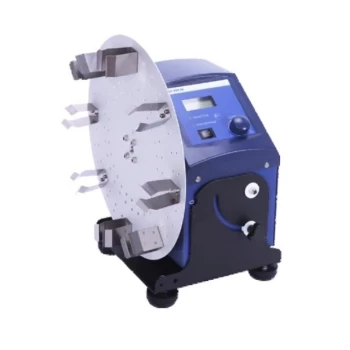
A laboratory orbital shaker acts as the primary driver of consistency during the Alkaline Hydrogen Peroxide (AHP) pretreatment of cassava stems. By providing continuous mechanical rotation, typically set at 100 rpm, the device ensures that solid stem particles remain in constant, thorough contact with the liquid hydrogen peroxide solution. This physical agitation is the defining factor that prevents material settling and ensures the chemical reaction is applied evenly across the entire sample.
Core Takeaway In static setups, chemical reactions can become localized and inefficient. The orbital shaker solves this by eliminating concentration gradients, guaranteeing that every cassava particle undergoes uniform oxidative delignification.
The Mechanics of Interaction
Ensuring Thorough Contact
The fundamental challenge in pretreating biomass like cassava stems is the physical state of the mixture. The stems are solid particles suspended in a liquid reagent.
Without intervention, these particles naturally settle or clump. The orbital shaker provides continuous mechanical rotation to counteract this. This motion forces the solid particles to remain suspended, ensuring they are perpetually surrounded by the fresh hydrogen peroxide solution.
Eliminating Concentration Gradients
A static reaction vessel inevitably develops concentration gradients. This means the chemical solution near the particle becomes depleted, while the solution further away remains potent.
The shaker’s constant agitation disrupts these zones. It constantly mixes the solution, ensuring the concentration of hydrogen peroxide remains uniform throughout the vessel. This prevents "hot spots" or "dead zones" within the reaction system.
Impact on Chemical Efficacy
Promoting Oxidative Delignification
The specific goal of AHP pretreatment is oxidative delignification. This process breaks down the rigid lignin structure to expose the fiber surfaces.
The shaker facilitates this by exposing the entire surface area of the cassava stem to the oxidant. Uniform rotation ensures the chemical attack on the lignin is consistent, preventing scenarios where some particles are over-processed while others remain untouched.
Maintaining Reaction Uniformity
Uniformity is the metric of success in this process. The use of a standard speed, such as 100 rpm, standardizes the kinetic energy within the system.
This standardization ensures that the results are reproducible. By mechanically controlling the environment, the shaker removes variability from the physical interaction between the solid stem and the liquid phase.
Operational Considerations and Risks
The Consequence of Inadequate Agitation
While the shaker drives the process, the reference highlights that its value lies in "continuous" and "uniform" motion.
If the agitation stops or is inconsistent, the concentration gradients returns immediately. This leads to incomplete delignification, where the core of the biomass may remain inaccessible to the chemicals, rendering the pretreatment ineffective.
Dependence on Mechanical Parameters
The process relies heavily on the specific rotation speed (e.g., 100 rpm).
Deviating significantly from the optimal speed can alter the contact efficiency. The shaker is not just a mixer; it is a tool for maintaining a steady-state reaction environment. Failure to maintain the mechanical rotation compromises the thoroughness of the contact.
Making the Right Choice for Your Goal
To maximize the efficiency of your AHP pretreatment, focus on the consistency of the physical environment.
- If your primary focus is Reproducibility: Ensure your shaker allows for precise speed locking (e.g., exactly 100 rpm) to maintain identical kinetic energy across batches.
- If your primary focus is Chemical Efficiency: Prioritize continuous operation to prevent the formation of concentration gradients that slow down oxidative delignification.
The orbital shaker transforms a heterogeneous mixture into a uniform reaction system, ensuring that chemical potential is fully translated into biological accessibility.
Summary Table:
| Feature | Role in AHP Pretreatment | Impact on Results |
|---|---|---|
| Mechanical Rotation | Ensures solid particles remain in constant contact with liquid hydrogen peroxide. | Prevents material settling and clumping. |
| Agitation Speed (100 rpm) | Standardizes kinetic energy and disrupts localized chemical zones. | Ensures reproducibility and eliminates gradients. |
| Continuous Motion | Facilitates consistent oxidative delignification across all fiber surfaces. | Optimizes lignin breakdown and biomass accessibility. |
Optimize Your Biomass Research with KINTEK Precision
Consistency is the backbone of successful AHP pretreatment. At KINTEK, we specialize in providing high-performance laboratory equipment tailored for rigorous research demands. Our precision orbital shakers and shakers ensure the exact mechanical rotation needed to eliminate concentration gradients and maximize oxidative delignification in your samples.
Beyond mixing solutions, KINTEK offers a comprehensive range of laboratory tools, including high-temperature furnaces, crushing and milling systems, and specialized reactors, to support your entire workflow from material preparation to chemical analysis.
Ready to enhance your lab's efficiency and reproducibility? Contact us today to find the perfect equipment solution!
References
- A. Sudha, Devi Priyenka. Improving enzymatic saccharification of cassava stem using peroxide and microwave assisted pre-treatment techniques. DOI: 10.2298/ciceq151113050s
This article is also based on technical information from Kintek Solution Knowledge Base .
Related Products
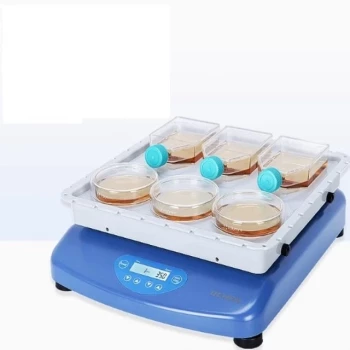
- Laboratory Oscillating Orbital Shaker
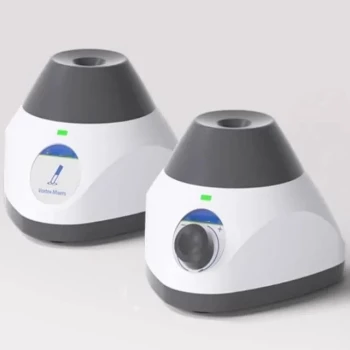
- Laboratory Vortex Mixer Orbital Shaker Multifunctional Rotation Oscillation Mixer
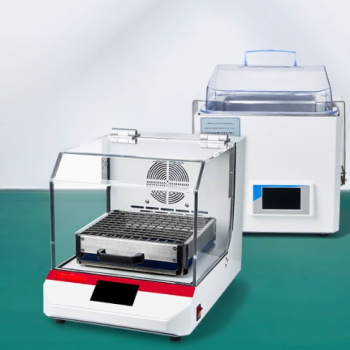
- Shaking Incubators for Diverse Laboratory Applications
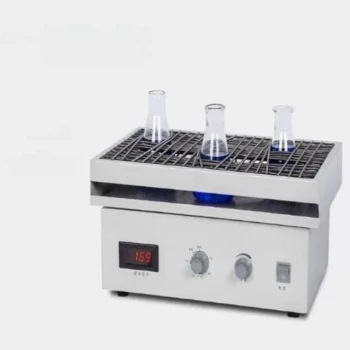
- Laboratory Multifunctional Small Speed-Adjustable Horizontal Mechanical Shaker for Lab
- Laboratory Test Sieves and Vibratory Sieve Shaker Machine
People Also Ask
- What is the role of a laboratory orbital shaker in activated carbon synthesis? Maximize Pore Depth & Surface Area
- What is the role of a laboratory orbital shaker in copper recovery? Optimize Industrial Waste Liquid Processing
- Why are high-precision shakers required for graphene oxide kinetic studies? Ensure Data Accuracy and Rapid Equilibrium
- What is the role of a laboratory shaker in silane sol preparation? Master Uniform Aramid Fabric Coating
- Why is a laboratory shaker required for continuous 24-hour catalyst treatment? Achieve Deep Uniform Impregnation