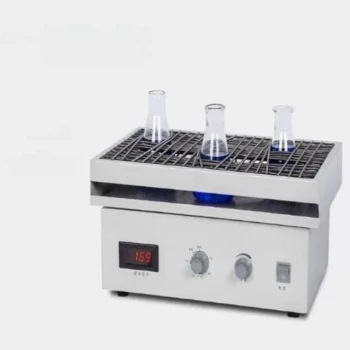
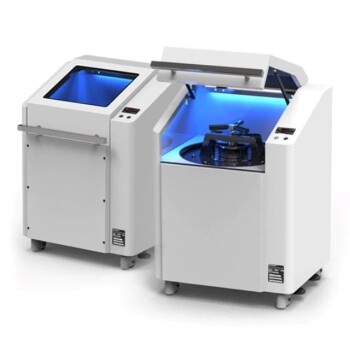
A laboratory shaker functions as the primary engine for mass transfer during the initial phase of green synthesis. By subjecting plant powder submerged in solvents—such as methanol—to continuous mechanical agitation, it drives the physical breakdown of plant fibers and ensures consistent interaction between the solid material and the liquid medium over extended periods, often lasting up to three days.
Core Takeaway The laboratory shaker is not merely a mixing device; it is a yield-maximization tool that ensures thorough solvent penetration into plant fibers. This continuous motion extracts the vital functional groups and structural materials required to act as precursors for the reduction and capping processes in nanocomposite synthesis.
How the Extraction Process Works
Continuous Mechanical Agitation
The fundamental role of the shaker is to prevent sedimentation. Without constant motion, plant powder would settle at the bottom of the container, significantly reducing the surface area exposed to the solvent.
The shaker maintains the plant material in a state of suspension. This ensures that every particle remains accessible to the solvent throughout the duration of the extraction.
Optimizing Solvent Contact
For successful extraction, the solvent (often methanol) must penetrate deep into the plant fibers.
The mechanical force applied by the shaker facilitates this thorough contact. It strips away saturated solvent layers from the particle surface, allowing fresh solvent to interact with the material and continue dissolving target compounds.
The Critical Link to Green Synthesis
Extracting Functional Groups
The ultimate goal of this agitation is to harvest natural functional groups.
These organic compounds are locked within the plant structure. The shaker's prolonged agitation ensures these groups are released into the solution in sufficient quantities to be useful.
Enabling Nanocomposite Formation
The extracted materials serve a specific chemical purpose in the next stage of synthesis.
They act as precursors necessary for reduction and capping. Without the high-quality extraction facilitated by the shaker, the subsequent green synthesis of nanocomposites would lack the biological materials required to stabilize and form the final product.
Operational Considerations
The Necessity of Time
The process described is not instantaneous. The reference highlights an extraction period of approximately three days.
This indicates that while the shaker automates the agitation, the extraction of complex structural materials is a slow kinetic process. Users must account for this extended timeline to ensure maximum yield.
Making the Right Choice for Your Goal
To ensure your extraction process effectively supports green synthesis, consider the following priorities:
- If your primary focus is Extraction Efficiency: Ensure the shaker runs continuously for the full recommended duration (e.g., three days) to guarantee thorough solvent penetration of the plant fibers.
- If your primary focus is Nanocomposite Quality: Prioritize the consistency of agitation to maximize the concentration of functional groups available for the critical reduction and capping phases.
Consistent mechanical agitation is the foundational step that transforms raw plant material into usable chemical precursors.
Summary Table:
| Feature | Role in Green Synthesis Extraction | Benefit to Research |
|---|---|---|
| Mechanical Agitation | Prevents sedimentation and maintains suspension | Maximizes surface area contact with solvents |
| Mass Transfer | Drives solvent penetration into plant fibers | Efficiently releases locked organic functional groups |
| Continuous Motion | Strips saturated layers from particle surfaces | Ensures high concentration of precursors for capping |
| Operational Durability | Supports extended extraction (up to 3 days) | Facilitates slow-kinetic dissolution of complex materials |
Elevate Your Green Synthesis with KINTEK Precision
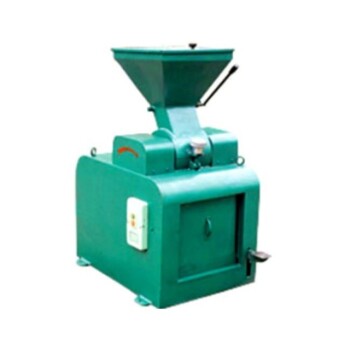
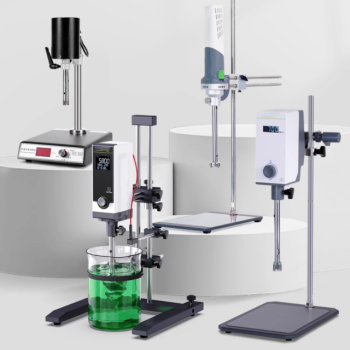
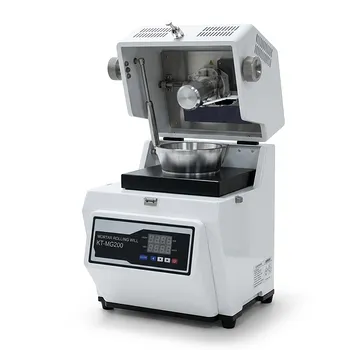
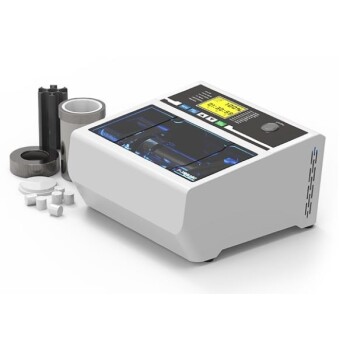
High-quality nanocomposite synthesis begins with superior extraction. KINTEK specializes in advanced laboratory equipment designed to withstand the rigorous demands of long-duration agitation. Our robust shakers, homogenizers, and crushing systems ensure consistent mass transfer, providing you with the high-concentration plant extracts necessary for effective reduction and capping.
From high-temperature furnaces and vacuum reactors for material characterization to PTFE consumables and cooling solutions, KINTEK provides the comprehensive toolkit your lab needs for innovative green chemistry.
Ready to optimize your extraction yield and synthesis quality? Contact KINTEK today for a tailored equipment consultation!
References
- Hajar Barkhor, Negin Nasseh. Construction of S-scheme CuFe12O19/CuS green nanocomposite for effective photocatalytic degradation of tetracycline from aqueous solution: mechanism, recyclability, and kinetic study. DOI: 10.1007/s13201-024-02346-5
This article is also based on technical information from Kintek Solution Knowledge Base .
Related Products
- Laboratory Multifunctional Small Speed-Adjustable Horizontal Mechanical Shaker for Lab
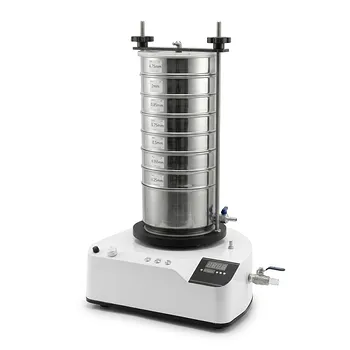
- Laboratory Vibratory Sieve Shaker Machine for Dry and Wet Three-Dimensional Sieving
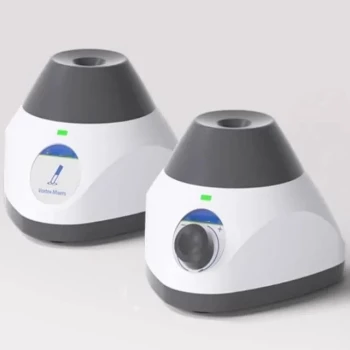
- Laboratory Oscillating Orbital Shaker
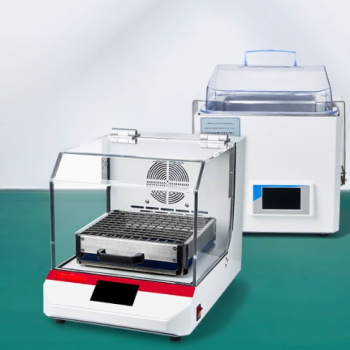
- Shaking Incubators for Diverse Laboratory Applications
- Laboratory Vibratory Sieve Shaker Machine Slap Vibrating Sieve
People Also Ask
- How do static culture and shaking culture affect the morphology of BC? Optimize Lab Shaker Results
- What is the role of a laboratory shaker in silane sol preparation? Master Uniform Aramid Fabric Coating
- Why is a laboratory shaker required for continuous 24-hour catalyst treatment? Achieve Deep Uniform Impregnation
- What is the function of a laboratory shaker in evaluating Fe-C@C nanoparticles? Optimize Methylene Blue Adsorption
- How do laboratory shakers or stirrers influence the efficiency of hydrogen production during dark fermentation?