A laboratory orbital shaker serves as the critical driver of uniformity in methylene blue adsorption kinetics experiments. Its primary function is to provide continuous, mechanical agitation—often at a set speed such as 120 rev/min—to ensure complete and constant contact between the solid adsorbent (e.g., chitosan) and the liquid solution.
Core Takeaway The orbital shaker does not merely mix ingredients; it actively removes physical barriers to the reaction. By generating constant turbulence, the device eliminates the "liquid film resistance" surrounding adsorbent particles, ensuring that the measured reaction rate reflects the true chemical kinetics rather than physical diffusion limitations.
The Mechanics of Effective Adsorption
Ensuring Full Particle Suspension
In any adsorption experiment, the solid particles must remain fully suspended within the aqueous solution.
Without constant mechanical power, particles settle, reducing the surface area available for the reaction. The shaker ensures the adsorbent and the methylene blue solution are in full, continuous contact.
Eliminating Concentration Gradients
Static solutions develop "dead zones" where the concentration of methylene blue is locally depleted.
The orbital motion creates a uniform kinetic environment. This eliminates local concentration gradients, ensuring the solute is evenly distributed throughout the vessel at all times.
Overcoming Mass Transfer Resistance
Reducing Liquid Film Resistance
This is the most technical and critical function of the shaker. Surrounding every solid particle is a stagnant layer of liquid known as the "film."
Molecules must diffuse through this film to reach the adsorbent surface. The shear force generated by the shaker's rotation reduces the thickness of this liquid film, effectively stripping away the barrier.
Enhancing External Diffusion
By reducing film resistance, the shaker maximizes diffusion efficiency.
This allows methylene blue molecules to travel efficiently from the bulk liquid phase to the surface of the chitosan or other adsorbents. This step—eliminating external mass transfer resistance—is a prerequisite for accurate data collection.
Impact on Data Integrity
Determining True Equilibrium
To calculate the maximum theoretical adsorption capacity, the system must reach a stable state.
Uniform agitation ensures that the time measured to reach this state (equilibrium time) is accurate and reproducible, rather than an artifact of poor mixing.
Validating Kinetic Models
Researchers use models (like pseudo-second-order) to understand the reaction mechanism.
If the shaker speed is inconsistent or too slow, the data will reflect diffusion issues rather than adsorption kinetics. Proper shaking ensures the data allows for the precise calculation of kinetic parameters.
Understanding the Trade-offs
The Risk of Inadequate Speed
If the agitation speed is too low, the liquid film remains thick.
This leads to "false" kinetic data, where the reaction appears slower than it actually is because the solute cannot reach the active sites efficiently.
The Necessity of Consistency
Agitation must be uniform throughout the entire experiment.
Fluctuations in mechanical power introduce variables that destroy reproducibility. The shaker provides the stability required to compare results across different trials or environmental conditions.
Making the Right Choice for Your Goal
- If your primary focus is determining Kinetic Rates: Ensure your shaker speed is high enough to completely minimize external mass transfer resistance (film diffusion) so it does not limit the reaction rate.
- If your primary focus is Reproducibility: rigorous adherence to a set speed (e.g., 120 rev/min) is vital to ensure that variance in your data is due to the chemistry, not inconsistent mixing.
The shaker transforms a heterogeneous mixture into a uniform system, allowing the true chemistry of adsorption to be observed and measured.
Summary Table:
| Function Category | Key Mechanism | Impact on Experiment |
|---|---|---|
| Particle Suspension | Mechanical agitation | Prevents settling and maximizes surface area contact |
| Mass Transfer | Reducing liquid film resistance | Minimizes external diffusion barriers for faster reaction |
| Uniformity | Eliminating concentration gradients | Ensures consistent solute distribution throughout the vessel |
| Data Integrity | Stable kinetic environment | Allows for accurate calculation of true chemical kinetics |
Elevate Your Adsorption Research with KINTEK Precision
Achieving accurate and reproducible kinetic data starts with high-performance laboratory equipment. KINTEK specializes in providing researchers with premium shakers and homogenizers designed to eliminate diffusion barriers and ensure complete mass transfer in critical experiments like methylene blue adsorption.
From our robust orbital shakers to our specialized crushing systems, hydraulic presses, and high-temperature reactors, KINTEK offers a comprehensive range of tools and consumables tailored for advanced material science and battery research.
Ready to optimize your lab's performance? Contact KINTEK today to find the perfect equipment solution for your research!
References
- Abidoye Olafadehan Olaosebikan, Morufat Bello Adebukola. Isotherms, kinetic and thermodynamic studies of methylene blue adsorption on chitosan flakes derived from African giant snail shell. DOI: 10.5897/ajest2021.3065
This article is also based on technical information from Kintek Solution Knowledge Base .
Related Products
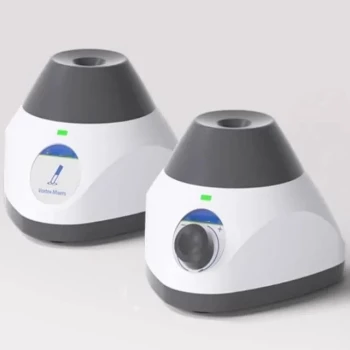
- Laboratory Vortex Mixer Orbital Shaker Multifunctional Rotation Oscillation Mixer
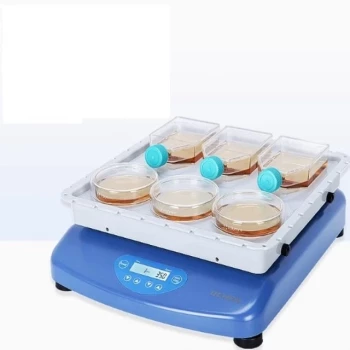
- Laboratory Oscillating Orbital Shaker
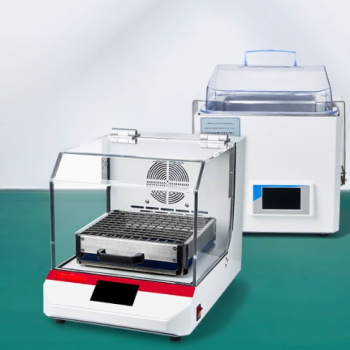
- Shaking Incubators for Diverse Laboratory Applications
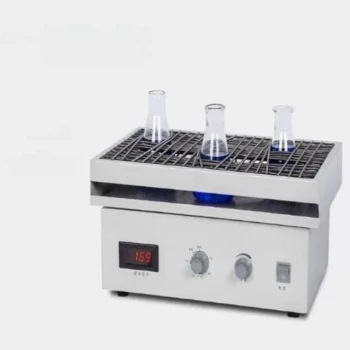
- Laboratory Multifunctional Small Speed-Adjustable Horizontal Mechanical Shaker for Lab
- Laboratory Vibratory Sieve Shaker Machine for Dry and Wet Three-Dimensional Sieving
People Also Ask
- What is the role of a laboratory orbital shaker in copper recovery? Optimize Industrial Waste Liquid Processing
- What is the role of a laboratory orbital shaker in activated carbon synthesis? Maximize Pore Depth & Surface Area
- What is a laboratory mixer used for? Choose the Right Tool for Liquids or Solids
- What is a laboratory mixer? A Guide to Achieving Perfect Sample Homogeneity
- What are laboratory mixers used for? Achieve Perfect Sample Homogeneity and Reliable Results