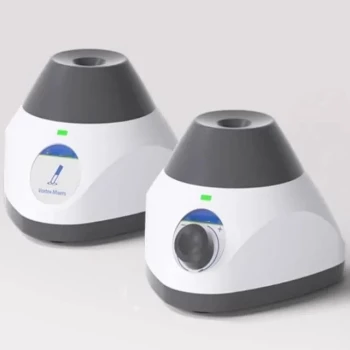
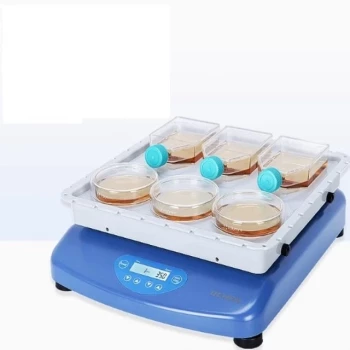
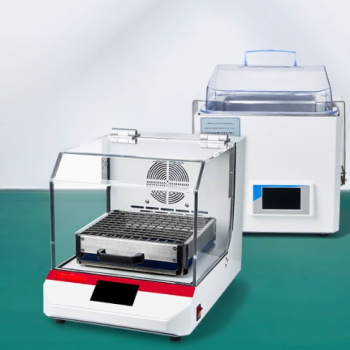
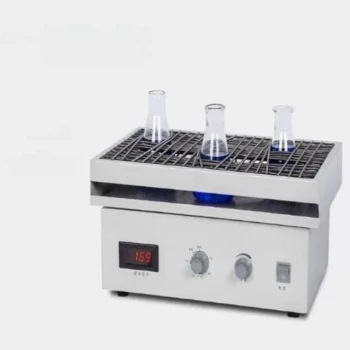
The primary function of a laboratory orbital shaker during Biochemical Methane Potential (BMP) testing is to provide continuous, gentle circular agitation within fermentation flasks. This mechanical action is critical for thoroughly mixing the bacterial inoculum with the substrate, such as Salix. By maintaining a dynamic suspension, the shaker prevents the separation of materials and ensures that the fermentation environment remains consistent throughout the testing period.
The orbital shaker acts as a fundamental control mechanism for data integrity. By eliminating stratification and ensuring uniform interaction between bacteria and nutrients, it allows for the collection of reproducible and accurate methane yield assessments.
The Mechanics of Homogeneity
Ensuring Thorough Contact
The core biological process in BMP testing requires constant contact between the microorganisms (inoculum) and the organic matter (Salix substrate). The orbital shaker facilitates this by keeping the mixture in constant motion. This ensures that the bacteria have continuous access to the substrate they need to digest.
Preventing Sedimentation
Without active intervention, solid materials in a liquid suspension will naturally settle to the bottom of the flask due to gravity. The continuous circular motion of the shaker counteracts this physical tendency. It keeps solid particles suspended, preventing them from forming a sludge layer that would inhibit digestion.
Stabilizing the Fermentation Environment
Uniform Nutrient Distribution
A static flask often develops pockets where nutrients are depleted while other areas remain rich. The agitation provided by the shaker redistributes the fermentation broth continuously. This guarantees that nutrients are evenly dispersed, preventing localized starvation zones for the inoculum.
Thermal consistency
Temperature fluctuations can significantly impact the metabolic rate of methanogenic bacteria. Stationary liquids can develop thermal gradients, where the center is cooler than the edges. Orbital shaking ensures the temperature is uniform throughout the entire volume of the flask.
Understanding Operational Trade-offs
The Importance of "Gentle" Motion
While agitation is necessary, the intensity of the motion is a critical variable. The primary goal is to keep solids suspended, not to create turbulence. Excessive speed could potentially disrupt the biological process, while insufficient speed leads to settling; the motion must remain "gentle" to balance these factors effectively.
Ensuring Data Integrity in Your BMP Tests
To maximize the reliability of your methane potential results, consider how you utilize the orbital shaker:
- If your primary focus is accuracy: Verify that the shaker provides continuous motion to prevent the settling of solid materials like Salix.
- If your primary focus is reproducibility: Ensure the agitation is uniform across all flasks to maintain consistent temperature and nutrient distribution.
By maintaining precise control over your mixing parameters, you transform a simple mechanical step into a guarantee of experimental validity.
Summary Table:
| Function | Description | Benefit in BMP Testing |
|---|---|---|
| Homogenization | Constant circular mixing of inoculum and substrate | Ensures continuous bacterial access to nutrients |
| Sedimentation Control | Keeps solid particles (e.g., Salix) in suspension | Prevents sludge formation and anaerobic dead zones |
| Thermal Regulation | Eliminates thermal gradients within the liquid | Maintains consistent metabolic rates for bacteria |
| Nutrient Distribution | Prevents localized depletion zones | Ensures uniform fermentation environment and data integrity |
Elevate Your Research Precision with KINTEK
Are you looking to ensure the highest data integrity in your BMP testing or biochemical research? KINTEK specializes in high-performance laboratory equipment designed for the most demanding scientific environments. From our precision shakers and homogenizers that ensure perfect suspension to our robust high-temperature reactors, autoclaves, and cooling solutions, we provide the tools necessary for reproducible results.
Whether you are managing complex battery research, dental material processing, or substrate fermentation, our comprehensive range of laboratory consumables (PTFE, ceramics, and crucibles) and crushing and milling systems supports every stage of your workflow.
Ready to optimize your lab's efficiency? Contact KINTEK today to discuss your specific equipment needs and discover the value of precision-engineered solutions tailored for your success.
References
- Jonas Ohlsson, Anna Schnürer. Co-Digestion of Salix and Manure for Biogas: Importance of Clone Choice, Coppicing Frequency and Reactor Setup. DOI: 10.3390/en13153804
This article is also based on technical information from Kintek Solution Knowledge Base .
Related Products
- Laboratory Vortex Mixer Orbital Shaker Multifunctional Rotation Oscillation Mixer
- Laboratory Oscillating Orbital Shaker
- Shaking Incubators for Diverse Laboratory Applications
- Laboratory Multifunctional Small Speed-Adjustable Horizontal Mechanical Shaker for Lab
- Laboratory Vibratory Sieve Shaker Machine for Dry and Wet Three-Dimensional Sieving
People Also Ask
- What is the role of a laboratory orbital shaker in copper recovery? Optimize Industrial Waste Liquid Processing
- What is the role of a laboratory orbital shaker in activated carbon synthesis? Maximize Pore Depth & Surface Area
- What is a laboratory mixer used for? Choose the Right Tool for Liquids or Solids
- What is a laboratory mixer? A Guide to Achieving Perfect Sample Homogeneity
- What are laboratory mixers used for? Achieve Perfect Sample Homogeneity and Reliable Results