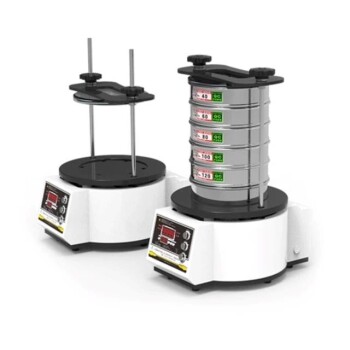
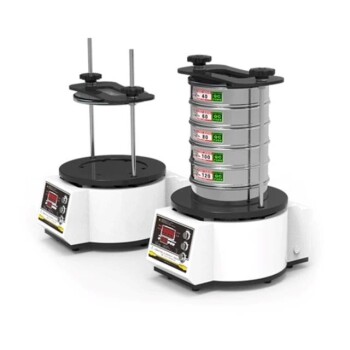
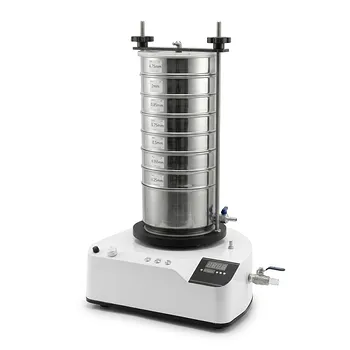
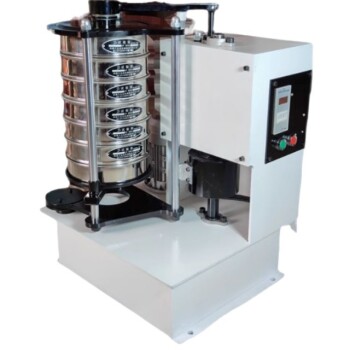
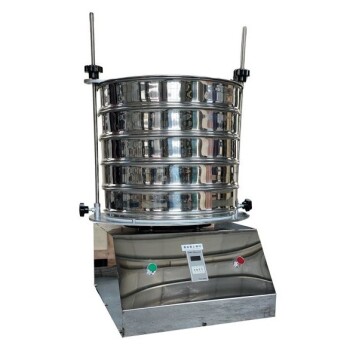
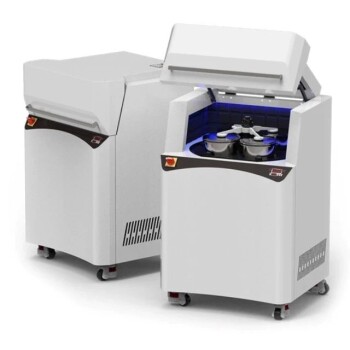
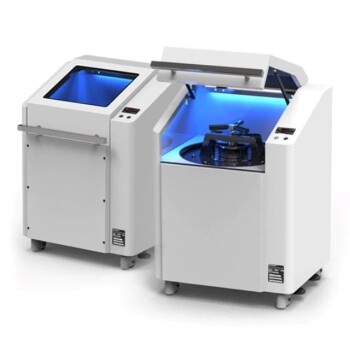
A vibratory sieve shaker is essential for creating a consistent particle size distribution, specifically isolating ranges such as 106-300 microns, to ensure experimental accuracy. By standardizing the physical surface area of ground PET, this equipment eliminates mass transfer discrepancies that otherwise distort data, making it a mandatory step for valid hydrolysis reaction kinetics research.
Core Takeaway Reliable chemical research requires that physical variables be controlled to isolate chemical effects. The vibratory sieve shaker guarantees that observed reaction rates are driven by the chemistry of the PET, not by random variations in particle size or surface area availability.
The Mechanism of Control
Precision Separation
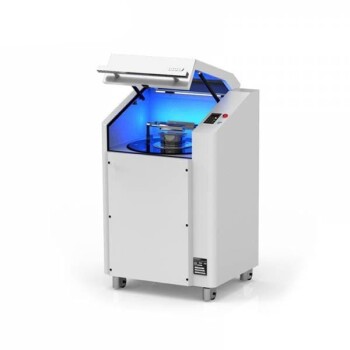
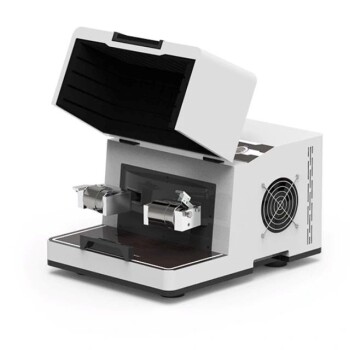
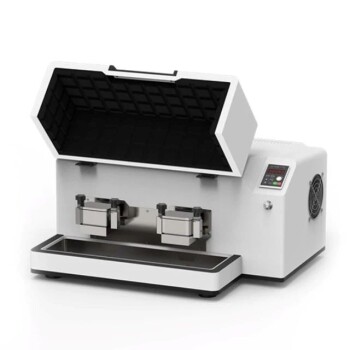
A vibratory sieve shaker utilizes mechanical vibration to pass ground powder through a stack of standard sieves with decreasing aperture sizes. This physical process sorts the bulk powder into distinct fractions based on geometric dimensions.
Validation of Grinding Efficiency
The shaker serves as a quality control checkpoint for the grinding process itself. It provides quantitative data to confirm whether the preceding ball milling or grinding stage has successfully reached the target average particle size.
Impact on Chemical Kinetics
Eliminating Mass Transfer Variables
In chemical processes like hydrolysis, the rate of reaction is heavily influenced by the surface area available to the reactants. A mixture containing both fine dust and large chunks will exhibit erratic mass transfer rates.
Ensuring Kinetic Accuracy
By filtering the PET powder to a narrow range (e.g., 106-300 microns), the shaker ensures that all particles have roughly the same surface-to-volume ratio. This allows researchers to accurately measure hydrolysis reaction kinetics without the noise of physical size diffusion limits.
Experimental Reliability
Repeatability of Results
Scientific validity relies on the ability to reproduce results under identical conditions. The vibratory sieve shaker ensures that every batch of PET powder used in experiments has the exact same particle size distribution.
Standardization for Downstream Processes
Beyond research, consistent particle size is critical for physical processing quality. Ensuring the powder meets specific size criteria is often a prerequisite for optimal performance in subsequent stages, such as pressing or melting.
Understanding the Trade-offs
The Cost of Precision
Using a vibratory sieve shaker adds a distinct processing step, which increases the total time required to prepare samples. It requires waiting for the mechanical separation to complete rather than using the bulk ground material immediately.
Material Loss
Sieving inevitably leads to the exclusion of material that falls outside the target range (both overshoot and undershoot). This reduces the overall yield of usable powder from the original bulk grinding process, requiring larger initial sample inputs.
Making the Right Choice for Your Goal
To maximize the value of your PET powder preparation, consider your primary objective:
- If your primary focus is Research Accuracy: Prioritize the use of multiple sieve stacks to create the narrowest possible particle range (e.g., 106-300 microns) to isolate chemical kinetic data.
- If your primary focus is Process Efficiency: Use the shaker primarily as a "Go/No-Go" gauge to quickly verify that the bulk grinding process has met the minimum size requirements for pressing.
Consistency in particle size is the invisible foundation of reliable chemical engineering data.
Summary Table:
| Feature | Benefit for PET Research | Impact on Result |
|---|---|---|
| Mechanical Vibration | Separates bulk powder into distinct geometric fractions | High precision separation |
| Size Range Control | Isolates specific ranges (e.g., 106-300 microns) | Standardized surface area |
| Quality Validation | Confirms efficiency of preceding grinding/milling | Verified target particle size |
| Mass Transfer Control | Eliminates erratic reaction rates from uneven sizes | Accurate kinetic data |
| Process Repeatability | Ensures batch-to-batch consistency | Scientific validity & reproducibility |
Elevate Your Material Consistency with KINTEK
Precise particle size distribution is the foundation of reliable chemical engineering and laboratory research. KINTEK specializes in high-performance sieving equipment, crushing and milling systems, and hydraulic presses designed to meet the rigorous demands of material science. From processing PET powder to advanced battery research and dental applications, our comprehensive range of laboratory equipment—including high-temperature furnaces, autoclaves, and electrolytic cells—provides the precision your data depends on.
Ready to eliminate variables and optimize your experimental results? Contact our laboratory experts today to find the perfect sieving and processing solution for your unique requirements.
References
- Dacosta Osei, Ana Rita C. Morais. Subcritical CO<sub>2</sub>–H<sub>2</sub>O hydrolysis of polyethylene terephthalate as a sustainable chemical recycling platform. DOI: 10.1039/d3gc04576e
This article is also based on technical information from Kintek Solution Knowledge Base .
Related Products
- Vibratory Sieve Shaker Machine Dry Three-Dimensional Vibrating Sieve
- Laboratory Wet Three-Dimensional Vibratory Sieve Shaker Machine
- Laboratory Vibratory Sieve Shaker Machine for Dry and Wet Three-Dimensional Sieving
- Laboratory Test Sieves and Vibratory Sieve Shaker Machine
- Laboratory Vibratory Sieve Shaker Machine Slap Vibrating Sieve
People Also Ask
- How is a vibratory sieve shaker used in the particle size analysis of mechanically alloyed powders? Expert Guide
- What is the principle of vibratory sieve shaker? Achieve Accurate Particle Size Analysis
- What is the function of a vibratory sieve shaker? Achieve Precise Particle Size Analysis
- What is the use of vibratory sieve shaker? Achieve Precise Particle Size Analysis for Your Lab
- How are vibratory sieve shakers and standard sieves utilized to analyze the effects of biomass torrefaction? Optimize Grindability