
Sieving Machine
Laboratory Test Sieves and Sieving Machines
Item Number : KT-RCZ
Price varies based on specs and customizations
- Sieve diameter
- Φ400, Φ300, Φ200 (mm)
- Sieve layers
- 1-5 (including bottom cover)
- Material
- 304 stainless steel

Shipping:
Contact us to get shipping details Enjoy On-time Dispatch Guarantee.
Why Choose Us
Easy ordering process, quality products, and dedicated support for your business success.
Laboratory Test Sieves and Sieving Machines
Application
Laboratory test sieves and sieving machines serve as indispensable tools for particle analysis across diverse scientific and industrial settings. These precision instruments enable researchers and quality control professionals to conduct accurate particle size determination, separation, and classification of materials ranging from powders and bulk solids to suspensions. In university laboratories and research institutes, they facilitate fundamental studies on material properties, while corporate R&D centers rely on them for product development and formulation consistency. The pharmaceutical industry utilizes these sieves for stringent quality checks on active ingredients and excipients, ensuring tablet uniformity and dissolution predictability. Within food processing, they verify grain sizes, detect contaminants, and maintain texture standards in products like flour, spices, and powdered beverages. Mining and geology sectors employ sieving for ore grading and soil composition analysis, while metallurgy labs assess metal powders for additive manufacturing suitability. Chemical manufacturers depend on them to validate catalyst particle distributions, pigment dispersions, and polymer pellet homogeneity. Ceramics producers control glaze particle sizes to prevent surface defects, and abrasives manufacturers guarantee grit consistency for precision grinding applications. Environmental testing labs use sieving to analyze sediment samples, and construction industries verify aggregate gradations for concrete strength. The versatility extends to niche applications like ink formulation, battery electrode material screening, and forensic evidence analysis. By enabling reproducible particle separation down to 20μm (extendable to 5μm with specialized techniques), these systems provide critical data for compliance with ISO, ASTM, and USP standards.
Key application scenarios include:
- Quality Assurance: Batch consistency verification in pharmaceuticals (e.g., API granule sizing)
- Material Characterization: Soil texture classification in geological surveys
- Contamination Control: Foreign particle detection in food processing lines
- Process Optimization: Catalyst efficiency testing in petrochemical refineries
- Research & Development: Nanomaterial fractionation in advanced material studies
- Compliance Testing: Aggregate gradation analysis for construction materials certification
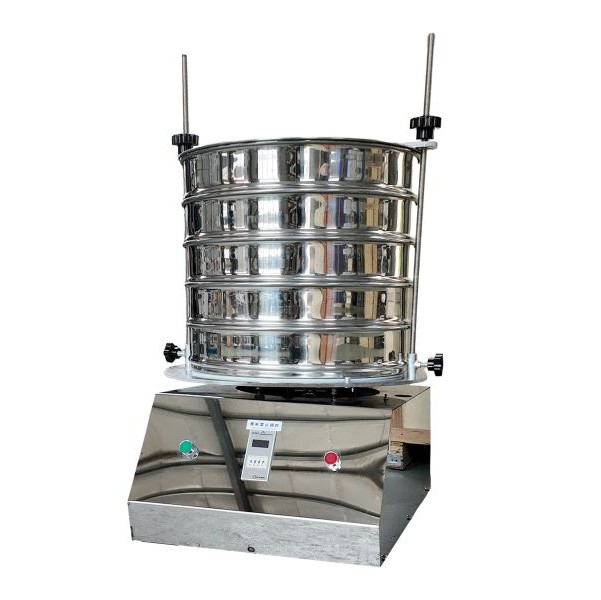
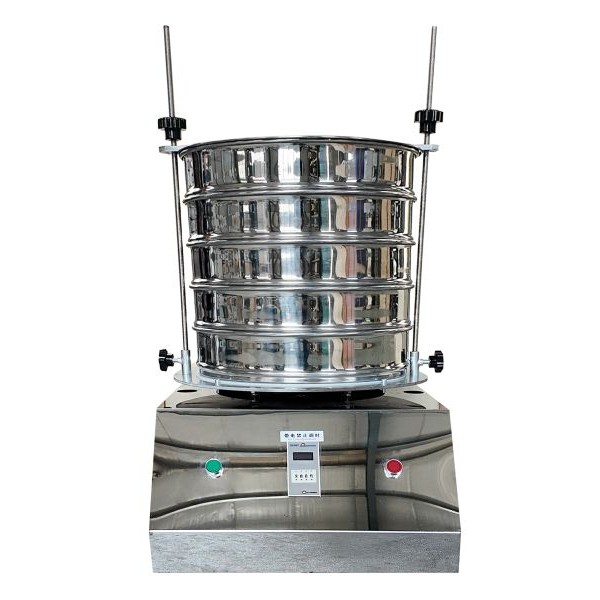
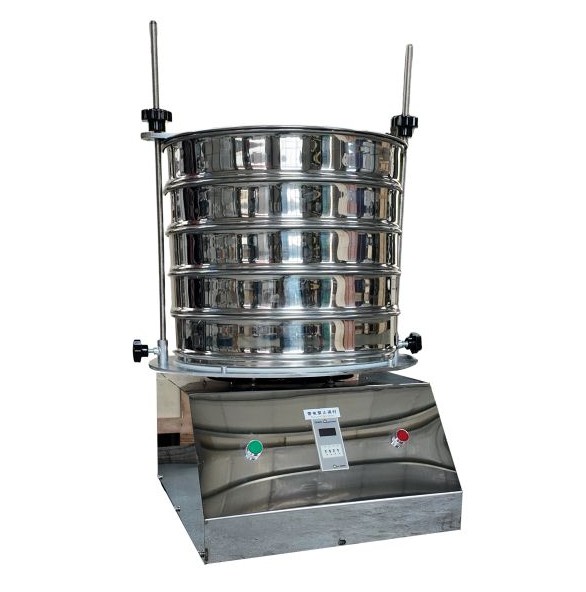
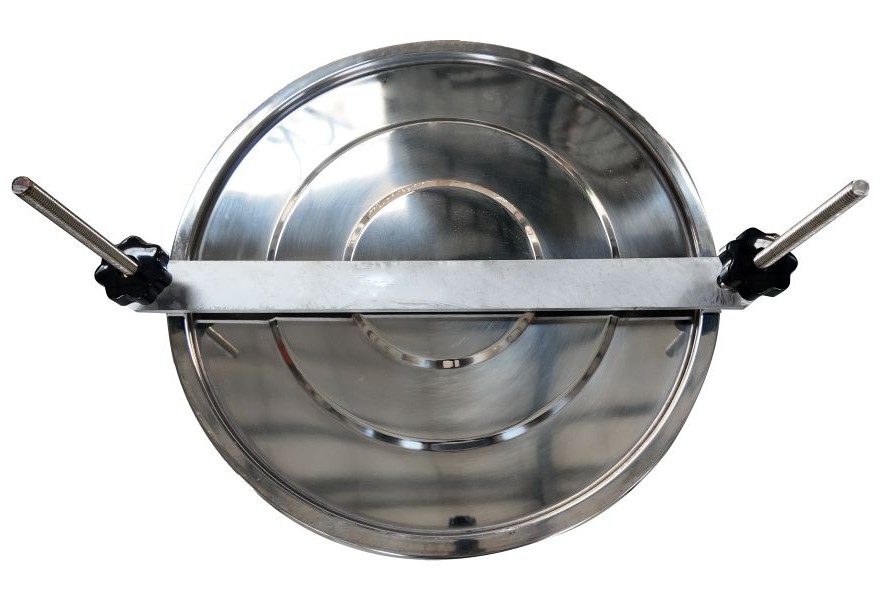
Detail & Parts
Feature
Laboratory test sieves and sieving machines integrate advanced engineering to deliver uncompromising precision and durability. Constructed from corrosion-resistant SUS304 or SUS316 stainless steel, sieves feature seamless single-stretch forming for zero-material trapping and consistent 0.6mm wall thickness. The laser-welded mesh-to-frame bonding withstands 400°C temperatures, enabling compatibility with aggressive solvents and sterilization protocols. Precision calibration ensures ±5μm aperture tolerances, while interchangeable sieve frames guarantee identical performance across batches—critical for longitudinal studies. Modular designs support 1-5 layer configurations (including bottom cover), allowing simultaneous separation of materials into 2-7 distinct particle fractions during a single operation. The sieving machines incorporate three-dimensional motion technology, generating compound horizontal, vertical, and elliptical vibrations through precisely balanced motor weights. This multi-axis agitation prevents particle blinding while optimizing stratification efficiency. Programmable timers with 0.01-99.59 minute resolution automate test duration, eliminating operator-dependent variables. Integrated ultrasonic generators (optional) create high-frequency vibrations that deagglomerate cohesive powders and clear mesh obstructions, boosting throughput by 200% for sub-20μm particles. Safety-focused engineering includes <50dB noise emission and enclosed motion mechanisms. Standardized Φ200mm, Φ300mm, and Φ400mm diameters accommodate sample volumes up to 300g, with amplitude adjustable from 1-5mm for material-specific optimization. The 5KN excitation force ensures effective particle agitation even for dense ores, while the 1440RPM motor maintains consistent energy input across 8-hour continuous operations. Additional functional highlights include electromagnetic compatibility with explosion-proof environments and IP54-rated protection against particulate ingress.
Critical performance specifications:
- Material Integrity: Full stainless steel construction resisting pH 1-14 solutions
- Thermal Stability: Operational range from -20°C to 400°C
- Calibration Traceability: NIST-certified mesh compliance
- Dynamic Control: Adjustable amplitude (1-5mm) and ultrasonic intensity
- Throughput Capacity: 300g sample handling per batch
- Energy Efficiency: 0.25kW motor consumption at 220V/50Hz
- Operational Safety: <50dB noise, vibration-damped base
Principle
Laboratory sieving operates on controlled particle stratification through precisely engineered vibration mechanics. The core mechanism converts the motor’s rotational energy into multi-directional kinetic forces using upper/lower eccentric weights. As counterweights spin at 1440 RPM, centrifugal forces generate compound oscillations—horizontal displacement separates particles laterally, vertical impulses induce jumping to prevent mesh clogging, and elliptical trajectories create rolling motions that expose all particle facets to apertures. This three-dimensional agitation stratifies materials by mass: finer particles migrate downward through mesh openings while coarser fractions remain atop. Three sieve architectures achieve this separation differently. Wire-braided meshes utilize interlocked warp/weft threads for standard 20μm-125mm fractionation, with aperture geometry maintained through tension-controlled weaving. Metal perforated plate sieves employ laser-drilled holes for exacting 1-125mm coarse particle analysis, featuring consistent aperture walls for minimal particle trapping. Electroformed sieves deposit nickel onto photo-etched templates to create ultra-precise 5-100μm apertures with optical-grade edge definition for nanomaterials. During operation, stacked sieves create a particle gradient—coarsest mesh on top, finest at bottom—with each layer capturing specific size fractions. The process leverages both probability sieving (particle orientation during freefall) and barrier separation (absolute size exclusion), with efficiency enhanced by ultrasonic surface cleaning that disrupts static charges. Sieve performance follows Darcy’s Law of fluid flow through porous media, where vibration amplitude controls particle fluidization energy. Analytical accuracy relies on standardized test durations that balance classification completeness against particle degradation risks, with results validated through mass balance calculations comparing feed and fraction weights.
Fundamental physics considerations:
- Stratification Dynamics: Size/mass segregation under harmonic excitation
- Aperture-Particle Interaction: Geometric vs. aerodynamic diameter effects
- Fluidization Threshold: Minimum vibration energy for powder behavior transition
- Near-Mesh Behavior: Particle orientation probability during aperture approach
- Ultrasonic Cleaning: Cavitation bubble collapse disrupting capillary forces
Advantage
Laboratory test sieves deliver unparalleled advantages in particle analysis through uncompromising precision engineering. The stainless steel construction ensures lifelong corrosion resistance—critical for harsh chemical environments like pharmaceutical dissolution testing or mining slurry analysis. Seamless laser-welded joints eliminate material trapping that skews results in competitive epoxy-bonded sieves, while 0.6mm frame thickness prevents deformation during ultrasonic cleaning cycles. Traceable calibration provides ISO 3310-1 compliance with documented ≤5μm aperture tolerances, enabling regulatory acceptance across FDA, EPA, and ISO 9001 frameworks. The three-dimensional vibration technology achieves 98% separation efficiency for cohesive materials like talc or titanium dioxide—surpassing rotary sieves by 40% in recovery rates. Modular layer configurations reduce analysis time 80% versus sequential testing, simultaneously generating complete particle distribution curves. Programmable timers guarantee test reproducibility with <0.1% runtime variation, eliminating operator-induced errors in GLP environments. Energy-efficient 0.25kW motors lower operational costs by 60% compared to pneumatic alternatives while maintaining 5KN excitation forces for heavy mineral processing. The ultrasonic compatibility revolutionizes sub-20μm analysis—reducing test durations from hours to minutes while preventing false positives from agglomerated particles. Standardized dimensions ensure compatibility with robotic sample handlers for high-throughput QA labs processing 500+ samples daily. Crucially, the interchangeable design allows cost-effective mesh replacement without recalibrating entire systems, while the sub-50dB operation protects technician hearing during extended shifts. These advantages converge to deliver lowest cost-per-test in particle analysis while providing defensible data for patent applications, quality disputes, and regulatory submissions.
Operational benefits demonstrated:
- Lifecycle Economy: 10-year service lifespan with replaceable components
- Compliance Leverage: Full documentation for 21 CFR Part 11 validation
- Productivity Gains: 7-layer simultaneous analysis in 15-minute cycles
- Accuracy Superiority: <2% mass imbalance in verification tests
- Maintenance Simplicity: Tool-free disassembly for autoclaving
- Adaptability: Amplitude tuning for materials from aerogels to iron ore
For precise particle characterization requirements, discuss your application specifications with our engineers to configure optimal sieving solutions—request consultation data sheets detailing calibration certificates and material compatibility matrices.
Technical specifications
| Parameter | Specification |
|---|---|
| Sieve diameter | Φ400, Φ300, φ200 (mm) |
| Sieve layers | 1-5 (including bottom cover) |
| Feeding amount (one-time) | ≤300g |
| Vibration amplitude | 1-5mm |
| Excitation force | 5KN |
| Power | 0.25KW 220V 50HZ |
| Speed | 1440R/min |
| Dimensions | 600×490×370mm |
| Sieve weight | 60kg |
| Motion trajectory | circular motion |
| Timing time | 0.01-99.59min |
| Noise | ≤50dB |
| Material | 304 stainless steel |
| Packing method | wooden box packaging |
Trusted by Industry Leaders
REQUEST A QUOTE
Our professional team will reply to you within one business day. Please feel free to contact us!
Related Products
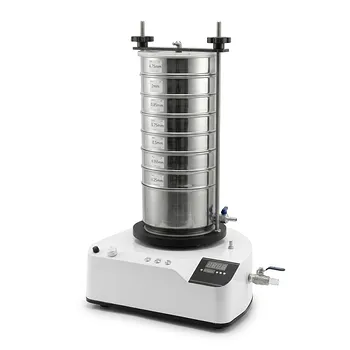
Laboratory Vibratory Sieve Shaker Machine for Dry and Wet Three-Dimensional Sieving
KT-VD200 can be used for sieving tasks of dry and wet samples in the laboratory. The screening quality is 20g-3kg. The product is designed with a unique mechanical structure and an electromagnetic vibrating body with a vibration frequency of 3000 times per minute.

Laboratory Test Sieves and Vibratory Sieve Shaker Machine
Efficiently process powders, granules, and small blocks with a high-frequency vibration sieve. Control vibration frequency, screen continuously or intermittently, and achieve accurate particle size determination, separation, and classification.
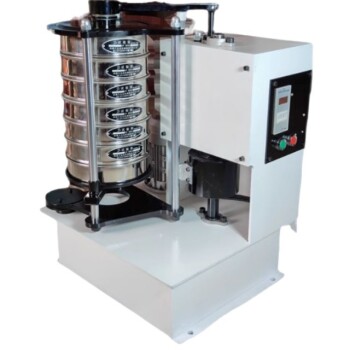
Laboratory Vibratory Sieve Shaker Machine Slap Vibrating Sieve
KT-T200TAP is a slapping and oscillating sieving instrument for laboratory desktop use, with 300 rpm horizontal circular motion and 300 vertical slapping motions to simulate manual sieving to help sample particles pass through better.
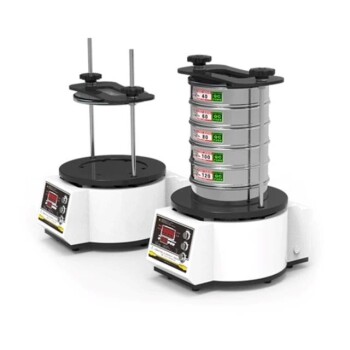
Laboratory Wet Three-Dimensional Vibratory Sieve Shaker Machine
The wet three-dimensional vibrating sieving instrument focuses on solving the sieving tasks of dry and wet samples in the laboratory. It is suitable for sieving 20g - 3kg dry, wet or liquid samples.
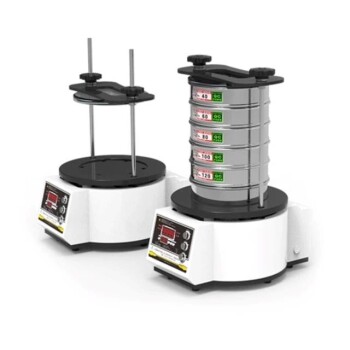
Vibratory Sieve Shaker Machine Dry Three-Dimensional Vibrating Sieve
The KT-V200 product focuses on solving common sieving tasks in the laboratory. It is suitable for sieving 20g-3kg dry samples.

Three-dimensional electromagnetic sieving instrument
KT-VT150 is a desktop sample processing instrument for both sieving and grinding. Grinding and sieving can be used both dry and wet. The vibration amplitude is 5mm and the vibration frequency is 3000-3600 times/min.
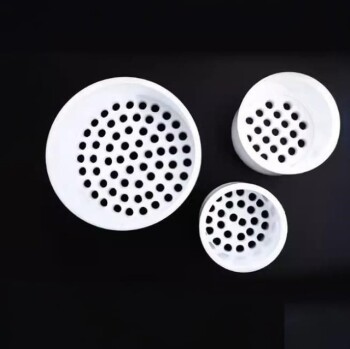
Custom PTFE Teflon Parts Manufacturer for PTFE Mesh F4 Sieve
PTFE mesh sieve is a specialized test sieve designed for particle analysis in various industries, featuring a non-metallic mesh woven from PTFE filament. This synthetic mesh is ideal for applications where metal contamination is a concern . PTFE sieves are crucial for maintaining the integrity of samples in sensitive environments, ensuring accurate and reliable results in particle size distribution analysis.

Mini Planetary Ball Mill Machine for Laboratory Milling
Discover the KT-P400 desktop planetary ball mill, ideal for grinding and mixing small samples in the lab. Enjoy stable performance, long service life, and practicality. Functions include timing and overload protection.

Vibrating Disc Mill Small Laboratory Grinding Machine
Discover the versatile Vibrating Disc Mill for efficient laboratory grinding. Ideal for geology, metallurgy, biology, and more. Explore now!

High-Energy Omnidirectional Planetary Ball Mill Milling Machine for Laboratory
The KT-P4000E is a new product derived from the vertical high-energy planetary ball mill with a 360° swivel function. Experience faster, uniform, and smaller sample output results with 4 ≤1000ml ball mill jars.

High Energy Planetary Ball Mill Milling Machine for Laboratory
The biggest feature is that the high energy planetary ball mill can not only perform fast and effective grinding, but also has good crushing ability

Automatic Laboratory Hydraulic Pellet Press Machine for Lab Use
Experience efficient sample preparation with our Automatic Lab Press Machine. Ideal for material research, pharmacy, ceramics, and more. Features a compact size and hydraulic press functionality with heating plates. Available in various sizes.
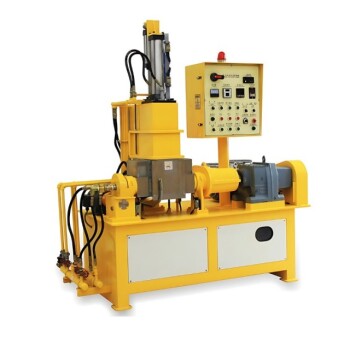
Lab Internal Rubber Mixer Rubber Kneader Machine for Mixing and Kneading
Lab internal rubber mixer is suitable for mixing, kneading and dispersing various chemical raw materials such as plastics, rubber, synthetic rubber, hot melt adhesive and various low-viscosity materials.

Laboratory Horizontal Planetary Ball Mill Milling Machine
Improve sample uniformity with our Horizontal Planetary Ball Mills. KT-P400H reduces sample deposition and KT-P400E has multi-directional capabilities. Safe, convenient and efficient with overload protection.

Laboratory Ball Mill Jar Mill with Metal Alloy Grinding Jar and Balls
Grind and mill with ease using metal alloy grinding jars with balls. Choose from 304/316L stainless steel or tungsten carbide and optional liner materials. Compatible with various mills and features optional functions.

Laboratory Jar Mill with Agate Grinding Jar and Balls
Grind your materials with ease using Agate Grinding Jars with Balls. Sizes from 50ml to 3000ml, perfect for planetary and vibration mills.
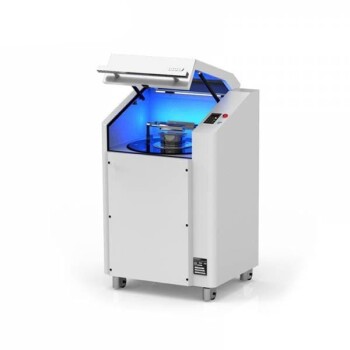
Lab Vibration Mill
Vibration Mill for Efficient Sample Preparation, Suitable for Crushing and Grinding a Variety of Materials with Analytical Precision. Supports Dry / Wet / Cryogenic Grinding and Vacuum/Inert Gas Protection.
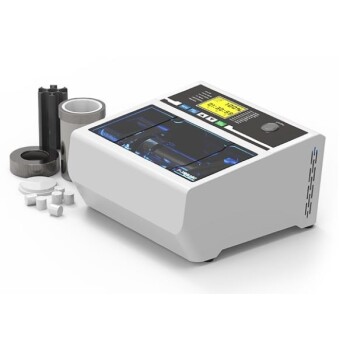
Laboratory Micro Horizontal Jar Mill for Precision Sample Preparation in Research and Analysis
Discover the Micro Horizontal Jar Mill for precise sample preparation in research and analysis. Ideal for XRD, geology, chemistry, and more.
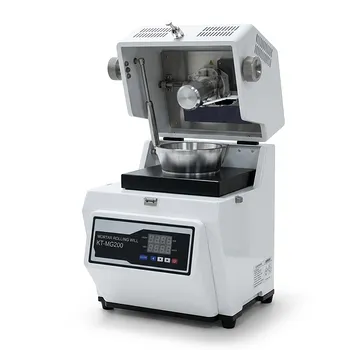
Laboratory Grinding Mill Mortar Grinder for Sample Preparation
KT-MG200 mortar grinder can be used for mixing and homogenizing powder, suspension, paste and even viscous samples. It can help users realize the ideal operation of sample preparation with more regularization and higher repeatability.

Laboratory Planetary Ball Mill Rotating Ball Milling Machine
KT-P400E is a desktop multi-directional planetary ball mill with unique grinding and mixing capabilities. It offers continuous and intermittent operation, timing, and overload protection, making it ideal for various applications.
Related Articles
The Scientific Principle of Sieving: Understanding Particle Size Distribution and Laboratory Test Sieves
Learn about the scientific principle of sieving, including the process of separating particles based on size, types of laboratory test sieves. Discover how sieving impacts various industries and the accuracy of particle sizing measurements.
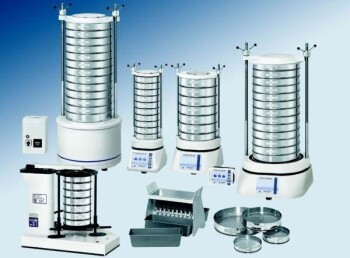
Revolutionizing Lab Efficiency: The Ultimate Guide to Laboratory Sieving Machines
Discover the common sieving methods used in laboratory analysis. Learn about single sieve and sieve set sieving, dry and wet sieving, and other techniques for effective particle separation. Find out how sieving has evolved over time and its importance in quality assurance.

Unlocking the Power of Sieving Machines: Functions, Applications and Maintenance
Discover the significance of sieving machines in various industries and the essential functions they serve. Learn about the the maintenance requirements for optimal performance. Explore the benefits of using sieve shakers for automating the particle separation process.

The Ultimate Guide to the Application and Benefits of Vibratory Sieve Shaker in Laboratory Testing
Discover the extensive application of vibratory sieve shaker in laboratory testing for industries such as food, medicine, chemical, and more. Learn about the benefits of using a sieve shaker.
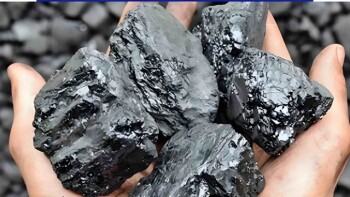
What is a Laboratory Crusher Used For?
Discover the uses and working mechanism of laboratory crushers. Explore various types of crushing equipment and their applications. Learn how laboratory crushers play a crucial role in scientific analysis and environmental studies.

Basic Laboratory Centrifuge Equipment
Overview of different types of centrifuges used in laboratories.

Three-Dimensional Vibrating Sieve: Working Principle and Application Fields
Discover the working principle and application fields of the three-dimensional vibrating screener. Learn how this laboratory equipment uses vibration force to efficiently separate and analyze granular materials. Explore its uses in the pharmaceutical, chemical, and various other industries.

Comprehensive Guide to Handheld Soil Analyzers: Features, Benefits, and Applications
Explore the capabilities of Handheld Soil Analyzers like AXR600, their role in rapid on-site soil screening, and how they minimize analysis costs and time. Ideal for environmental monitoring and remediation.

Comprehensive Guide to Handheld Soil Analyzers: Revolutionizing Soil Testing and Remediation
Explore the capabilities of Handheld Soil Analyzers like AXR600, which offer rapid detection of heavy metals and reduce soil testing costs. Ideal for environmental monitoring and remediation.
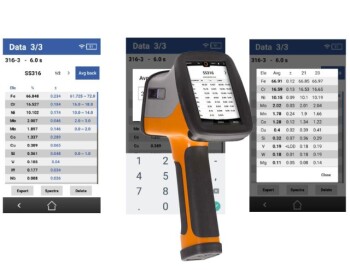
Ultimate Guide to Handheld Alloy Analyzers: Features, Applications, and Advantages
Explore the world of handheld alloy analyzers, their applications in various industries, and the benefits they offer. Discover how these devices provide rapid, accurate, and non-destructive analysis for quality control and material verification.
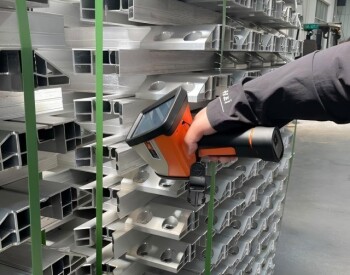
Comprehensive Guide to Handheld Alloy Analyzers: Features, Applications, and Benefits
Explore the advanced features, wide-ranging applications, and significant benefits of handheld alloy analyzers. Learn how these devices revolutionize alloy analysis with fast, accurate, and non-destructive testing methods.
Revolutionizing Quality Control: The Ultimate Guide to Handheld Alloy Analyzers
Explore the advanced features and benefits of handheld alloy analyzers, including fast analysis, real-time data management, and cost-effective solutions for industrial quality control. Discover how these devices can enhance your production processes and ensure 100% quality assurance.