It’s a scenario that plays out in too many advanced labs. You’ve just run a critical heat-treatment cycle on a batch of expensive, precision-machined titanium components. The process parameters were perfect. The atmosphere control was double-checked. Yet, as you inspect the parts, your heart sinks. They aren't strengthened and perfected; they're discolored, brittle, and have failed quality control. Another costly batch is scrapped. Another deadline is in jeopardy.
Does this sound painfully familiar?
Chasing Ghosts: Why Your Usual Fixes Don't Work
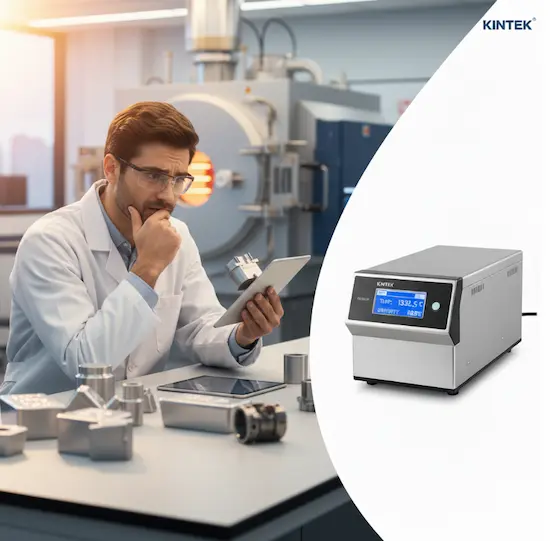
When a heat-treating process goes wrong, the immediate instinct is to blame the process variables. Engineers and technicians launch into a frustrating and expensive cycle of troubleshooting:
- "Maybe the temperature ramped too quickly? Let's recalibrate the pyrometers."
- "Was the nitrogen purge insufficient? Let's increase the gas flow rate."
- "Perhaps there was a vacuum leak? Let's check all the seals again."
Each adjustment is followed by another test run, consuming more time, more energy, and more valuable material. Yet, the results remain inconsistent.
This isn't just a technical headache; it's a significant business problem. The costs multiply with every failed cycle:
- Direct Material Loss: Scrapping high-value alloys like titanium or specialized medical-grade metals is incredibly expensive.
- Project Delays: Unreliable results derail R&D timelines and production schedules, eroding trust with clients and stakeholders.
- Reputational Risk: For components used in critical applications like aerospace or medical implants, inconsistent material properties are not an option. A single failure can be catastrophic.
The frustrating truth is that you can tweak your process parameters forever and never solve the problem. That's because you're treating the symptoms, not the disease. The real saboteur is hiding in plain sight: inside your furnace itself.
Unmasking the Culprit: When Your Furnace Fights Your Materials
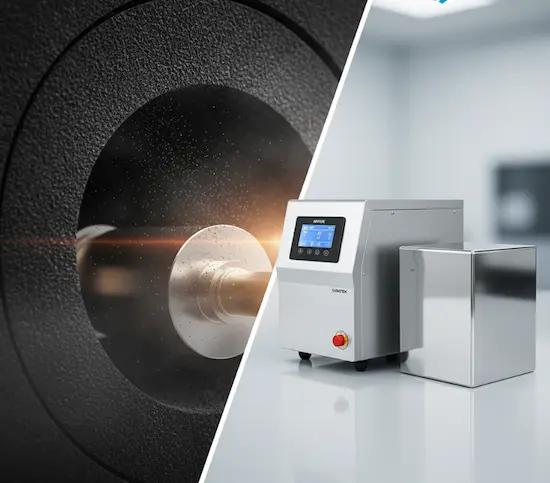
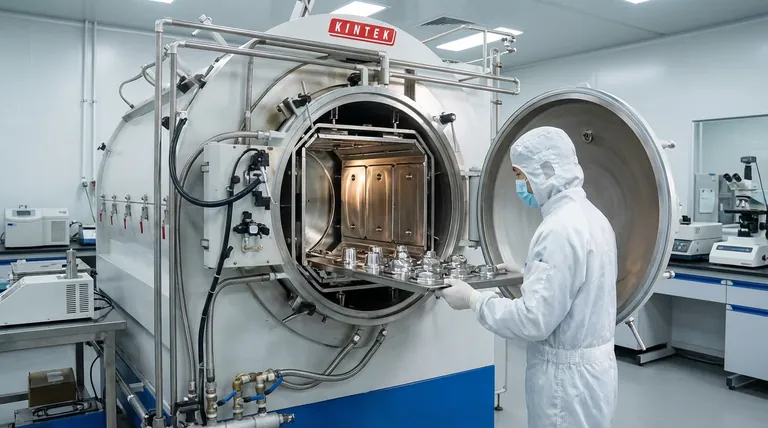
A high-temperature furnace is more than just a hot box. At its heart is the "hot zone"—the internal chamber where the heating elements reside. For many standard furnaces, this hot zone is constructed from graphite.
Graphite is popular for a reason: it's durable, structurally sound at extreme temperatures, and relatively inexpensive. For heat-treating common carbon steels and many non-reactive alloys, it works beautifully.
But here is the critical detail that is often overlooked: At high temperatures, graphite sheds microscopic carbon particles.
For a piece of steel, a little extra carbon isn't a problem. But for reactive metals like titanium and its alloys, this carbon is a poison. The free carbon atoms react with the surface of the titanium, forming titanium carbides. This contamination fundamentally changes the metal's properties, making it brittle and useless for its intended application.
This is the root cause of your failures. You are fighting a battle of chemistry, not process. No amount of temperature or atmosphere adjustment can stop a graphite hot zone from contaminating a reactive metal.
Engineered for Purity: The Refractory Metal Advantage
To solve a problem of chemical contamination, you need a chemically inert solution. You need a furnace environment that is not just hot, but fundamentally pure at its core.
This is precisely why high-purity furnaces are built with hot zones made from refractory metals, such as molybdenum (Moly) or tungsten.
These materials are not chosen by accident. They are selected based on a deep understanding of high-temperature material science:
- Chemical Inertness: Unlike graphite, refractory metals are incredibly stable and do not shed contaminating particles, even at extreme temperatures. They provide a truly clean environment.
- Purity Assurance: They prevent unwanted chemical reactions, ensuring the metallurgical integrity of sensitive materials like titanium, niobium, and other reactive or high-purity alloys.
A furnace with a refractory metal hot zone isn't just another piece of equipment; it is the correct tool for a purity-critical job. It is the physical embodiment of the solution to the contamination problem that plagues so many advanced processes. At KINTEK, we don't just sell furnaces; we provide the specific solution your materials demand, whether that's a cost-effective graphite system for general use or a high-purity refractory metal furnace for your most sensitive applications.
From Fighting Fires to Fueling Innovation
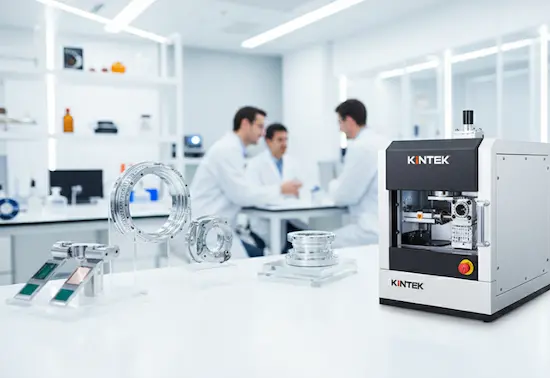
Once you eliminate the constant, nagging problem of material contamination, everything changes. Your team's focus shifts from troubleshooting and damage control to progress and innovation.
With the right furnace matched to your materials, you unlock new potential:
- Achieve Predictable Success: Confidently process advanced alloys for aerospace, medical, and semiconductor applications, knowing your results will be repeatable and reliable.
- Accelerate R&D: Experiment with new materials and push the boundaries of performance without the fear of your equipment sabotaging your research.
- Increase Yield and Reduce Waste: Dramatically cut down on scrapped batches, saving significant costs on materials and energy.
- Build a Reputation for Excellence: Become known for delivering components of the highest quality and reliability, on time and on budget.
Instead of asking "What went wrong this time?", you can start asking "What's possible next?".
Solving tough material science challenges begins with understanding the fundamentals. If you're tired of battling inconsistent results and want to ensure your equipment is an asset, not a liability, our team is here to help. We can dive into the specifics of your projects and help you determine the right tools to move from costly failures to consistent success. To discuss your unique requirements, Contact Our Experts.
Visual Guide

Related Products
- Graphite Vacuum Furnace High Thermal Conductivity Film Graphitization Furnace
- High Temperature Muffle Oven Furnace for Laboratory Debinding and Pre Sintering
- 1700℃ Controlled Atmosphere Furnace Nitrogen Inert Atmosphere Furnace
- Vertical High Temperature Graphite Vacuum Graphitization Furnace
- 1700℃ Muffle Oven Furnace for Laboratory
Related Articles
- Optimizing Performance with Graphite Vacuum Furnaces: A Comprehensive Guide
- Maximizing Efficiency and Precision with Vacuum Graphite Furnaces
- Unveiling Vacuum Graphite Furnaces: Performance, Applications, and Expert Insights
- The Hidden Enemy in Your Furnace: Why Your Heat-Treated Parts Have Scale and Discoloration—And How to Fix It for Good
- Why Your Furnace Experiments Fail: The Hidden Mismatch in Your Lab