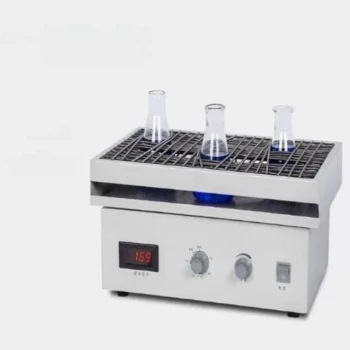
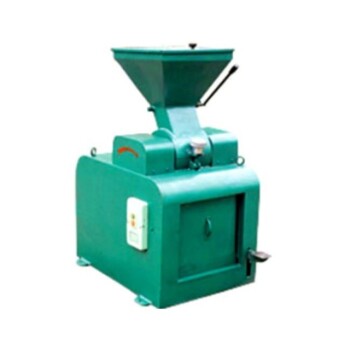
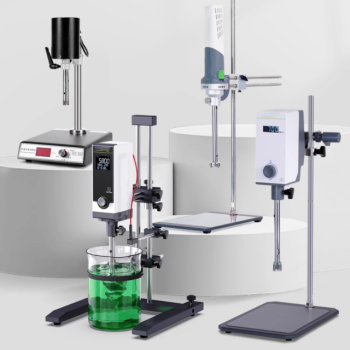
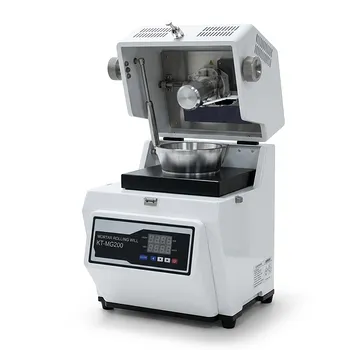
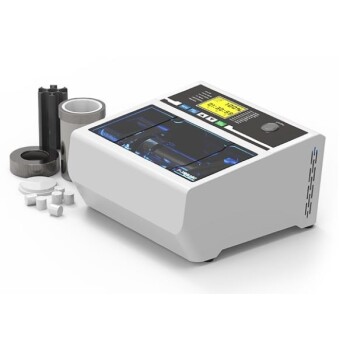
The primary function of a laboratory shaker is to enforce chemical uniformity through continuous agitation. It physically mixes silane monomers, such as APTES and DEDMS, with hydrochloric acid catalysts. This constant oscillation is the critical process step that drives the formation of a homogeneous hybrid organosilicon sol, ensuring the material is properly prepared for application onto aramid fabric.
By maintaining constant motion, the shaker facilitates the full hydrolysis of silane molecules while preventing uneven, localized polymerization. This uniformity is the prerequisite for a coating that delivers reliable hydrophobic protection and mechanical strength.
The Chemistry of Agitation
Facilitating Full Hydrolysis
To create an effective sol, silane monomers must undergo a specific chemical reaction called hydrolysis.
The laboratory shaker ensures that the monomers (APTES and DEDMS) interact comprehensively with the acid catalyst.
Without this continuous mechanical energy, the hydrolysis process may remain incomplete, leading to a chemically unstable mixture.
Preventing Premature Reactions
A major challenge in sol-gel preparation is controlling how molecules link together.
The shaker’s oscillating action prevents uneven localized polymerization, which occurs when molecules react too quickly in concentrated pockets.
By keeping the fluid in motion, the system distributes the reacting agents evenly, stopping clumps or gel particles from forming prematurely.
Impact on Coating Performance
Ensuring Sol Uniformity
The physical quality of the liquid sol directly dictates the quality of the solid coating.
A laboratory shaker creates a uniform sol system, which is essential for applying a consistent layer across the aramid fabric.
If the sol is heterogeneous (unmixed or clumpy), the resulting coating will have weak spots and irregular coverage.
Achieving Hydrophobicity and Strength
The ultimate goal of the coating is to make the fabric water-repellent (hydrophobic) and mechanically durable.
These properties are only possible if the silane network is formed correctly during the shaking process.
A well-agitated sol results in a coating structure that provides stable hydrophobic properties and high mechanical strength.
Common Pitfalls to Avoid
The Risk of Stagnation
If the mixture is allowed to sit without agitation, or if the shaking speed is insufficient, the chemical reaction will be inconsistent.
This leads to "phase separation," where different parts of the mixture react at different rates.
Consequences of Poor Mixing
Failing to use a shaker correctly often results in a coating that peels or fails to repel water.
This is usually due to the presence of large, uneven polymer chains that failed to integrate into the sol network properly.
Optimizing the Sol-Gel Process
To ensure the highest quality coating for aramid fabrics, consider the following regarding the agitation process:
- If your primary focus is Chemical Stability: Ensure the shaker runs for the full duration required to complete the hydrolysis of the APTES and DEDMS monomers.
- If your primary focus is Coating Durability: Prioritize continuous, vigorous oscillation to prevent localized polymerization, which is the main cause of structural weakness in the final film.
Consistent mechanical agitation is the bridge between raw chemical ingredients and a high-performance protective textile.
Summary Table:
| Process Step | Role of Laboratory Shaker | Impact on Final Coating |
|---|---|---|
| Hydrolysis | Ensures complete interaction between silane monomers & catalysts | Prevents chemical instability & incomplete reactions |
| Polymerization | Prevents localized reactions & clumping via continuous motion | Ensures structural integrity & uniform film thickness |
| Homogenization | Maintains a stable, uniform hybrid organosilicon sol system | Delivers reliable hydrophobicity & mechanical strength |
| Application | Eliminates phase separation before fabric coating | Prevents peeling and irregular surface coverage |
Elevate Your Material Research with KINTEK Precision Shakers
Achieving the perfect silane sol requires more than just chemistry—it requires the precise, reliable mechanical agitation that KINTEK laboratory shakers provide. Whether you are developing hydrophobic coatings for aramid fabrics or advanced hybrid materials, our equipment ensures the chemical uniformity and stability your research demands.
Beyond our high-performance shakers and homogenizers, KINTEK specializes in a comprehensive range of laboratory solutions, including:
- High-Temperature Systems: Muffle, tube, vacuum, and CVD furnaces.
- Processing Equipment: Crushing, milling, sieving, and hydraulic presses.
- Reaction Vessels: High-pressure reactors, autoclaves, and electrolytic cells.
- Lab Essentials: ULT freezers, freeze dryers, and high-quality ceramics/crucibles.
Ready to optimize your sol-gel process? Contact KINTEK today to discover how our advanced laboratory equipment can enhance your lab's efficiency and experimental accuracy.
References
- Alicja Nejman, Małgorzata Cieślak. Silver Nanowires and Silanes in Hybrid Functionalization of Aramid Fabrics. DOI: 10.3390/molecules27061952
This article is also based on technical information from Kintek Solution Knowledge Base .
Related Products
- Laboratory Multifunctional Small Speed-Adjustable Horizontal Mechanical Shaker for Lab
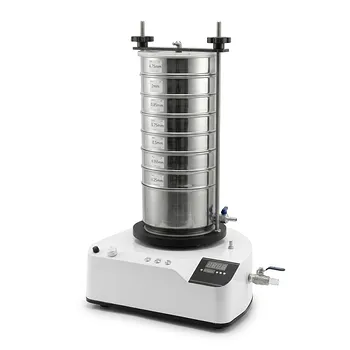
- Laboratory Vibratory Sieve Shaker Machine for Dry and Wet Three-Dimensional Sieving
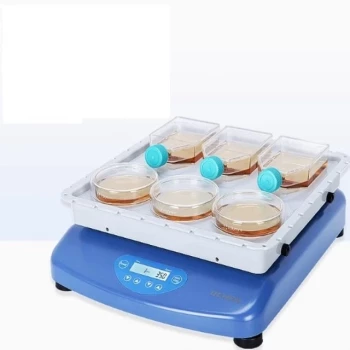
- Laboratory Oscillating Orbital Shaker
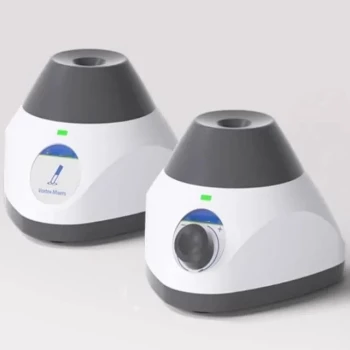
- Laboratory Vortex Mixer Orbital Shaker Multifunctional Rotation Oscillation Mixer
- Shaking Incubators for Diverse Laboratory Applications
People Also Ask
- How do static culture and shaking culture affect the morphology of BC? Optimize Lab Shaker Results
- Why is a laboratory shaker required for continuous 24-hour catalyst treatment? Achieve Deep Uniform Impregnation
- What is the function of a laboratory shaker in evaluating Fe-C@C nanoparticles? Optimize Methylene Blue Adsorption
- How do laboratory shakers or stirrers influence the efficiency of hydrogen production during dark fermentation?
- What is the function of a laboratory shaker during the wet chemical synthesis of Pd/Fe3O4 nanocatalysts?