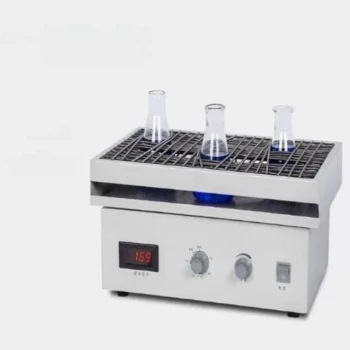
A constant temperature orbital shaker serves as the central control unit for biomass processing, providing the dual requirements of thermal stability and kinetic energy. It functions not just as a heater, but as a mechanical catalyst that uses orbital rotation to maximize contact between enzymes and solid substrates while maintaining the precise temperature required for biological activity.
By simultaneously stabilizing the thermal environment and generating continuous mechanical shear, the shaker eliminates physical barriers to reaction. This ensures uniform nutrient distribution and prevents substrate sedimentation, directly resulting in maximized fermentation rates and ethanol yields.
Optimizing the Reaction Kinetics
Thermal Precision for Enzyme Activity
Enzymatic hydrolysis is a temperature-sensitive process that requires a stable thermal environment to function efficiently. The shaker maintains the reaction at a specific set point—often around 50°C for saccharification or 36-40°C for fermentation—to match the optimal activity point of the enzymes. This precise control prevents temperature fluctuations that could slow down reaction rates or denature the enzymes.
Mechanical Shear and Contact Frequency
The defining feature of this equipment is the mechanical shear generated by its orbital motion. This physical agitation forces liquid enzyme molecules into frequent, high-velocity collisions with solid cellulose substrates. By increasing the contact frequency, the shaker accelerates the breakdown of complex biomass into simple sugars.
Reducing Mass Transfer Resistance
In heterogeneous systems containing both solids (biomass) and liquids (enzymes/solvents), the reaction is often limited by how fast molecules can move to the reaction site. Continuous oscillation effectively reduces this mass transfer resistance. This ensures that the enzyme preparation creates full, thorough contact with the lignocellulose, rather than reacting only with the surface layer.
Maintaining Homogeneity and Yield
Preventing Sedimentation and Inhibition
Without constant motion, solid biomass tends to settle at the bottom of the vessel, and reaction products can accumulate locally. The shaker prevents this precipitation and promotes product desorption (moving the product away from the enzyme). This is critical because high local concentrations of sugars can otherwise inhibit enzyme activity.
Uniform Distribution for Fermentation
During the yeast fermentation stage, the biological needs of the organisms take precedence. The orbital mixing creates a dynamic environment that ensures nutrients and oxygen are evenly distributed throughout the culture. This uniformity is essential for maximizing yeast health, fermentation rates, and the final volumetric yield of ethanol.
Understanding the Operational Trade-offs
Parameter Sensitivity
While the shaker facilitates high efficiency, the process remains highly sensitive to environmental parameters. The benefits of the device are lost if the oscillation frequency is not tuned correctly; too slow results in sedimentation, while incorrect temperatures immediately impact enzyme viability.
Complexity of Heterogeneous Systems
The shaker is designed to manage "heterogeneous" systems (solids mixed with liquids), which are inherently difficult to control. While the shaker reduces resistance, achieving complete degreasing or hydrolysis requires that the agitation speed be matched perfectly to the viscosity and density of the specific biomass slurry being processed.
Making the Right Choice for Your Goal
To maximize the efficiency of your biomass hydrolysis or fermentation project, align your equipment settings with your specific objectives:
- If your primary focus is maximizing reaction speed: Prioritize higher orbital speeds (rpm) to generate sufficient shear force, which minimizes mass transfer resistance and increases enzyme-substrate collisions.
- If your primary focus is experimental reproducibility: Focus on the device's thermal stability specifications to ensure a uniform thermodynamic environment that eliminates temperature-based variables between batches.
- If your primary focus is high ethanol yield: Ensure the agitation is aggressive enough to prevent local solute concentration buildup, which averts enzyme inhibition and maximizes glucose conversion.
The constant temperature orbital shaker is not merely a vessel for holding samples; it is an active participant in the chemical conversion process that dictates the efficiency of your final yield.
Summary Table:
| Feature | Role in Biomass Processing | Impact on Reaction |
|---|---|---|
| Thermal Precision | Maintains stable set points (e.g., 50°C) | Prevents enzyme denaturation & ensures activity |
| Orbital Motion | Generates mechanical shear force | Increases collision frequency between enzymes & substrates |
| Continuous Agitation | Reduces mass transfer resistance | Prevents substrate sedimentation & local inhibition |
| Nutrient Mixing | Homogenizes oxygen & nutrient distribution | Maximizes yeast health & final ethanol volumetric yield |
Elevate Your Biomass Research with KINTEK Precision
Unlock the full potential of your enzymatic hydrolysis and fermentation processes with KINTEK’s high-performance laboratory solutions. From advanced shakers and homogenizers to high-precision high-temperature reactors and autoclaves, we provide the specialized equipment needed to overcome mass transfer resistance and achieve superior yields.
Whether you are focusing on experimental reproducibility or maximizing ethanol production, our comprehensive range of laboratory equipment and consumables is designed to meet the rigorous demands of biomass research.
Ready to optimize your lab's efficiency? Contact KINTEK today to find the perfect solution for your application!
References
- Hanna Hörhammer, Renata Bura. Removal of non-structural components from poplar whole-tree chips to enhance hydrolysis and fermentation performance. DOI: 10.1186/s13068-018-1219-4
This article is also based on technical information from Kintek Solution Knowledge Base .
Related Products
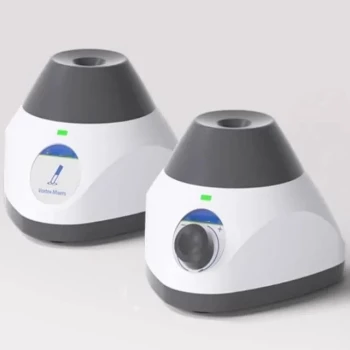
- Laboratory Vortex Mixer Orbital Shaker Multifunctional Rotation Oscillation Mixer
- Laboratory Small Constant Temperature Heated Magnetic Stirrer Heater and Stirrer
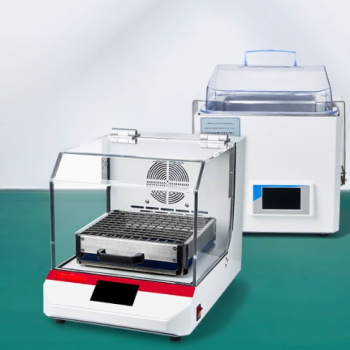
- Shaking Incubators for Diverse Laboratory Applications
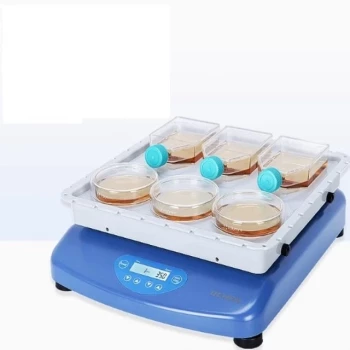
- Laboratory Oscillating Orbital Shaker
- High Temperature Constant Temperature Heating Circulator Water Bath Chiller Circulator for Reaction Bath
People Also Ask
- What is the role of a laboratory orbital shaker in copper recovery? Optimize Industrial Waste Liquid Processing
- What is the role of a laboratory orbital shaker in activated carbon synthesis? Maximize Pore Depth & Surface Area
- What is a laboratory mixer used for? Choose the Right Tool for Liquids or Solids
- What is a laboratory mixer? A Guide to Achieving Perfect Sample Homogeneity
- What are laboratory mixers used for? Achieve Perfect Sample Homogeneity and Reliable Results