In the wet chemical synthesis of Pd/Fe3O4 nanocatalysts, the laboratory shaker serves as the critical mechanism for ensuring uniform reaction kinetics. It utilizes high-frequency mechanical oscillation to induce forced convection, creating an environment where the magnetite support particles and the palladium acetate precursor can interact thoroughly in an aqueous solution.
Core Takeaway The laboratory shaker is not merely a mixing device; it is a tool for controlling particle architecture. By generating consistent forced convection, it accelerates adsorption and prevents nanoparticle clumping, ensuring the final catalyst has a uniform coating and optimal surface area.
The Mechanics of Synthesis
Creating Forced Convection
The primary physical function of the shaker is to generate high-frequency mechanical oscillation. This movement prevents the solid particles within the aqueous solution from settling or adhering to the container walls.
Instead of a static environment, the shaker creates a dynamic state of forced convection. This continuous motion reduces the boundary layer around particles, facilitating the movement of reactants.
Enhancing Precursor Contact
For a composite catalyst to form correctly, the active metal (Palladium) must find the support structure (Magnetite/Fe3O4).
The shaker ensures thorough contact between the magnetite support particles and the palladium acetate precursor. Without this active agitation, the precursor would not distribute evenly through the solution, leading to inconsistent reaction rates.
Impact on Catalyst Quality
Accelerating Adsorption
The synthesis of Pd/Fe3O4 relies on the adsorption of palladium ions onto the magnetite surface.
The shaker’s forced convection significantly accelerates this adsorption reaction. By constantly refreshing the solution in contact with the magnetite surface, the shaker drives the chemical deposition process forward more efficiently than passive diffusion.
Ensuring Uniform Deposition
Catalytic performance is dictated by how evenly the active metal is dispersed.
The mechanical mixing ensures that palladium is evenly deposited across the magnetite surface. This prevents "hot spots" where too much palladium might gather, leaving other areas of the support bare and inactive.
Controlling Particle Agglomeration
In nanotechnology, particle size is everything. Smaller, distinct particles provide more surface area for reactions.
A critical function of the shaker is to prevent excessive agglomeration. If the particles remain static, they tend to clump together due to surface energy. The constant motion keeps the nanoparticles dispersed, preserving their high surface-to-volume ratio.
Understanding the Trade-offs
The Risk of Inadequate Agitation
While the shaker is essential, its effectiveness relies on proper calibration. If the oscillation frequency is too low, the shear forces will be insufficient to overcome particle-to-particle attraction.
This leads to incomplete mixing and localized agglomeration, resulting in a catalyst with poor uniformity and reduced activity.
Mechanical Stress Factors
Conversely, while the primary goal is mixing, one must consider the physical integrity of the support.
In scenarios involving fragile porous supports (though Fe3O4 is generally robust), aggressive oscillation must be balanced to ensure it acts as a mixing agent without causing mechanical attrition or grinding of the support particles, which could alter the desired morphology.
Making the Right Choice for Your Goal
To maximize the efficiency of your nanocatalyst synthesis, align your process parameters with your specific objectives:
- If your primary focus is Reaction Speed: Prioritize high-frequency oscillation to maximize forced convection and accelerate the adsorption of palladium acetate.
- If your primary focus is Particle Size Distribution: Ensure continuous, steady agitation throughout the entire wet chemical reaction to physically prevent the agglomeration of nanoparticles.
The laboratory shaker is the defining variable that transforms a simple mixture into a highly active, uniformly coated nanomaterial.
Summary Table:
| Function | Physical Mechanism | Impact on Catalyst Quality |
|---|---|---|
| Mixing | High-frequency oscillation | Ensures uniform precursor distribution |
| Convection | Forced convection | Accelerates palladium ion adsorption |
| Dispersion | Mechanical shear forces | Prevents particle agglomeration & clumping |
| Deposition | Continuous agitation | Guarantees even coating on magnetite support |
Elevate Your Nanomaterial Synthesis with KINTEK
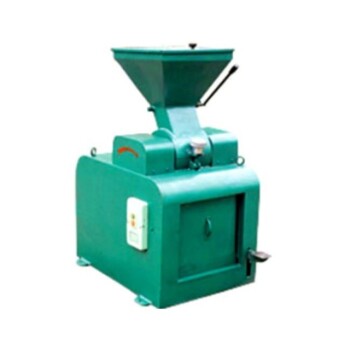
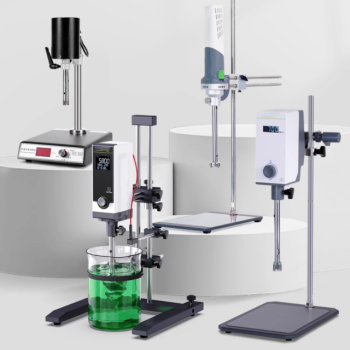
Achieving the perfect catalyst architecture requires precision and consistency. At KINTEK, we specialize in high-performance laboratory equipment designed for rigorous research environments. Whether you are synthesizing complex nanocatalysts like Pd/Fe3O4 or scaling up battery research, our comprehensive range of laboratory shakers, homogenizers, and cooling solutions provides the forced convection and temperature stability you need.
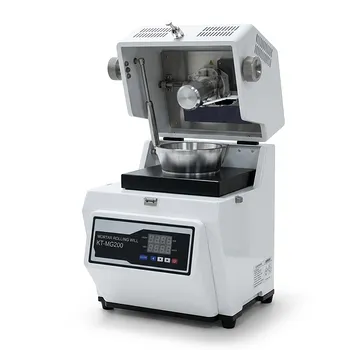
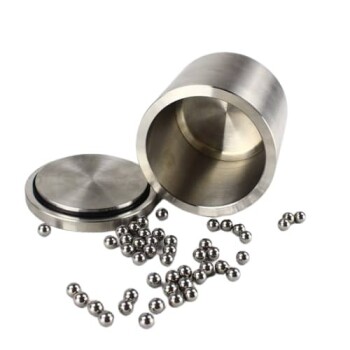
From high-temperature furnaces and vacuum reactors to precision crushing and milling systems, KINTEK delivers the tools that ensure your materials meet the highest standards of uniformity and activity.
Ready to optimize your lab’s efficiency? Contact us today to find the perfect equipment for your synthesis goals!
References
- Heike Hildebrand, Katrin Mackenzie. Novel nano-catalysts for wastewater treatment. DOI: 10.30955/gnj.000507
This article is also based on technical information from Kintek Solution Knowledge Base .
Related Products
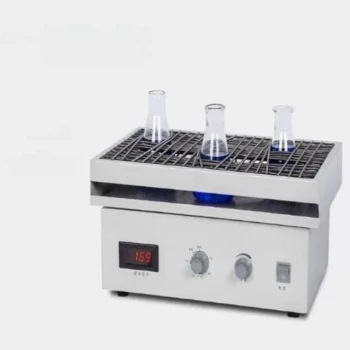
- Laboratory Multifunctional Small Speed-Adjustable Horizontal Mechanical Shaker for Lab
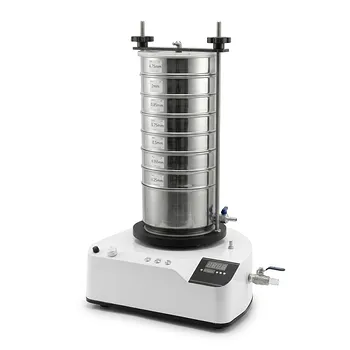
- Laboratory Vibratory Sieve Shaker Machine for Dry and Wet Three-Dimensional Sieving
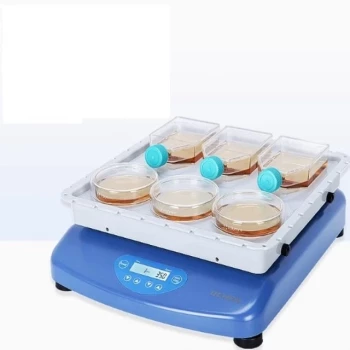
- Laboratory Oscillating Orbital Shaker
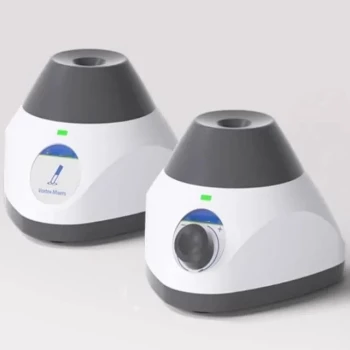
- Laboratory Vortex Mixer Orbital Shaker Multifunctional Rotation Oscillation Mixer
- Shaking Incubators for Diverse Laboratory Applications
People Also Ask
- How do static culture and shaking culture affect the morphology of BC? Optimize Lab Shaker Results
- What is the role of a laboratory shaker in silane sol preparation? Master Uniform Aramid Fabric Coating
- Why is a laboratory shaker required for continuous 24-hour catalyst treatment? Achieve Deep Uniform Impregnation
- What is the function of a laboratory shaker in evaluating Fe-C@C nanoparticles? Optimize Methylene Blue Adsorption
- How do laboratory shakers or stirrers influence the efficiency of hydrogen production during dark fermentation?