Ultrasonic homogenization is the catalyst for molecular precision in silane preparation. It leverages the high-energy cavitation effect to break down molecular aggregates of (3-Aminopropyl)trimethoxysilane (APTMS) within deionized water. This mechanical process creates a highly uniform suspension, which is the essential prerequisite for achieving consistent chemical grafting onto the surfaces of activated porous carbon.
The core value of ultrasonic homogenization lies in its ability to transform a standard mixture into a molecular-level dispersion. By eliminating aggregates, the equipment ensures that APTMS functional groups are distributed evenly, leading to predictable and high-quality carbon modification.
The Mechanism of Ultrasonic Cavitation
Breaking Down Molecular Aggregates
APTMS molecules naturally tend to form aggregates or clusters when introduced to a solvent. Ultrasonic equipment emits high-frequency sound waves that create microscopic vacuum bubbles in the liquid. When these bubbles collapse—a process known as cavitation—they release intense localized energy that shears these clusters apart.
Generating Micro-Jets and High Pressure
The collapse of cavitation bubbles generates micro-jets and extreme localized pressure. These forces are significantly more powerful than traditional mechanical stirring. This high-energy environment ensures that the APTMS is not just "mixed" but is thoroughly dispersed into the deionized water at a foundational level.
Achieving a Uniform Suspension
The result of this process is a highly uniform suspension where the concentration of APTMS is identical throughout the entire volume of the solvent. This uniformity is vital for the next phase of the modification process. Without it, the concentration of silane reaching the carbon surface would be erratic, leading to failed or uneven grafting.
The Impact on Carbon Modification
Facilitating Consistent Grafting
For carbon modification, functional groups must attach to the surface of activated porous carbon. If the APTMS solution contains aggregates, the grafting will be "clumpy" and inefficient. Ultrasonic homogenization ensures that every available pore and surface site has equal access to individual APTMS molecules for consistent bonding.
Ensuring Molecular-Level Contact
By achieving a state of molecular-level dispersion, the equipment allows for maximum contact between the silane agent and the carbon precursor. This mirrors processes seen in biomass processing, where thorough mixing is required for subsequently added chemical sources to react effectively. This contact is the primary driver of chemical efficiency in the modification.
Promoting Thorough Chelation and Doping
In more complex carbon structures, such as 3D-skeletal frameworks, uniform dispersion is essential for chelation. When precursors are dispersed at the molecular level, they can form the necessary chemical bonds to establish a stable, three-dimensional structure. This ensures that any subsequent doping or modification is structurally sound.
Understanding the Trade-offs and Limitations
Thermal Management Challenges
The high energy produced by cavitation inevitably generates heat within the solution. APTMS and other silanes can be sensitive to temperature, which may trigger premature hydrolysis or unwanted polymerization. It is often necessary to use cooling jackets or pulsed sonication to maintain a stable temperature during the process.
Risk of Over-Processing
While high energy is required to break aggregates, excessive sonication can potentially degrade certain organic precursors. Finding the "sweet spot" between enough energy to disperse and too much energy that causes molecular damage is a critical calibration step.
Equipment Maintenance and Erosion
The intense pressure of cavitation can cause tip erosion on the ultrasonic probe over time. As the probe wears down, it may shed microscopic metallic particles into the APTMS solution. Regular inspection and maintenance are required to ensure the purity of the modified carbon remains high.
How to Apply This to Your Project
When integrating ultrasonic homogenization into your APTMS preparation workflow, your approach should be dictated by your specific material requirements.
- If your primary focus is maximum grafting density: Utilize high-amplitude sonication with active cooling to ensure the complete elimination of aggregates without overheating the silane.
- If your primary focus is structural integrity of the carbon: Use lower-intensity, longer-duration ultrasonic cycles to achieve dispersion while minimizing the risk of mechanical damage to delicate porous structures.
- If your primary focus is batch-to-batch consistency: Standardize the sonication time and energy output (Joules) rather than relying on visual clarity alone.
By mastering the cavitation effect, you transition silane preparation from a variable chemical task into a controlled, high-precision engineering process.
Summary Table:
| Feature | Mechanism | Impact on Modification |
|---|---|---|
| Aggregate Breakup | Cavitation-induced shear forces | Creates a uniform molecular-level suspension |
| Mixing Energy | Micro-jets & localized high pressure | Ensures thorough dispersion vs. standard stirring |
| Grafting Quality | Molecular-level surface contact | Facilitates consistent, non-clumpy chemical bonding |
| Thermal Stability | Pulsed sonication/Cooling jackets | Prevents premature hydrolysis or polymerization |
Elevate Your Material Research with KINTEK Precision
Achieving perfect APTMS dispersion is the foundation of high-quality carbon modification. KINTEK specializes in advanced laboratory equipment designed to give you total control over your chemical processes.
Whether you need high-performance ultrasonic homogenizers to master cavitation, cooling solutions (chillers and cold traps) to manage thermal sensitivity, or essential PTFE and ceramic consumables for high-purity results, we have the comprehensive range to support your lab. Our portfolio also extends to high-temperature furnaces, hydraulic presses, and battery research tools, ensuring you have the right technology for every stage of material development.
Ready to optimize your silane preparation and grafting efficiency?
Contact a KINTEK Specialist Today
References
- Siqi Lv, Zichuan Ma. Removal of Hexamethyldisiloxane via a Novel Hydrophobic (3–Aminopropyl)Trimethoxysilane-Modified Activated Porous Carbon. DOI: 10.3390/molecules28186493
This article is also based on technical information from Kintek Solution Knowledge Base .
Related Products
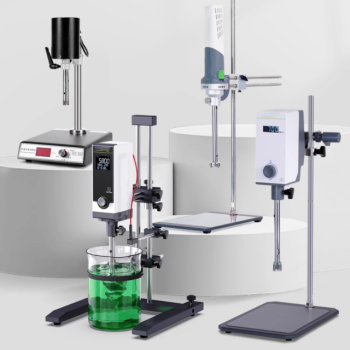
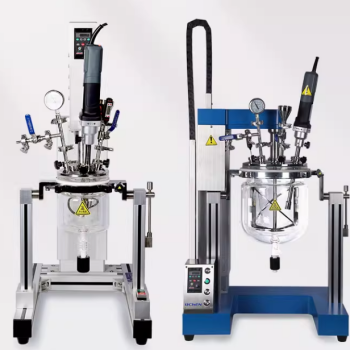
- High Shear Homogenizer for Pharmaceutical and Cosmetic Applications
- High Performance Lab Homogenizer for Pharma Cosmetics and Food R&D
- Lab Sterile Slapping Type Homogenizer for Tissue Mashing and Dispersing
- Laboratory High Throughput Tissue Grinding Mill Grinder
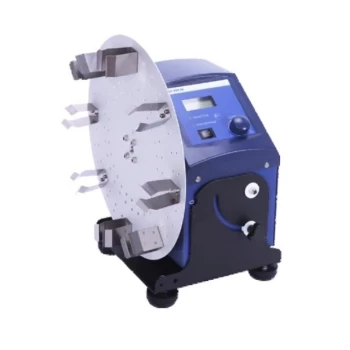
- Laboratory Disc Rotary Mixer for Efficient Sample Mixing and Homogenization
People Also Ask
- Why Use a High Shear Homogenizer for Cathode Slurries? Optimize Double-Layer Solid-State Battery Production
- What is the function of high-shear dispersion equipment in corona-resistant nanocomposites? Elevate Your Insulation
- What is the necessity of using an industrial-grade high-shear homogenizer for biomass washing? Ensure Process Efficiency
- What are the advantages of using a high-shear homogenizer for BED/GMA coatings? Achieve Superior Nano-Dispersion
- What role does a high-shear homogenizer play in ODC catalyst suspensions? Unlock Superior Electrochemical Efficiency