A laboratory analytical balance acts as the primary data collection tool for monitoring moisture ingress in concrete studies. It is utilized to measure the precise mass changes of recycled concrete specimens at strictly defined time intervals, providing the raw data needed to track water penetration.
By recording water absorption over time, researchers can derive the capillary water absorption coefficient ($k$). This metric is critical for plotting absorption curves that scientifically evaluate how different bioproducts or additives influence the durability and pore structure of recycled concrete.
The Mechanics of Kinetic Measurement
Tracking Mass Changes Over Time
The fundamental role of the analytical balance is to capture specific data points across a timeline.
Researchers weigh the concrete specimens repeatedly at specified intervals.
This process transforms a static material test into a dynamic kinetic study, revealing how quickly the material interacts with moisture.
Plotting the Absorption Curve
The raw mass data is used to generate capillary water absorption curves.
These visual representations map the total amount of water absorbed against time (often the square root of time).
The accuracy of the balance directly dictates the smoothness and reliability of this curve, which is essential for identifying the distinct phases of absorption.
Deriving Material Insights
Calculating the Coefficient ($k$)
The ultimate analytical goal is to determine the capillary water absorption coefficient ($k$).
This value is calculated based on the slope of the absorption curve generated from the balance's readings.
It provides a standardized metric that quantifies the rate at which the concrete transports water through its capillary network.
Evaluating Durability and Bioproducts
The data obtained is not just about water; it is a proxy for durability.
By comparing the $k$ values of different samples, researchers can scientifically assess the contribution of specific bioproducts.
A lower absorption coefficient typically indicates a denser structure and higher resistance to environmental degradation, validating the efficacy of the recycled mix.
Understanding the Trade-offs
Sensitivity vs. Stability
The primary strength of a high-precision analytical balance is its ability to detect minute changes in mass.
However, this high sensitivity makes the measurement process vulnerable to environmental factors like air currents or vibrations.
To ensure accurate kinetic data, the environment must be controlled, and specimens must be handled with extreme consistency to avoid introducing errors into the $k$ calculation.
Discrete Intervals vs. Continuous Data
The balance provides data at discrete time intervals, not continuously.
While effective, this method requires rigorous adherence to the schedule.
Missing a specific weigh-in time can distort the absorption curve, potentially skewing the calculation of the absorption coefficient.
Making the Right Choice for Your Research
To effectively utilize an analytical balance for capillary absorption studies, consider your specific analytical goals:
- If your primary focus is determining material durability: Prioritize the accuracy of the capillary water absorption coefficient ($k$) calculation to objectively compare different concrete mixes.
- If your primary focus is evaluating new additives: Use the balance to plot comparative absorption curves, looking for shifts in the rate of uptake that indicate how the bioproduct has altered the pore structure.
Precision in weighing is the prerequisite for precision in understanding concrete longevity.
Summary Table:
| Metric | Role of Analytical Balance | Scientific Value |
|---|---|---|
| Mass Change (Δm) | Captures precise weight gain at set intervals | Primary raw data for kinetic tracking |
| Absorption Curve | Provides data points for plotting (Mass vs. √Time) | Visualizes moisture ingress phases |
| Coefficient (k) | Derived from the slope of the absorption curve | Quantifies material transport rate |
| Durability Assessment | Compares absorption rates across samples | Evaluates pore structure & additive efficacy |
Elevate Your Material Research with KINTEK Precision
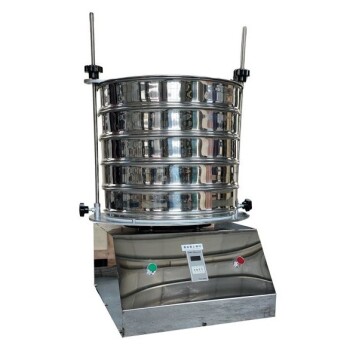
Precise kinetic studies demand more than just a measurement—they require absolute accuracy. KINTEK provides high-performance laboratory equipment designed for the rigorous demands of material science. Whether you are studying recycled concrete durability or developing innovative bioproducts, our range of analytical balances, crushing and milling systems, and sieving equipment ensures your raw data is flawless.
From high-temperature furnaces for specimen preparation to advanced analytical tools for moisture tracking, KINTEK is your partner in laboratory excellence. Contact us today to optimize your research workflow and find the perfect equipment solutions for your specific application.
References
- Lorena Serrano-González, Andrés Juan-Valdés. Use of Bioproducts Derived from Mixed Microbial Cultures Grown with Crude Glycerol to Protect Recycled Concrete Surfaces. DOI: 10.3390/ma14082057
This article is also based on technical information from Kintek Solution Knowledge Base .
Related Products
- Reference Electrode Calomel Silver Chloride Mercury Sulfate for Laboratory Use
- Multifunctional Electrolytic Electrochemical Cell Water Bath Single Layer Double Layer
- Laboratory Oscillating Orbital Shaker
- Cylindrical Press Mold with Scale for Lab
- Optical Water Bath Electrolytic Electrochemical Cell
People Also Ask
- What is the function of a reference electrode? Master Precision in Three-Electrode Reactor Reconstruction
- What is the recommended maintenance for the filling solution of a reference electrode? A Guide to Stable & Accurate Readings
- Which electrode is used as a ground reference? Master the Key to Accurate Electrochemical Measurements
- What is the reference electrode in potentiometry? The Key to Stable & Accurate Measurements
- Which electrode is used as a reference? A Guide to Accurate Electrochemical Measurements