Beyond standard heating capabilities, water baths can be equipped with three primary additional systems: external circulating systems, shaking mechanisms, and ultrasonic generators. These integrated systems evolve the equipment from a passive heating vessel into an active tool for dynamic laboratory applications.
While a basic bath maintains temperature, specialized systems are required when your protocols demand high-precision uniformity, continuous sample agitation, or sonic energy for cleaning and processing.
Expanding Functionality with Specialized Systems
To select the right equipment, you must understand how these three specific systems alter the function of the bath.
External Circulating Systems
These systems are designed to actively pump fluid throughout the bath chamber.
By creating constant movement, they eliminate thermal gradients (hot or cold spots). This ensures that the water temperature is perfectly uniform across the entire bath, which is critical for highly sensitive experiments.
Shaking Water Baths
Shaking baths incorporate a mechanical platform that moves samples physically within the heated water.
This system provides continuous agitation and mixing while maintaining a controlled thermal environment. This functionality is essential for applications like cell culturing, hybridization, and solubility studies where static incubation is insufficient.
Ultrasonic Baths
These units utilize high-frequency sound waves to transmit energy through the water.
This process, often called sonication, creates microscopic bubbles that implode (cavitation). This is primarily used for the vigorous cleaning of labware, but it is also a powerful method for degassing liquids or disrupting biological cells.
Understanding the Trade-offs
While these additional systems add value, they also introduce complexity.
Maintenance requirements increase with the addition of moving mechanical parts found in shaking and circulating systems. These components are points of failure that standard static baths do not have.
Additionally, ultrasonic baths generate heat as a byproduct of the sonic energy. If you are processing temperature-sensitive samples in an ultrasonic unit, you must monitor the temperature closely to prevent overheating.
Making the Right Choice for Your Goal
Select the system that directly addresses the limiting factor in your current workflow.
- If your primary focus is thermal precision: Choose an external circulating system to guarantee temperature uniformity across the entire bath.
- If your primary focus is biological agitation: Choose a shaking water bath to ensure constant mixing during incubation periods.
- If your primary focus is equipment prep or cell lysis: Choose an ultrasonic bath for its ability to clean surfaces or disrupt cellular membranes.
Match the specific system to your application's "Deep Need" to ensure valid, reproducible results.
Summary Table:
| System Type | Core Function | Primary Benefit | Key Application |
|---|---|---|---|
| External Circulating | Active fluid pumping | Eliminates thermal gradients | High-precision thermal experiments |
| Shaking Mechanism | Mechanical agitation | Continuous sample mixing | Cell culturing & solubility studies |
| Ultrasonic Generator | High-frequency sound | Cavitation & energy transfer | Labware cleaning & cell lysis |
Upgrade Your Lab's Thermal Precision with KINTEK
Maximize your research potential with KINTEK’s advanced laboratory solutions. Whether you require high-precision water baths, cooling solutions (ULT freezers, cold traps), or homogenizers, we provide the specialized equipment needed for reliable and reproducible results. From high-temperature furnaces to crushing and milling systems, our comprehensive portfolio is designed to meet the rigorous demands of modern laboratories and industrial research.
Ready to optimize your workflow? Contact KINTEK today to consult with our experts and find the perfect system for your specific application.
Related Products
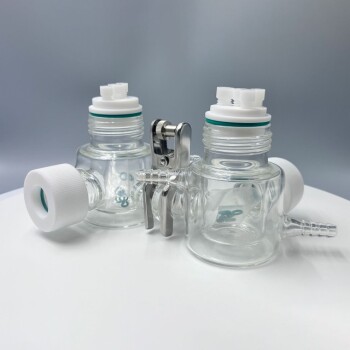
- Multifunctional Electrolytic Electrochemical Cell Water Bath Single Layer Double Layer
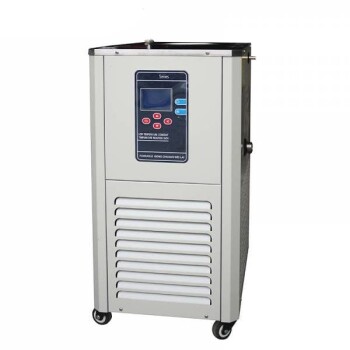
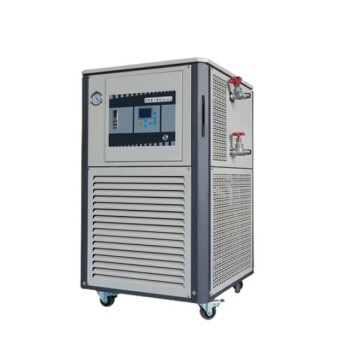
- 50L Chiller Water Bath Cooling Circulator Low Temperature Constant Temperature Reaction Bath
- Optical Water Bath Electrolytic Electrochemical Cell
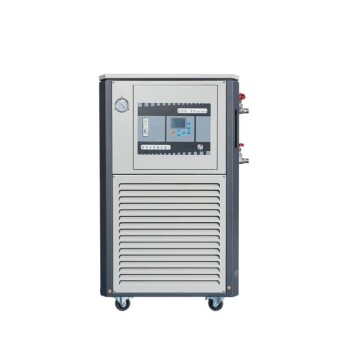
- 10L Chilling Circulator Cooling Water Bath Low Temperature Constant Temperature Reaction Bath
- Double Layer Five-Port Water Bath Electrolytic Electrochemical Cell
People Also Ask
- What does the routine maintenance of a double-layer water-bath electrolytic cell involve? A Guide to Ensuring Precision and Longevity
- When is professional repair required for a double-layer water-bath electrolytic cell? Protect Your Lab's Precision and Safety
- What are the key features of a double-layer water-bath electrolytic cell? Achieve Precise Temperature Control for Your Experiments
- What are the procedures for after using a double-layer water-bath electrolytic cell? Ensure Equipment Longevity and Data Accuracy
- What is the typical experimental system used with a double-layer water-bath electrolytic cell? Achieve Precise Electrochemical Control