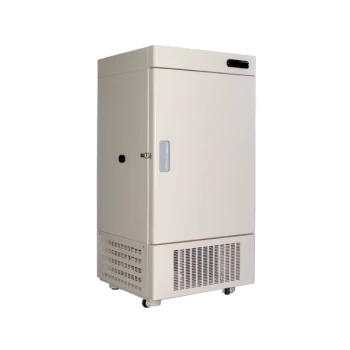
Vacuum freeze drying is the superior method for processing $\text{Bi}_2\text{Se}_3/\text{Bi}$ precursor powders. By removing water and residual ethanol through sublimation under low-temperature vacuum conditions, this technique prevents the agglomeration of nanoparticles and the collapse of delicate microstructures. This specific process is critical for preserving the unique "flower-like" or "bouquet-like" morphologies that enable the formation of high-efficiency heterojunctions.
Core Takeaway: Unlike traditional thermal drying, vacuum freeze drying bypasses the liquid phase to eliminate capillary-induced structural collapse. This ensures the $\text{Bi}_2\text{Se}_3/\text{Bi}$ precursors maintain the high specific surface area and complex architectures necessary for peak material performance.
Preservation of Complex Micro-Nanostructures
Eliminating Capillary Pressure
Traditional drying involves the evaporation of liquid solvents, which creates significant surface tension and capillary pressure. This pressure often causes delicate nanopores to collapse and forces particles to fuse together into hard aggregates.
Vacuum freeze drying utilizes sublimation, where ice turns directly into gas. This process avoids the liquid phase entirely, ensuring the original porous morphology and "flower-like" structures remain intact.
Maintaining High Specific Surface Area
For $\text{Bi}_2\text{Se}_3/\text{Bi}$ precursors, the effectiveness of the resulting heterojunction depends on a high specific surface area.
By preventing structural shrinkage, freeze drying ensures that more active sites remain exposed. This is vital for materials intended for catalytic or electrochemical applications where surface contact is a primary driver of efficiency.
Physicochemical Integrity and Quality
Prevention of Nanoparticle Agglomeration
In traditional heating methods, the migration of solvents can carry active components with them, leading to agglomeration. Freeze drying locks the components in place within a frozen matrix before removing the solvent.
This "locking" effect preserves the original particle size and ensures a loose, dispersible powder. For $\text{Bi}_2\text{Se}_3/\text{Bi}$ precursors, this translates to better sintering activity and more uniform material distribution.
Protection Against Oxidation
Vacuum freeze dryers operate in an oxygen-free environment. This is a critical advantage for bismuth-based precursors, which can be sensitive to high-temperature oxidation or atmospheric degradation.
Drying occurs at significantly lower temperatures than conventional ovens. This protects the material from thermal shrinkage or unwanted phase changes that could alter its chemical properties.
Operational and Environmental Efficiency
Significant Speed and Energy Gains
Laboratory freeze dryers can be 3 to 10 times faster than conventional vacuum drying ovens. Despite the sophisticated vacuum requirements, they often consume 2 to 3 times less energy during the drying cycle.
The process is particularly efficient in the low-temperature range of 0°C to 50°C. This allows for high-throughput processing without sacrificing the quality of the delicate precursor powders.
Organic Solvent Recycling
The vacuum freeze-drying system is capable of recycling organic solvents like ethanol. This reduces the overall cost of production and minimizes the environmental footprint of the manufacturing process.
Understanding the Trade-offs
Equipment Complexity and Cost
While the operational energy use is lower, the initial capital investment for a vacuum freeze dryer is significantly higher than for a standard drying oven. The systems require specialized vacuum pumps and condenser units that necessitate regular maintenance.
Scalability Constraints
Freeze drying is often a batch process, which can be more difficult to scale for massive industrial throughput compared to continuous-flow thermal dryers. However, for high-value technical ceramics and nanomaterials like $\text{Bi}_2\text{Se}_3/\text{Bi}$, the performance gains usually outweigh these logistical hurdles.
How to Apply This to Your Project
Recommendations Based on Your Objectives
- If your primary focus is maximizing heterojunction efficiency: Use vacuum freeze drying to ensure the "flower-like" microstructures are fully preserved for optimal contact.
- If your primary focus is preventing material oxidation: Prioritize vacuum freeze drying for its oxygen-free, low-temperature environment to maintain chemical purity.
- If your primary focus is cost-effective lab-scale production: Consider vacuum freeze drying for its ability to recycle solvents and its superior drying speed compared to traditional vacuum ovens.
- If your primary focus is simple, bulk moisture removal of non-sensitive materials: A standard vacuum drying oven may be sufficient, though you will lose the delicate morphology of the $\text{Bi}_2\text{Se}_3/\text{Bi}$ precursors.
By choosing vacuum freeze drying, you ensure that the sophisticated architectural design of your $\text{Bi}_2\text{Se}_3/\text{Bi}$ precursors is translated directly into the final high-performance material.
Summary Table:
| Feature | Vacuum Freeze Drying | Traditional Thermal Drying |
|---|---|---|
| Mechanism | Sublimation (Ice to Gas) | Evaporation (Liquid to Gas) |
| Morphology | Preserves "flower-like" structures | Capillary pressure causes collapse |
| Particle Quality | Loose, dispersible powder | Hard aggregates and fusion |
| Oxidation Protection | High (Vacuum & low temperature) | Low (Heat-induced oxidation risk) |
| Energy & Speed | 3-10x faster; 2-3x lower energy | Slower; higher energy consumption |
Elevate Your Material Research with KINTEK
Maximize the potential of your Bi2Se3/Bi precursors by ensuring structural integrity and chemical purity. KINTEK specializes in high-performance laboratory equipment tailored for advanced material science. Our range of vacuum freeze dryers, cold traps, and freeze dryers provides the precise low-temperature environment needed to prevent nanoparticle agglomeration and structural collapse.
Beyond drying solutions, KINTEK offers a comprehensive portfolio including:
- High-temperature furnaces (muffle, vacuum, and atmosphere) for precise sintering.
- High-pressure reactors and autoclaves for advanced synthesis.
- Crushing, milling, and hydraulic presses for superior powder preparation.
- Electrolytic cells and battery research tools for electrochemical testing.
Don't let traditional drying methods compromise your results. Contact KINTEK today to discuss your specific application and find the ideal equipment to accelerate your breakthroughs.
References
- Juncheng Han, Dongbo Wang. Construction of Bouquet-like Bi2Se3/Bi2O3@Bi Composites with High Interfacial Charge Separation for the Degradation of Atrazine. DOI: 10.3390/ma16051896
This article is also based on technical information from Kintek Solution Knowledge Base .
Related Products
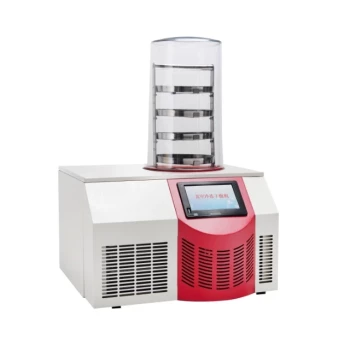
- Benchtop Laboratory Vacuum Freeze Dryer
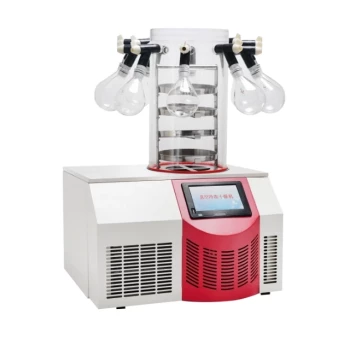
- High Performance Laboratory Freeze Dryer
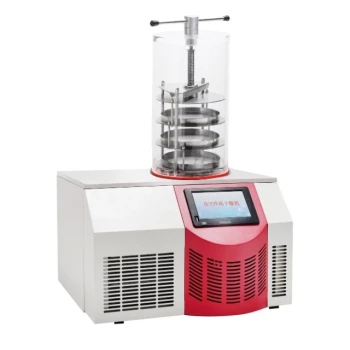
- High Performance Laboratory Freeze Dryer for Research and Development
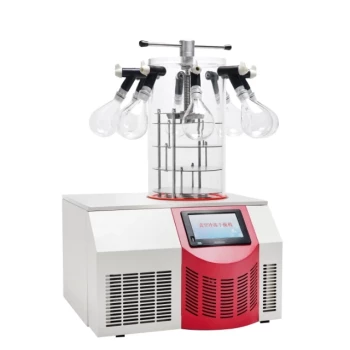
- Benchtop Laboratory Freeze Dryer for Lab Use
- 56L Vertical Laboratory Vacuum Drying Oven
People Also Ask
- What are the technical advantages of using a laboratory freeze dryer for porous carbon precursors? Preserve 3D Networks
- How do laboratory freeze dryers support scientific research? Preserve Sample Integrity for Reproducible Results
- Why is a laboratory freeze dryer preferred over traditional heating? Preserve Biochar Structure & Maximize Porosity
- What types of liquid samples can be processed using a laboratory freeze dryer? Preserve Your Sensitive Materials
- What role do laboratory freeze dryers play in the food industry? Unlock Superior Food Preservation