Three-dimensional nickel foam provides a transformative architecture for high-performance electrolysis. Unlike planar substrates, 3D nickel foam offers a high specific surface area and an open porous structure that minimizes bubble masking and mass transfer resistance. This enables stable operation at extreme current densities—often exceeding 1,000 mA/cm²—by facilitating rapid gas evacuation and providing an expansive framework for catalyst loading in water or urea electrolysis.
Nickel foam's 3D topography outperforms planar substrates by combining superior electronic conductivity with a macro-porous network that optimizes both gas-liquid dynamics and catalyst utilization. It is the gold standard for scaling electrolysis to industrial-level current densities where bubble management and surface area are the primary physical bottlenecks.
Maximizing Catalyst Utilization and Loading
The Benefit of High Specific Surface Area
Nickel foam provides a significantly larger geometric area than flat plates, allowing for a much higher density of active sites. This ensures that catalysts are not just present, but are distributed across a structure that maximizes contact with the electrolyte.
Lowering Local Current Density
By spreading the electrochemical reaction over a larger three-dimensional space, nickel foam lowers the local current density. This reduction directly translates to a lower overpotential, which improves the overall energy efficiency of the hydrogen or oxygen evolution reactions.
Facilitating Rapid Electron Transport
The continuous metallic framework of nickel foam ensures rapid electron transport throughout the entire volume of the electrode. This effectively reduces the equivalent series resistance (ESR) and ensures high-speed electron transfer between the active material and the external circuit.
Overcoming Mass Transfer and Bubble Bottlenecks
Mitigating the Bubble Masking Effect
In high-current electrolysis, gas bubbles (hydrogen, oxygen, or nitrogen) can cling to planar surfaces, "masking" active sites and increasing electrical resistance. The open-pore structure of nickel foam facilitates the rapid detachment and upward movement of these bubbles, preventing them from blocking the catalyst.
Enhancing Electrolyte Penetration
The interconnected pores act as micro-channels that allow the electrolyte to penetrate deep into the electrode. This constant refresh of reactants at the catalyst surface maintains high reaction rates and prevents the "starvation" of active sites during intense operation.
Reducing Mass Transfer Resistance
The 3D morphology significantly reduces the resistance to mass transfer by providing shorter diffusion paths for ions. This structural advantage ensures that the system remains efficient even when operating at high current densities where planar electrodes typically fail due to diffusion limits.
Understanding the Trade-offs
Challenges in Catalyst Coating Uniformity
While the 3D structure allows for high loading, ensuring a uniform coating of catalysts throughout the deep inner pores can be technically challenging. Variations in coating thickness can lead to uneven current distribution and may cause localized degradation over time if not managed during the manufacturing process.
Increased Engineering Complexity
Predicting fluid dynamics within a complex 3D matrix is more difficult than with simple planar surfaces. This requires more sophisticated system modeling to optimize flow rates and ensure that stagnant zones do not form within the foam structure during continuous operation.
Potential for Higher Initial Cost
Compared to simple nickel mesh or plates, high-quality industrial-grade nickel foam may carry a higher production cost. However, this is typically offset by the significantly improved production rates and lower energy consumption achieved at high current densities.
Strategic Implementation of 3D Nickel Foam
To leverage the full potential of 3D nickel foam, the application must align with the specific operational constraints of your electrochemical project.
- If your primary focus is industrial-scale throughput: Prioritize nickel foam to manage bubble evacuation and maintain stability at current densities exceeding 1000 mA/cm².
- If your primary focus is minimizing energy overhead: Use the 3D architecture to lower overpotentials by distributing the reaction across its vast internal surface area.
- If your primary focus is catalyst longevity: Select foam substrates to prevent localized hotspots and mechanical stress caused by gas entrapment and high local currents.
By transitioning from planar to three-dimensional architectures, engineers can effectively bypass the physical limitations of gas evolution, unlocking the true potential of high-density electrochemical systems.
Summary Table:
| Feature | Advantage for Electrolysis |
|---|---|
| 3D Porous Network | Facilitates rapid gas bubble evacuation and minimizes masking effects. |
| High Specific Surface Area | Maximizes catalyst loading and increases the density of active reaction sites. |
| Metallic Framework | Ensures rapid electron transport and low equivalent series resistance (ESR). |
| Interconnected Pores | Enhances electrolyte penetration and reduces mass transfer resistance. |
| Macro-porous Topography | Lowers local current density, reducing overpotential and energy consumption. |
Elevate Your Electrochemical Research with KINTEK
Ready to transition from planar substrates to high-performance 3D nickel foam? At KINTEK, we specialize in providing cutting-edge laboratory equipment and consumables tailored for high-demand applications. Whether you are scaling industrial water electrolysis or advancing battery research, our premium electrolytic cells, high-purity electrodes, and specialized consumables ensure stability even at extreme current densities.
Our extensive portfolio includes:
- Electrolysis & Battery Tools: Advanced cells, electrodes, and research consumables.
- Thermal Processing: High-temperature muffle, vacuum, and CVD furnaces.
- Sample Preparation: Precision hydraulic presses, crushing, and milling systems.
- Laboratory Essentials: PTFE products, ceramics, and high-durability crucibles.
Maximize your lab's efficiency and unlock superior gas-liquid dynamics. Contact our specialists today to find the perfect electrode solutions for your project!
References
- Liling Liao, Yu Fang. Multi-site trifunctional hydrangea-like electrocatalysts for efficient industrial-level water/urea electrolysis with current density exceeding 1000 mA cm−2. DOI: 10.1007/s40843-023-2544-5
This article is also based on technical information from Kintek Solution Knowledge Base .
Related Products
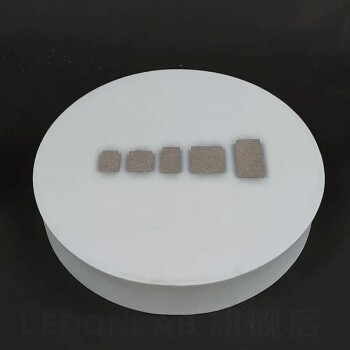
- Copper Nickel Foam Metal Sheet
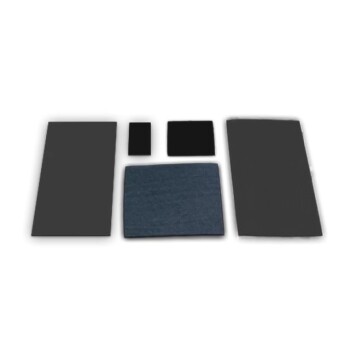
- Conductive Carbon Cloth Carbon Paper Carbon Felt for Electrodes and Batteries
- Nickel Foam for Industrial and Laboratory Applications
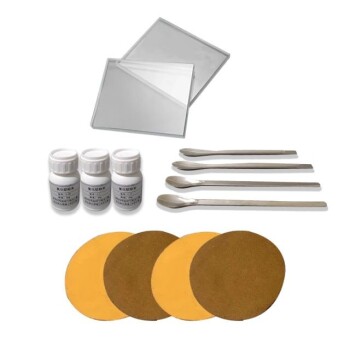
- Electrode Polishing Material for Electrochemical Experiments
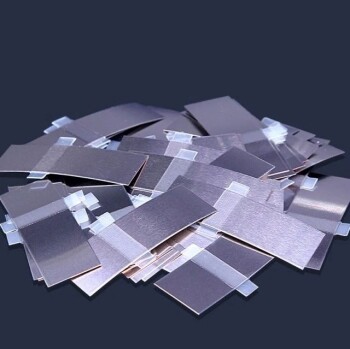
- Nickel Aluminum Tabs for Soft Pack Lithium Batteries
People Also Ask
- What electrostatic protection measures should be taken when using nickel and copper foam? Essential ESD Safety Protocols
- How should nickel or copper foam be handled during an experiment? Protect Your Sample's Critical Porous Structure
- In which fields is nickel foam widely used? A Key Material for Advanced Engineering
- What procedures should be followed after using nickel or copper foam? A Guide to Reliable Reuse and Performance
- What is nickel foam used for? A Guide to Its Electrochemical Applications