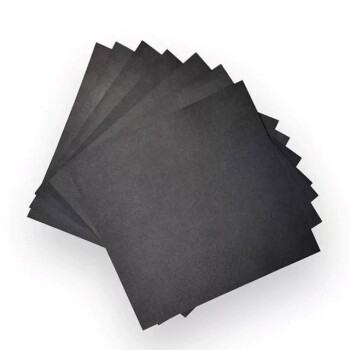
Hydrophobically treated carbon paper or carbon cloth functions as the structural and functional foundation of the air cathode in flexible zinc-air batteries. Its primary role is to establish a stable gas-liquid-solid three-phase interface, where it simultaneously facilitates rapid oxygen diffusion, enables efficient electron transfer, and prevents electrolyte leakage.
The core function of these carbon substrates is to act as a selectively permeable current collector that allows oxygen to enter the battery while keeping the liquid electrolyte contained, even under mechanical stress.
Engineering the Triple-Phase Interface
Facilitating Oxygen Diffusion
The porous structure of carbon paper and cloth is engineered to allow ambient oxygen to move freely from the air to the catalyst sites. This high porosity ensures that the reduction reaction is not limited by a lack of reactants during high-discharge scenarios.
Enabling Electron Transfer
As a highly conductive material, the carbon substrate serves as the primary current collector for the air electrode. It efficiently gathers electrons from the external circuit and delivers them to the catalytic sites where the oxygen reduction reaction (ORR) occurs.
Supporting Catalyst Loading
The three-dimensional fiber structure provides a high surface area that acts as a robust carrier for catalysts, such as Fe/ZnS-SNC or CoSA/N-PCMS. This architecture ensures that the catalyst is evenly distributed and remains in close contact with both the oxygen gas and the electrolyte.
The Vital Role of Hydrophobic Treatment
Preventing Electrolyte Leakage
The hydrophobic treatment is a critical modification that makes the carbon fibers water-repellent. This prevents the alkaline electrolyte from seeping through the pores of the electrode, which would otherwise lead to battery failure or environmental hazards.
Maintaining the Gas-Liquid Balance
By repelling the liquid electrolyte, the treatment ensures that the pores remain open for gas transport. Without this treatment, the electrolyte would "flood" the electrode, blocking oxygen from reaching the catalyst and effectively "suffocating" the battery.
Ensuring Stability During Bending
In flexible applications, mechanical deformation can force liquids through porous membranes. The hydrophobic nature of the treated carbon cloth provides a capillary barrier that maintains a stable discharge profile even when the battery is subjected to repeated bending or twisting.
Understanding the Trade-offs
Balancing Hydrophobicity and Catalytic Activity
While high hydrophobicity prevents leakage, an excessive coating can sometimes mask active catalytic sites. If the treatment is too aggressive, it may hinder the necessary contact between the electrolyte and the catalyst, increasing internal resistance.
Mechanical Fatigue in Carbon Paper vs. Cloth
Carbon paper is often more brittle and may develop micro-cracks under extreme or repetitive bending. Carbon cloth, while offering superior flexibility and durability, can sometimes have a more irregular pore distribution, which may lead to localized variations in current density.
How to Optimize Your Battery Design
Making the Right Choice for Your Goal
To achieve the best performance in your flexible zinc-air battery project, consider the specific requirements of your application:
- If your primary focus is maximum flexibility and durability: Use carbon cloth as your substrate, as its woven 3D structure handles mechanical strain much better than paper.
- If your primary focus is high power density and precision: Opt for high-purity carbon paper, which often provides a more uniform surface for consistent catalyst loading and gas diffusion.
- If your primary focus is long-term operational stability: Prioritize a robust hydrophobic treatment (such as PTFE coating) to ensure the electrolyte remains contained throughout the battery's lifecycle.
By carefully selecting and treating your carbon substrate, you create a resilient architecture capable of bridging the gap between high electrochemical performance and physical flexibility.
Summary Table:
| Feature | Function in Flexible Zinc-Air Batteries | Key Benefit |
|---|---|---|
| Hydrophobic Treatment | Prevents electrolyte seepage and electrode flooding. | Maintains gas channels for oxygen diffusion. |
| 3D Porous Structure | Facilitates oxygen transport to catalytic sites. | Enables high discharge rates and stability. |
| High Conductivity | Acts as the primary current collector. | Ensures efficient electron transfer during ORR. |
| Fiber Matrix | Provides high surface area for catalyst loading. | Improves catalyst distribution and durability. |
| Mechanical Flexibility | Resists damage during bending and twisting. | Critical for wearable and flexible applications. |
Advance Your Battery Research with KINTEK
Precision materials are the foundation of breakthrough energy storage. At KINTEK, we specialize in providing high-quality laboratory equipment and specialized consumables tailored for cutting-edge battery research. Whether you need carbon substrates, PTFE-treated materials, high-temperature furnaces (CVD/PECVD) for catalyst synthesis, or hydraulic pellet presses for electrode preparation, we have the expertise to support your workflow.
Why choose KINTEK?
- Comprehensive Range: From electrolytic cells and electrodes to homogenizers and cooling solutions, we provide everything for your lab.
- Tailored for Innovation: Our products are designed to meet the rigorous demands of flexible electronics and advanced material science.
- Reliable Support: We ensure your research stays on track with durable equipment and consistent supply chains.
Contact our experts today to discuss your project requirements!
References
- Fenglai Pei, Xiangzhi Cui. Constructing FeS and ZnS Heterojunction on N,S-Codoped Carbon as Robust Electrocatalyst toward Oxygen Reduction Reaction. DOI: 10.3390/nano13192682
This article is also based on technical information from Kintek Solution Knowledge Base .
Related Products
- Hydrophilic Carbon Paper TGPH060 for Battery Lab Applications
- Conductive Carbon Cloth Carbon Paper Carbon Felt for Electrodes and Batteries
- Glassy Carbon Sheet RVC for Electrochemical Experiments
People Also Ask
- What role does hydrophilic carbon fiber paper play as an electrode material? Enhancing Flow Cell Efficiency
- Why is carbon paper placed between the powder and the graphite mold? Protect Your LTPO Electrolytes & Tooling
- How can the lifespan of carbon paper be extended? Reinforce Edges with Epoxy for Maximum Durability
- Why is carbon paper commonly selected as a current collector for manganese dioxide cathodes? Unlock Battery Efficiency
- What are the material properties of carbon paper? Unlocking High Conductivity & Porosity for Your Lab