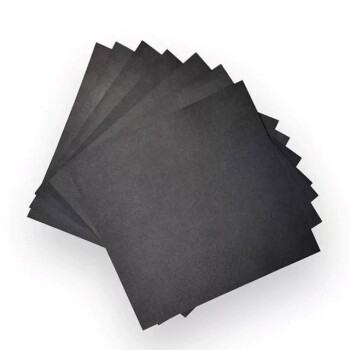
Carbon paper is the preferred choice for manganese dioxide cathodes because it functions as a highly conductive, chemically stable, and porous 3D framework. It directly addresses the limitations of standard flat collectors by maximizing the contact area for active materials and ensuring durability within the aqueous electrolyte environment common in zinc-ion batteries.
The Core Advantage Carbon paper does not just conduct electricity; it acts as a flexible, porous host. By accommodating the physical expansion of the electrode and resisting chemical corrosion, it ensures the battery remains stable and efficient over repeated charging cycles.
Optimizing Electron Transport and Surface Area
Superior Electrical Conductivity
For a battery to function efficiently, electrons must move freely between the active material and the external circuit. Carbon paper provides excellent electrical conductivity, ensuring that energy loss is minimized during this transfer.
High Porosity for Maximum Contact
Unlike flat metal foils, carbon paper offers a complex, porous structure. This significantly increases the contact area available for the active manganese dioxide ($\text{MnO}_2$).
Reducing Interfacial Resistance
The large contact area created by the porous network creates a tight interface between the collector and the active material. This structure effectively reduces interfacial contact resistance, which is often a bottleneck in battery performance.
Enhancing Chemical Compatibility
Chemical Stability in Aqueous Environments
Zinc-ion batteries typically use aqueous (water-based) electrolytes, which can be corrosive to many standard metals. Carbon paper is chemically stable, preventing the degradation and corrosion that would otherwise shorten the battery's lifespan.
Excellent Wettability
For the electrochemical reaction to occur, the electrolyte must fully permeate the electrode. Carbon paper exhibits good wettability, allowing the aqueous electrolyte to soak easily into the structure.
Improving Material Utilization
Because the electrolyte can reach deep into the carbon paper's pores, more of the active material is engaged in the reaction. This directly enhances the utilization rate, allowing the battery to deliver more capacity.
Managing Physical Stress
Accommodating Volume Changes
Electrodes often swell and shrink as ions move in and out during cycling. The porous nature of carbon paper allows it to accommodate these volume changes without cracking or delaminating.
Understanding the Trade-offs
The Necessity of Porosity
While the porosity of carbon paper is its greatest strength, it acts as a critical variable. If the porosity is not matched to the active material loading, you risk either poor mechanical support or insufficient space for the volume expansion mentioned above.
Active Material Loading
The porous structure allows for high loading of active materials, but this must be balanced. Overfilling the pores can block electrolyte pathways, negating the wettability and utilization benefits that carbon paper is selected to provide.
Making the Right Choice for Your Goal
When engineering a manganese dioxide cathode for a zinc-ion battery, use carbon paper to solve specific stability and performance challenges.
- If your primary focus is Cycle Life: Leverage the chemical stability and volume accommodation of carbon paper to prevent mechanical failure and corrosion over time.
- If your primary focus is High Efficiency: Rely on the high porosity and wettability to minimize resistance and ensure every bit of active material is accessible to the electrolyte.
Carbon paper transforms the current collector from a passive component into an active structural support that creates a more durable and efficient battery interface.
Summary Table:
| Feature | Advantage for MnO2 Cathodes | Impact on Battery Performance |
|---|---|---|
| 3D Porous Structure | Increases contact area and material loading | Enhances active material utilization and capacity |
| Chemical Stability | Resists corrosion in aqueous electrolytes | Extends cycle life and improves durability |
| High Conductivity | Facilitates rapid electron transport | Reduces internal resistance and energy loss |
| Physical Flexibility | Accommodates volume expansion/contraction | Prevents electrode delamination and cracking |
| Wettability | Ensures deep electrolyte penetration | Optimizes ion transport and reaction kinetics |
Elevate Your Energy Storage Research with KINTEK
Transition from standard components to high-performance solutions. At KINTEK, we understand that the foundation of a great battery lies in its materials. We provide a comprehensive suite of tools tailored for the next generation of energy storage, including battery research tools and consumables, electrolytic cells, and specialized ceramics and crucibles.
Whether you are optimizing manganese dioxide cathodes or developing advanced aqueous zinc-ion systems, KINTEK offers the precision equipment you need—from crushing and milling systems for material prep to vacuum furnaces and pellet presses for electrode fabrication.
Ready to optimize your battery performance? Contact KINTEK today to discuss your project needs and let our experts provide the high-quality materials and equipment your laboratory deserves.
References
- Xiaoying Yan, Wenbin Hu. Highly Reversible Zn Anodes through a Hydrophobic Interface Formed by Electrolyte Additive. DOI: 10.3390/nano13091547
This article is also based on technical information from Kintek Solution Knowledge Base .
Related Products
- Hydrophilic Carbon Paper TGPH060 for Battery Lab Applications
- Conductive Carbon Cloth Carbon Paper Carbon Felt for Electrodes and Batteries
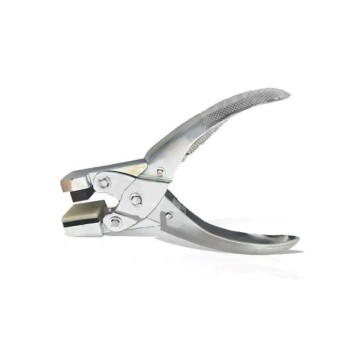
- Professional Cutting Tools for Carbon Paper Cloth Diaphragm Copper Aluminum Foil and More
- Glassy Carbon Sheet RVC for Electrochemical Experiments
- Carbon Graphite Plate Manufactured by Isostatic Pressing Method
People Also Ask
- What role does hydrophilic carbon fiber paper play as an electrode material? Enhancing Flow Cell Efficiency
- Why is carbon paper placed between the powder and the graphite mold? Protect Your LTPO Electrolytes & Tooling
- How can the lifespan of carbon paper be extended? Reinforce Edges with Epoxy for Maximum Durability
- What are the material properties of carbon paper? Unlocking High Conductivity & Porosity for Your Lab
- How should carbon paper be handled during cutting? Prevent Fractures with a Delicate, Precise Approach