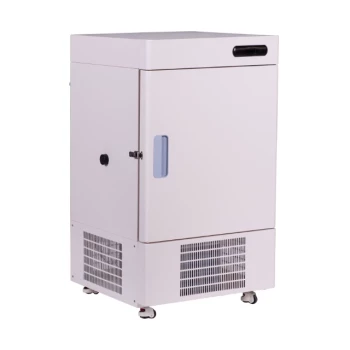
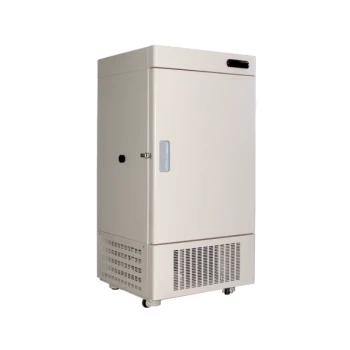
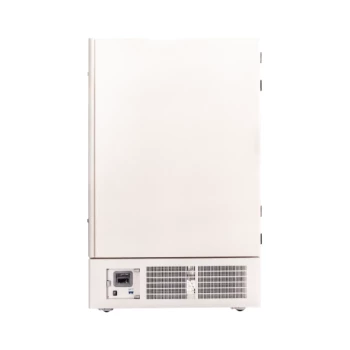
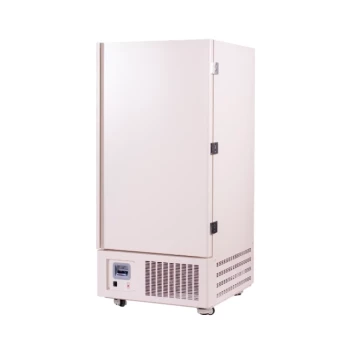
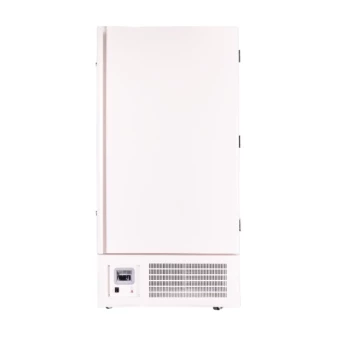
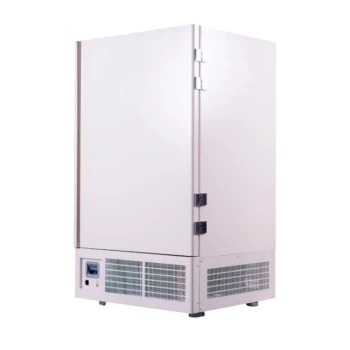
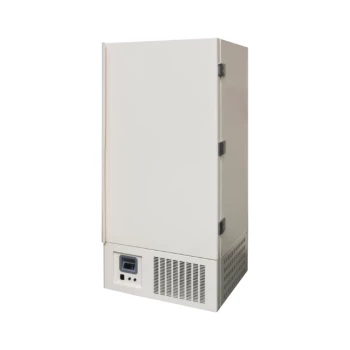
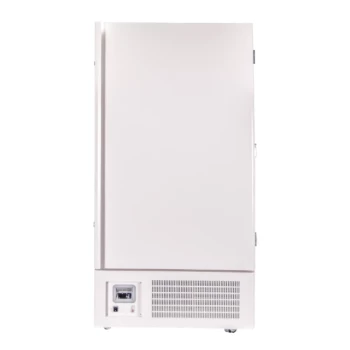
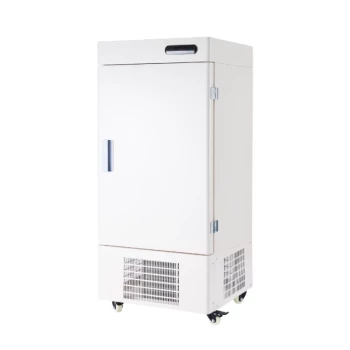
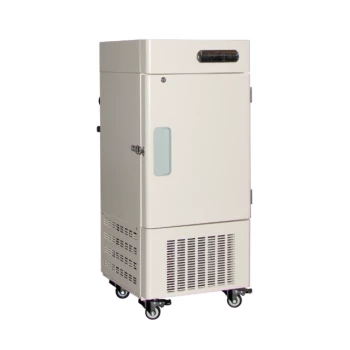
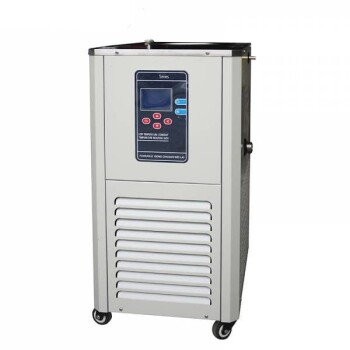
The primary role of a laboratory ultra-low temperature freezer in these studies is to preserve the stability of high-concentration hydrogen peroxide ($H_2O_2$) oxidants. By maintaining a controlled environment below -10 °C, the freezer inhibits the chemical's natural self-decomposition, ensuring the concentration of the oxidant remains constant for the duration of the experiment.
In accelerated corrosion studies, the validity of your data depends entirely on the consistency of the simulated environment. The ultra-low temperature freezer serves as a critical stabilization tool, preventing the degradation of hydrogen peroxide to ensure the simulated water radiolysis conditions remain accurate and reproducible.
Simulating Water Radiolysis Environments
The Challenge of Chemical Instability
Simulating the highly oxidizing environment caused by water radiolysis typically requires high concentrations of hydrogen peroxide ($H_2O_2$).
However, hydrogen peroxide is thermodynamically unstable.
Without intervention, it naturally undergoes self-decomposition, steadily lowering the concentration of the oxidant available for the reaction.
Inhibiting Self-Decomposition
The rate of this decomposition is heavily influenced by temperature.
By storing the oxidant in an ultra-low temperature freezer, researchers effectively pause or drastically slow the decomposition kinetics.
This preservation is essential for preventing variable chemical conditions that would skew corrosion data.
The -10 °C Threshold
The primary reference indicates that a stable environment below -10 °C is necessary for this application.
Maintaining the temperature below this specific threshold ensures the oxidant remains potent between experimental runs.
This allows for the preparation of consistent chemical batches that can be used over time without degradation.
The Impact on Experimental Validity
Maintaining Constant Oxidant Concentration
For an accelerated corrosion study to be valid, the "acceleration factor"—in this case, the oxidant concentration—must remain constant.
If the $H_2O_2$ degrades during storage, the corrosive environment becomes less aggressive than intended.
The freezer eliminates this variable, ensuring that the stainless steel is exposed to a consistent chemical attack.
Ensuring Chemical Consistency
Scientific rigor requires that every variable in an experiment be controlled.
Using an ultra-low temperature freezer guarantees that the chemical consistency of the solution is identical from the first day of the study to the last.
This allows researchers to attribute observed corrosion strictly to the material properties and the simulated environment, rather than fluctuating chemical strength.
Operational Considerations and Trade-offs
Dependence on Power Consistency
Reliance on ultra-low temperature storage introduces a critical point of failure in the laboratory workflow.
A power outage or equipment malfunction that allows temperatures to rise above -10 °C can silently trigger decomposition.
This could render an entire stock of oxidants unsuitable for precision testing without the researcher immediately knowing.
Thermal Equilibration
While the freezer preserves the chemical, the solution cannot be used immediately upon removal.
Researchers must account for the time required to safely bring the oxidant from -10 °C to the target reaction temperature.
Failing to manage this transition properly can introduce thermal shock or alter the initial reaction kinetics of the corrosion test.
Ensuring Data Integrity in Corrosion Studies
To ensure your stainless steel corrosion simulations yield reliable data, you must treat your cold storage as an active variable control.
- If your primary focus is Experimental Consistency: rigorous monitoring of the freezer temperature is required to ensure it never fluctuates above -10 °C, guaranteeing the oxidant concentration remains static.
- If your primary focus is Workflow Efficiency: batch your hydrogen peroxide preparation to utilize freezer stability, reducing the need for daily chemical preparation while maintaining standard potency.
Ultimately, the ultra-low temperature freezer is not merely for storage; it is a fundamental control instrument that safeguards the chemical fidelity of your corrosion simulations.
Summary Table:
| Feature | Role in Corrosion Studies | Impact on Data |
|---|---|---|
| Temperature Control | Maintains environment below -10 °C | Inhibits chemical self-decomposition |
| Oxidant Stability | Preserves high-concentration $H_2O_2$ | Ensures consistent acceleration factors |
| Consistency | Batch-to-batch chemical fidelity | Prevents variable oxidation kinetics |
| Data Integrity | Eliminates storage-related variables | Guarantees reproducible, rigorous results |
Secure Your Research Integrity with KINTEK Solutions
In accelerated corrosion studies, equipment failure is not an option. KINTEK specializes in advanced laboratory ultra-low temperature freezers, cooling solutions, and specialized high-temperature reactors designed for the most demanding stainless steel and material science research.
Our comprehensive range of ULT freezers and freeze dryers ensures your chemical oxidants remain stable and potent, eliminating variables that compromise your simulation data. From high-temperature autoclaves to precision crushing systems, KINTEK provides the tools necessary for modern material analysis.
Ready to upgrade your laboratory precision? Contact us today to discover how our high-performance equipment can optimize your workflow and safeguard your experimental outcomes.
References
- Alberto Ubaldini, G.L. Pintilei. A Study of Accelerated Corrosion of Stainless Steels under Highly Oxidizing Conditions. DOI: 10.3390/coatings14040390
This article is also based on technical information from Kintek Solution Knowledge Base .
Related Products
- 108L Vertical Ultra Low Temperature ULT Freezer
- 308L Precision Ultra Low Temperature Freezer for Laboratory Applications
- 208L Advanced Precision Laboratory Ultra Low Temperature Freezer for Cold Storage
- 58L Precision Laboratory Ultra Low Temperature Upright Freezer for Critical Sample Storage
- 938L Vertical Ultra Low Temperature Freezer for Advanced Laboratory Storage
People Also Ask
- What are the common applications of ultra-low temperature freezers? Preserve Your Most Valuable Samples
- What are the different types of ultra-low temperature freezers available? Choose the Right ULT Freezer for Your Lab
- What are some key features of ultra-low temperature freezers? Essential Guide to Reliable Sample Storage
- Have other labs successfully stored samples at -70°C? Proven Long-Term Preservation for Biological Materials
- What features should be considered when choosing an ultra low temperature freezer? Secure Your Samples with Precision