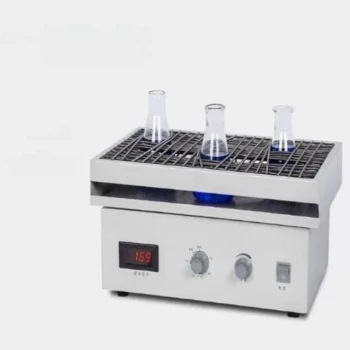
The thermostatic shaker serves as the engine of consistency in batch adsorption experiments. It provides a dual-function environment of stable thermal control and continuous mechanical agitation. This setup ensures that aluminum-impregnated food waste biochar particles maintain maximum contact with phosphate ions, allowing the reaction to reach dynamic equilibrium within a specified timeframe.
The thermostatic shaker is indispensable for eliminating physical variables like mass transfer resistance and particle settling. By providing a uniform kinetic environment, it ensures that experimental data accurately reflects the biochar’s chemical performance rather than the limitations of the laboratory setup.
Overcoming Mass Transfer Resistance
Eliminating Liquid Film Diffusion
The mechanical force generated by the shaker’s rotation disrupts the "water film" or boundary layer that naturally surrounds solid biochar particles. By breaking this layer, phosphate molecules can move freely from the bulk solution to the adsorbent surface without being hindered by liquid film resistance.
Maintaining Biochar Suspension
Aluminum-impregnated biochar particles can be denser than untreated biochar and may settle at the bottom of the flask if left still. The shaker provides the mechanical power necessary to keep these particles in a suspended state, ensuring that the entire available surface area is active for phosphate capture.
Ensuring Uniform Solute Distribution
Continuous agitation prevents the formation of local concentration gradients within the solution. This uniformity ensures that every biochar particle is exposed to the same concentration of phosphate, which is a prerequisite for obtaining reliable and repeatable adsorption capacity data.
Validating Kinetic and Thermodynamic Models
Providing Precise Thermal Control
Phosphate adsorption is a temperature-dependent process that requires a stable environment to yield valid results. The shaker’s thermostatic function allows researchers to simulate various environmental conditions, which is essential for calculating thermodynamic parameters like enthalpy and Gibbs free energy.
Enabling Kinetic Collision Consistency
By maintaining a set oscillation frequency (such as 180 rpm), the shaker ensures that the frequency of kinetic collisions between phosphate ions and aluminum active sites remains constant. This consistency is required to accurately fit adsorption kinetic models, which describe how quickly the pollutant is removed.
Reaching Dynamic Equilibrium
The shaker facilitates the interaction between the biochar and the solution over long durations, typically up to 24 hours. This sustained energy input allows the system to overcome external diffusion resistance and reach a state of thermodynamic equilibrium, providing a true measure of the material's maximum loading capacity.
Common Pitfalls to Avoid
Risks of Sub-Optimal Rotation Speeds
If the rotation speed is set too low, the biochar may not fully suspend, leading to an underestimation of its removal potential. Conversely, excessively high speeds can cause mechanical attrition, physically breaking the biochar particles and creating "new" surface area that would not exist in real-world treatment scenarios.
Temperature Fluctuations During Long Runs
Adsorption experiments often run for 24 hours or longer, making the system vulnerable to ambient temperature changes. High-quality thermostatic shakers are necessary to prevent these fluctuations, as even minor temperature shifts can significantly alter the adsorption rate and invalidate thermodynamic calculations.
Overlooking Localized Heating
In some lower-end equipment, the mechanical motor can generate heat that transfers into the incubation chamber. It is critical to use a shaker with well-insulated components to ensure the internal solution temperature matches the digital setpoint exactly.
How to Apply This to Your Project
Recommendations for Success
- If your primary focus is kinetic accuracy: Set a rotation speed that is high enough to achieve a fully homogenous suspension of biochar but low enough to avoid visible particle fragmentation.
- If your primary focus is thermodynamic calculation: Use a calibrated thermostatic shaker to perform runs at multiple temperatures (e.g., 15°C, 25°C, and 35°C) to accurately determine if the phosphate removal is endothermic or exothermic.
- If your primary focus is industrial scalability: Use the shaker to establish the minimum time required to reach equilibrium, which will help in designing the contact time for full-scale water treatment reactors.
By masterfully controlling the kinetic and thermal environment, you ensure that your research into food waste biochar provides a definitive and reproducible foundation for phosphate remediation.
Summary Table:
| Feature | Function in Adsorption | Benefit for Biochar Research |
|---|---|---|
| Mechanical Agitation | Disrupts liquid film diffusion | Accelerates phosphate ion transport to adsorbent surface. |
| Stable Thermostat | Maintains precise temperature | Enables accurate thermodynamic calculations (Enthalpy/Gibbs). |
| Particle Suspension | Prevents settling of dense biochar | Ensures 100% of available surface area is active. |
| Oscillation Control | Constant collision frequency | Provides reliable data for kinetic model fitting. |
Precision Lab Solutions for Advanced Material Research
Elevate your water treatment and biochar research with KINTEK’s high-performance laboratory equipment. From high-precision thermostatic shakers and homogenizers to a comprehensive range of high-temperature furnaces and cooling solutions, we provide the tools necessary to eliminate variables and ensure reproducible experimental results.
Whether you are performing batch adsorption or scaling up industrial reactors, KINTEK supports your workflow with specialized equipment and essential consumables, including PTFE products, ceramics, and crucibles.
Ready to enhance your lab's efficiency and data accuracy? Contact KINTEK today to find the perfect equipment for your research goals!
References
- Jin-Kyu Kang, Seong‐Jik Park. Optimization of the Preparation Conditions of Aluminum-Impregnated Food Waste Biochar Using RSM with an MLP and Its Application in Phosphate Removal. DOI: 10.3390/w15162997
This article is also based on technical information from Kintek Solution Knowledge Base .
Related Products
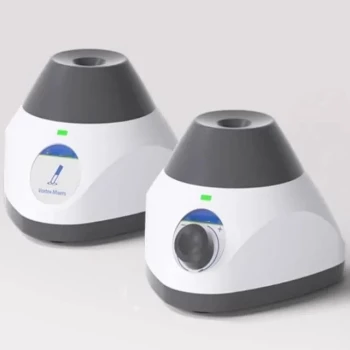
- Laboratory Vortex Mixer Orbital Shaker Multifunctional Rotation Oscillation Mixer
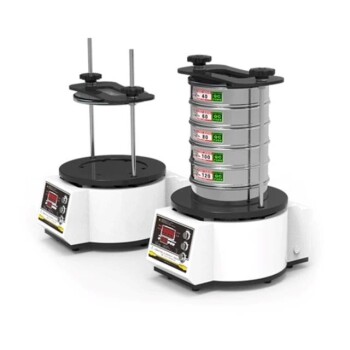
- Laboratory Wet Three-Dimensional Vibratory Sieve Shaker Machine
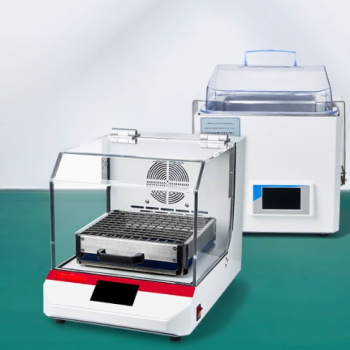
- Shaking Incubators for Diverse Laboratory Applications
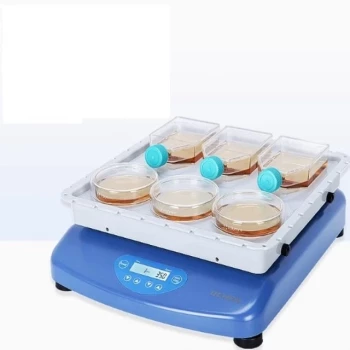
- Laboratory Oscillating Orbital Shaker
- Laboratory Multifunctional Small Speed-Adjustable Horizontal Mechanical Shaker for Lab
People Also Ask
- What is the role of a laboratory orbital shaker in copper recovery? Optimize Industrial Waste Liquid Processing
- What is the role of a laboratory orbital shaker in activated carbon synthesis? Maximize Pore Depth & Surface Area
- What is a laboratory mixer used for? Choose the Right Tool for Liquids or Solids
- What is a laboratory mixer? A Guide to Achieving Perfect Sample Homogeneity
- What are laboratory mixers used for? Achieve Perfect Sample Homogeneity and Reliable Results