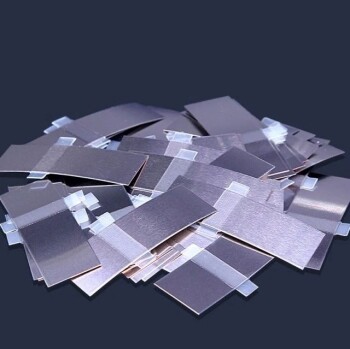
Nickel foam acts as a high-performance 3D current collector and structural framework for supercapacitor electrodes. It provides a highly conductive, interconnected network that serves as both a physical carrier for active materials and an electrical highway for electron transfer. By offering a massive effective surface area and an open pore structure, it ensures low contact resistance and rapid ion diffusion, which are critical for high-rate energy storage.
Nickel foam serves as a multifunctional substrate that bridges the gap between active materials and the external circuit, optimizing both the electrical conductivity and the accessibility of electrolyte ions through its unique three-dimensional porosity.
Providing a High-Surface Area Conductive Framework
The 3D Interconnected Porous Network
The primary advantage of nickel foam is its highly interconnected 3D porous structure, which provides a large geometric surface area. This open morphology allows for the uniform loading of active materials, such as carbon cryogels or MXene nanomaterials, throughout the volume of the electrode.
Enhancing Electron Transport
Nickel foam possesses excellent electrical conductivity, enabling high-speed electron transfer between the active material and the external circuit. This characteristic significantly reduces contact resistance, ensuring that the electrode can handle high current densities during rapid charging and discharging cycles.
Increasing Active Material Loading
Unlike flat metallic foils, the spatial depth of nickel foam allows for a significantly higher loading capacity of active materials. This increased mass loading is essential for improving the overall energy density of the supercapacitor without sacrificing the mechanical integrity of the electrode.
Optimizing Ion and Electrolyte Dynamics
Facilitating Electrolyte Penetration
The open-cell structure of nickel foam allows for free electrolyte penetration, ensuring that the electrolyte can reach the internal surfaces of the active material. This accessibility is vital for maintaining high performance in thick electrode architectures where ion starvation might otherwise occur.
Reducing Mass Transfer Resistance
By promoting the swift diffusion of ions, nickel foam significantly reduces ion diffusion resistance within the electrode. This synergistic effect enhances the rate capability of the supercapacitor, allowing it to maintain efficiency even under high-current operating conditions.
Management of Gas Evolution
In hybrid systems or specific electrochemical reactions, nickel foam's structure facilitates the swift detachment of gas bubbles. This prevents bubbles from masking active sites, thereby reducing mass transfer resistance and ensuring the long-term chemical stability of the catalyst layers.
Understanding the Trade-offs
Impact on Gravimetric Energy Density
While nickel foam provides excellent structural support, it is significantly heavier and thicker than traditional thin-film current collectors like aluminum or copper foil. This additional mass can lower the overall gravimetric energy density of the final device if the active material loading is not optimized.
Potential for Parasitic Reactions
Nickel is electrochemically active in certain potential windows and electrolyte environments, particularly in alkaline media. While this can sometimes contribute to pseudocapacitance, it may also lead to unwanted parasitic reactions or corrosion that could affect the long-term cycling stability of the electrode.
Mechanical Sensitivity to Compression
The beneficial 3D porosity of nickel foam is susceptible to mechanical deformation during the assembly process. Over-compression during electrode calendering can collapse the pore structure, which restricts electrolyte flow and diminishes the very rate advantages the foam was intended to provide.
How to Apply This to Your Project
Making the Right Choice for Your Goal
- If your primary focus is High Rate Performance: Utilize nickel foam to minimize internal resistance and maximize ion access, ensuring the 3D structure remains uncollapsed during assembly.
- If your primary focus is Binder-Free Fabrication: Use the foam as a self-supporting base to grow active materials directly onto the nickel surface, eliminating the need for non-conductive polymer binders.
- If your primary focus is High Mass Loading: Leverage the deep spatial morphology of the foam to host thicker layers of active material while maintaining a conductive pathway to the current collector.
By strategically leveraging the three-dimensional architecture of nickel foam, engineers can develop electrodes that achieve a superior balance between power delivery and structural durability.
Summary Table:
| Key Feature | Functional Role | Impact on Performance |
|---|---|---|
| 3D Porous Network | High surface area framework | Maximizes active material loading & energy density |
| High Conductivity | Interconnected electron highway | Reduces contact resistance for high-speed transfer |
| Open-Cell Structure | Electrolyte reservoir | Facilitates rapid ion diffusion & high-rate capability |
| Structural Depth | Physical carrier/substrate | Enables binder-free fabrication & mechanical stability |
Elevate Your Energy Storage Research with KINTEK
Maximize the performance of your supercapacitor electrodes with high-quality substrates and advanced laboratory solutions. KINTEK specializes in precision laboratory equipment and consumables, offering a comprehensive range of battery research tools, nickel foam substrates, and electrolytic cells designed for cutting-edge material science.
Whether you need high-temperature furnaces (vacuum, CVD, or atmosphere) for material synthesis or hydraulic presses for electrode preparation, our portfolio is engineered to ensure reliability and superior results.
Ready to optimize your lab's efficiency? Contact our experts today to find the perfect tools and consumables for your specific research needs.
References
- Rui Lou, Xiao Zhang. Metal–Organic-Framework-Mediated Fast Self-Assembly 3D Interconnected Lignin-Based Cryogels in Deep Eutectic Solvent for Supercapacitor Applications. DOI: 10.3390/polym15081824
This article is also based on technical information from Kintek Solution Knowledge Base .
Related Products
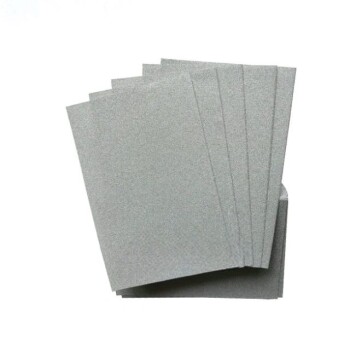
- Nickel Foam for Industrial and Laboratory Applications
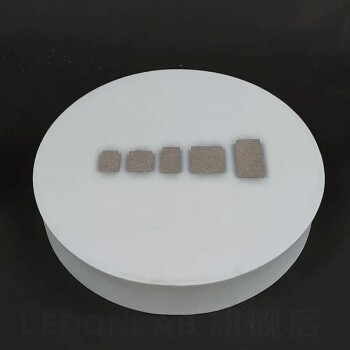
- Copper Nickel Foam Metal Sheet
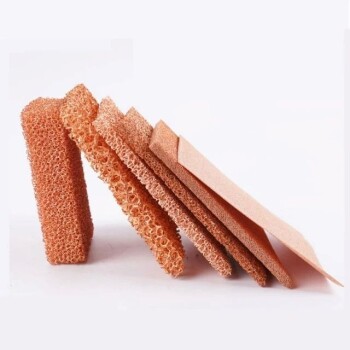
- Copper Foam
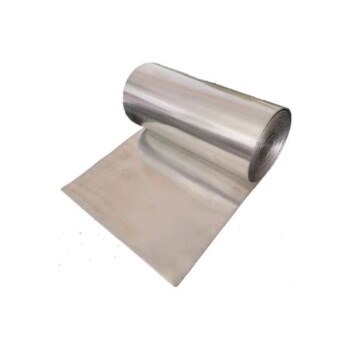
- High Purity Zinc Foil for Battery Lab Applications
- Nickel Aluminum Tabs for Soft Pack Lithium Batteries
People Also Ask
- What procedures should be followed after using nickel or copper foam? A Guide to Reliable Reuse and Performance
- What is nickel foam used for? A Guide to Its Electrochemical Applications
- In which fields is nickel foam widely used? A Key Material for Advanced Engineering
- What procedures should be followed before using nickel or copper foam? Ensure Optimal Performance and Reliability
- What are the advantages of using high-porosity Nickel Foam or Nickel Mesh? Boost Your MEC Performance