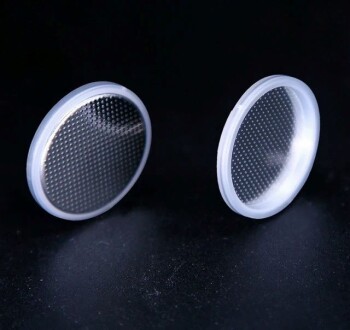
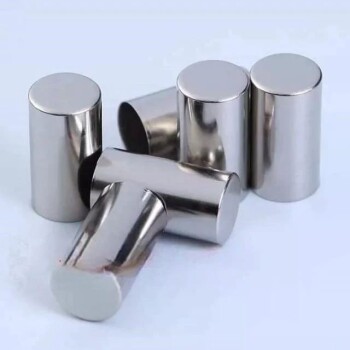
The primary roles of CR2032 coin cell cases and stainless steel plates are environmental isolation and electrochemical definition. The CR2032 case acts as a hermetically sealed vessel that maintains mechanical pressure and protects moisture-sensitive polymers. Inside this vessel, stainless steel plates function as ion-blocking electrodes, ensuring that the measurement captures only the electrolyte's resistance without interference from chemical reactions at the electrode interface.
Core Takeaway To accurately measure how well a solid polymer moves ions, you must isolate that movement from all other factors. This setup achieves isolation by using stainless steel to block the ions at the boundaries and a CR2032 case to mechanically compress the sample while locking out environmental contaminants.
The Role of the CR2032 Coin Cell Case
The coin cell case is not merely a container; it is an active component in maintaining the physical conditions required for accurate Electrochemical Impedance Spectroscopy (EIS).
Environmental Standardization
Solid polymer electrolytes are frequently sensitive to atmospheric conditions, particularly humidity. The CR2032 case provides a standardized, sealed environment.
By encapsulating the sample, the case prevents moisture ingress that would otherwise alter the ionic conductivity results.
Maintaining Mechanical Contact
The sealing process of a CR2032 cell generates significant internal mechanical pressure. This pressure is critical for creating tight physical contact between the stainless steel electrodes and the solid electrolyte.
Proper compression minimizes interface resistance. Without this constant pressure, gaps could form between layers, leading to noisy or inaccurate data.
The Role of Stainless Steel Plates
In a functioning battery, you want electrodes that absorb or release ions. In a conductivity test, however, you need the opposite.
Functioning as Ion-Blocking Electrodes
Stainless steel is electronically conductive but ionically non-conductive. This dual nature makes it the ideal material for measuring solid electrolytes.
Because the steel cannot accept or store ions (it is irreversible to ions like Lithium), it forces the ions to accumulate at the interface. This allows the testing equipment to clearly distinguish the electrolyte's behavior from electrode behavior.
Creating a Symmetric Cell
For these tests, the cell is assembled with stainless steel plates on both sides of the polymer, creating a symmetric blocking cell.
This symmetry simplifies the data analysis. It ensures that the current response is governed purely by the bulk resistance of the electrolyte, rather than asymmetric reactions at an anode or cathode.
Eliminating Reaction Interference
Active electrode materials (like Lithium metal) introduce chemical reactions that add their own resistance to the measurement.
By using stainless steel, you effectively remove electrode reaction kinetics from the equation. The resulting impedance spectrum reflects only the internal ionic transport resistance and activation energy of the polymer itself.
Understanding the Trade-offs
While this setup is the industry standard for conductivity testing, precise assembly is required to avoid data corruption.
Interface Resistance vs. Bulk Resistance
While stainless steel blocks ions, the contact quality between the steel and the polymer is a common source of error. If the polymer surface is rough or the case pressure is uneven, "contact resistance" can be mistaken for the electrolyte's internal resistance.
Material Compatibility
Stainless steel is generally inert, but it is not universally compatible with every possible chemical environment. Ensure that your specific polymer electrolyte formulation does not react corrosively with the steel grades typically used in these spacers (often SS304 or SS316).
Making the Right Choice for Your Goal
The configuration of your test cell depends entirely on which property you need to isolate.
- If your primary focus is measuring intrinsic ionic conductivity: Use stainless steel plates. They block reactions and isolate the polymer’s transport properties.
- If your primary focus is testing full battery performance: Use active electrodes (e.g., Lithium anode and composite cathode). Stainless steel will not work here because the battery must be able to cycle ions.
Success in testing solid polymer electrolytes relies on using the CR2032 case for physical consistency and stainless steel plates for electrochemical isolation.
Summary Table:
| Component | Primary Role | Key Function |
|---|---|---|
| CR2032 Case | Environmental Isolation | Provides hermetic sealing, prevents moisture ingress, and maintains mechanical pressure. |
| Stainless Steel Plates | Ion-Blocking Electrode | Acts as an electronically conductive but ionically non-conductive barrier for symmetric cell testing. |
| Mechanical Pressure | Interface Optimization | Ensures tight physical contact between electrodes and electrolyte to minimize contact resistance. |
| Symmetric Setup | Data Simplification | Eliminates electrode reaction kinetics to isolate the bulk resistance of the polymer. |
Elevate Your Battery Research with KINTEK Precision
Achieving accurate electrochemical data requires high-quality components that guarantee consistency. KINTEK specializes in premium laboratory equipment and consumables, providing everything you need for advanced battery research. From high-precision CR2032 coin cell cases and stainless steel spacers to specialized battery research tools, our products ensure your solid polymer electrolyte testing is free from environmental interference and mechanical failure.
Beyond battery tools, our expertise extends to high-temperature furnaces, hydraulic pellet presses, and electrolytic cells, supporting every stage of your material characterization.
Ready to optimize your lab's performance? Contact KINTEK today to discuss your project needs and discover how our comprehensive range of lab solutions can enhance your research outcomes.
Related Products
People Also Ask
- What is the primary role of standardized coin cell cases in Li/LSTH/Li assembly? Ensure Precise Battery Testing Results
- What is the significance of using a 2032-type coin cell configuration? Isolate Intrinsic Graphene Performance.
- What are the uses of desiccators and specific thermal regulators? Expert Insights for Vapor-Assisted Conversion
- What is the purpose of using a high-pressure hydraulic crimper for CR2032 coin cell assembly? Ensure Superior Sealing
- Why is the use of reaction containers with environmental control capabilities essential in mechanochemistry?