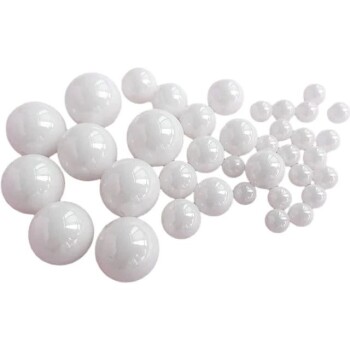
Zirconia beads are the preferred grinding medium for iron oxide because they offer a unique combination of high density, extreme hardness, and exceptional wear resistance. These properties ensure that the beads generate sufficient kinetic energy to refine the powder to an ultra-fine state while preventing the introduction of impurities that would compromise the chemical purity of the final iron product.
Zirconia beads function as a high-efficiency energy transfer medium that achieves superior particle refinement without contaminating the target material. Their selection is driven by the need to maintain strict chemical integrity while providing the mechanical force necessary to overcome the structural resistance of iron oxide.
Maximizing Kinetic Energy and Refinement
The Impact of High Density
High-energy milling requires significant impact and shear forces to break down the crystalline structure of iron oxide. Zirconia possesses a high density that allows the beads to carry and transfer more kinetic energy during high-speed rotation compared to lighter media. This energy is critical for achieving ultra-fine powder refinement in shorter durations.
Hardness and Particle Breakdown
Iron oxide and its associated impurities can be mechanically resilient, requiring a grinding medium with superior hardness. Zirconia’s extreme hardness allows the beads to effectively crush and grind the raw powder without being deformed or destroyed. This ensures a consistent particle size distribution throughout the milling process.
Maintaining Chemical and Physical Purity
Resistance to Mechanical Wear
During long-duration, high-speed milling, the friction between beads can cause "media loss," where fragments of the beads mix with the powder. Zirconia's superior wear resistance minimizes this erosion, ensuring that the iron oxide remains free from physical debris. This is vital for applications where the powder must undergo a final reduction process to produce high-purity iron.
Chemical Stability and Inertness
Zirconia is characterized by its excellent chemical stability, meaning it does not react with the iron oxide or the milling solvent (such as ethanol or isopropyl alcohol). This inertness prevents the introduction of metallic impurity ions, such as iron or chromium, which are common when using steel media. Maintaining this "electrical purity" is essential for the performance of the final material in electrochemical or ceramic applications.
Understanding the Trade-offs
Initial Cost versus Longevity
While zirconia beads have a higher initial purchase price compared to alumina or steel media, their durability often results in a lower total cost of ownership. The reduced rate of media replacement and the elimination of expensive post-processing purification steps justify the investment for high-performance applications.
Density and Heat Generation
The high density that makes zirconia effective also leads to significant heat generation during high-energy milling. If the temperature is not managed via cooling jackets or interval milling, it can lead to unwanted phase changes or grain growth in the iron oxide powder.
Media Size Selection
Using beads that are too large can lead to inefficient grinding of ultra-fine particles, while beads that are too small may lack the mass to break down larger clusters. The size of the zirconia beads must be carefully matched to the initial particle size of the iron oxide to ensure optimal energy transfer.
How to Apply This to Your Process
Selecting the right milling parameters is essential for leveraging the benefits of zirconia media.
- If your primary focus is maximum purity: Use high-purity zirconia beads in combination with a zirconia-lined grinding jar to eliminate all sources of metallic contamination.
- If your primary focus is rapid particle size reduction: Opt for higher-density zirconia beads and increase the rotation speed to maximize the kinetic energy of the impacts.
- If your primary focus is achieving a narrow size distribution: Use smaller diameter zirconia beads (0.1mm to 0.5mm) during the final stages of milling to ensure uniform refinement.
By prioritizing material hardness and chemical inertness, you ensure that your iron oxide powder retains the precise characteristics required for high-performance industrial and scientific applications.
Summary Table:
| Property | Benefit for Iron Oxide Milling | Outcome |
|---|---|---|
| High Density | Maximizes kinetic energy transfer during rotation | Faster reduction to ultra-fine particles |
| Extreme Hardness | Crushes resilient crystalline structures effectively | Consistent and narrow size distribution |
| Wear Resistance | Minimizes media erosion and fragmentation | Prevents physical debris contamination |
| Chemical Inertness | Non-reactive with iron oxide and solvents | Maintains strict chemical/electrical purity |
Elevate Your Material Purity with KINTEK Milling Solutions
Achieving the perfect ultra-fine powder requires more than just high-energy force; it requires the right media to ensure zero contamination and maximum efficiency. KINTEK specializes in high-performance crushing and milling systems, providing premium zirconia beads, ceramics, and grinding jars designed for the most demanding laboratory applications.
Whether you are performing battery research, developing advanced ceramics, or refining high-purity oxides, our comprehensive range of laboratory equipment—from high-temperature furnaces to hydraulic presses and cooling solutions—is engineered to deliver precision results.
Ready to optimize your milling process? Contact our experts today to find the ideal grinding media and equipment for your specific research needs!
References
- Heungseok Oh, Caroline Sunyong Lee. Study of solid loading of feedstock using trimodal iron powders for extrusion based additive manufacturing. DOI: 10.1038/s41598-023-32095-5
This article is also based on technical information from Kintek Solution Knowledge Base .
Related Products
- Precision Machined Zirconia Ceramic Ball for Engineering Advanced Fine Ceramics
- Precision Machined Yttrium Stabilized Zirconia Ceramic Rod for Engineering Advanced Fine Ceramics
- Laboratory Jar Mill with Agate Grinding Jar and Balls
People Also Ask
- What are the applications of zirconia ceramics? Unlock High-Performance Solutions for Extreme Environments
- What is the physical mechanism for selecting hard grinding media? Optimize Your ZrC-Al Matrix Composite Production
- Why are zirconia milling balls preferred for P2-type layered oxides? Ensure High Purity and Grinding Efficiency
- What is the purpose of using zirconia milling balls of different diameters? Optimize Solid Electrolyte Processing
- Why are zirconia grinding jars and balls required for solid-state electrolyte powders? Ensure High Purity & Performance