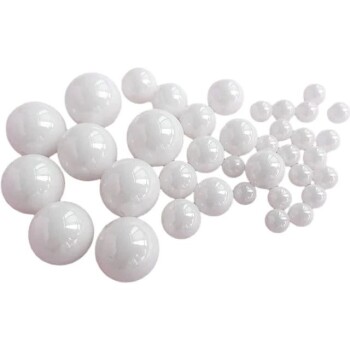
Zirconia milling balls are the preferred choice for synthesizing P2-type layered oxide materials primarily due to their unique balance of high density and chemical inertness. Unlike metallic media, zirconia delivers the necessary impact energy for efficient size reduction while strictly maintaining the purity of the final ceramic powder.
The core value of zirconia lies in its ability to facilitate high-energy grinding without compromising the sample's chemistry. While its density ensures the mechanical force required for synthesis, its chemical stability prevents the introduction of impurities that would degrade the electrochemical performance of the final material.
The Imperative of Chemical Purity
Eliminating Metallic Contamination
The most critical requirement for synthesizing P2-type layered oxides is maintaining an impurity-free composition.
Zirconia is chemically inert, meaning it prevents the introduction of metallic impurities during the intense grinding process. This stands in stark contrast to steel media, which can release iron into the sample, severely affecting the material's properties.
Preventing Reactions with Precursors
During the synthesis process, precursors can be highly active.
Zirconia exhibits excellent stability toward these reactive materials. This ensures that the grinding media does not chemically react with the sample, preserving the precise stoichiometry required for high-performance ceramic powders like Na2Ni2TeO6 and Na2Zn2TeO6.
Mechanics of Efficient Synthesis
Leveraging High Density for Impact
Grinding efficiency is directly related to the kinetic energy transferred from the ball to the powder.
Zirconia balls possess high density, which translates to higher impact energy during the milling process. This allows for the effective breakdown and refinement of hard ceramic raw materials that lighter media cannot process efficiently.
Superior Wear Resistance
P2-type oxide synthesis often requires prolonged high-energy milling.
Zirconia’s extreme hardness and superior wear resistance allow it to withstand these extended processing times without degrading. This ensures that the media itself does not wear down and become a contaminant in the synthesized powder.
Understanding the Trade-offs: Zirconia vs. Steel
The Cost of Purity
While zirconia is superior technically, it is generally more expensive than common alternatives like stainless steel.
However, in the context of advanced battery materials or ionic conductors, this cost is justifiable. The expense of a failed batch due to iron contamination far outweighs the upfront cost of high-quality zirconia media.
The Risk of "Good Enough"
It is a common pitfall to assume that harder media always equals better results.
While materials like Tungsten Carbide are denser, they may not offer the same chemical inertness as zirconia for specific oxide chemistries. Using media that is chemically incompatible, regardless of its hardness, poses a risk to the synthesis of sensitive P2-type materials.
Making the Right Choice for Your Goal
To ensure the successful synthesis of P2-type layered oxides, align your media choice with your specific project constraints:
- If your primary focus is Electrochemical Performance: Choose zirconia to strictly eliminate metallic impurities that could cause short circuits or side reactions.
- If your primary focus is Grinding Efficiency: Rely on zirconia’s high density to refine hard ceramic precursors without the self-wear associated with softer ceramic beads.
Ultimately, zirconia is not just a grinding tool; it is a safeguard for the chemical integrity of your high-performance materials.
Summary Table:
| Feature | Zirconia Milling Media | Stainless Steel Media | Impact on P2-Type Synthesis |
|---|---|---|---|
| Chemical Purity | High (Chemically Inert) | Low (Iron Contamination) | Prevents degradation of electrochemical performance. |
| Density | High (~6.0 g/cm³) | High (~7.8 g/cm³) | Provides necessary impact energy for hard precursors. |
| Wear Resistance | Excellent (Minimal Self-wear) | Moderate | Ensures media remains out of the final sample. |
| Application | Advanced Battery Materials | General Industrial Grinding | Critical for stoichiometric precision in ceramic powders. |
Elevate Your Material Synthesis with KINTEK Precision
Don't compromise the electrochemical performance of your P2-type layered oxides with substandard grinding media. KINTEK specializes in high-performance laboratory equipment and consumables designed for the most demanding research environments.
Our premium zirconia milling balls provide the perfect balance of high density and chemical inertness required to prevent metallic contamination. Beyond grinding media, we offer a comprehensive suite of solutions for battery research and material science, including:
- High-Temperature Furnaces: Muffle, tube, and vacuum systems for precise calcination.
- Crushing & Milling Systems: High-energy planetary ball mills and wear-resistant jars.
- Hydraulic Presses: Pellet and isostatic presses for sample preparation.
- Specialized Labware: High-purity ceramics, crucibles, and PTFE products.
Ready to ensure the chemical integrity of your high-performance materials? Contact our technical experts today to find the ideal equipment and consumables for your specific lab requirements.
Related Products
- Laboratory Jar Ball Mill with Alumina Zirconia Grinding Jar and Balls
- Precision Machined Zirconia Ceramic Ball for Engineering Advanced Fine Ceramics
- Laboratory Jar Mill with Agate Grinding Jar and Balls
- Laboratory Ball Mill Jar Mill with Metal Alloy Grinding Jar and Balls
- Laboratory Planetary Ball Mill Cabinet Planetary Ball Milling Machine
People Also Ask
- What are the primary functions of using a ball mill for BZCY72 powder? Achieve High Purity and Enhanced Sintering
- In what way does a laboratory ball mill affect material properties when modifying PHBV/pulp fiber composites?
- Why is a laboratory ball mill required for ultra-fine fly ash? Unlock Nano-Scale Adsorption Power
- What is the function of a laboratory ball mill in the preparation of AMMCs? Optimize Dispersion & Grain Refinement
- What is the function of a laboratory ball mill in the pretreatment of waste tire char (WTC)? Optimize Material Reactivity