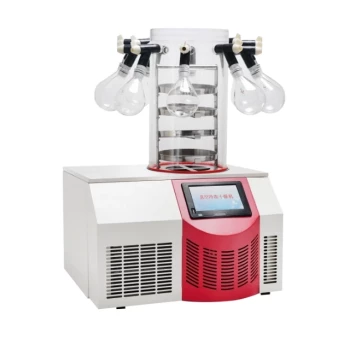
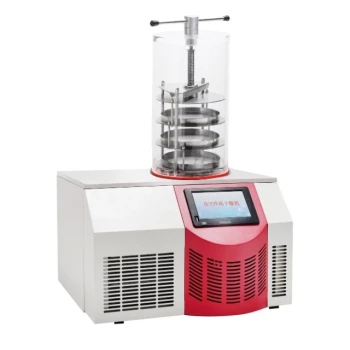
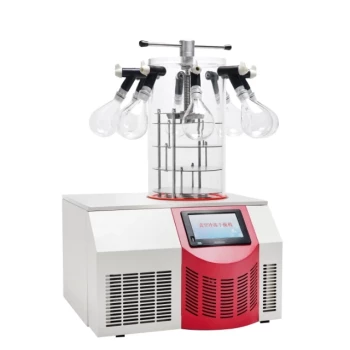
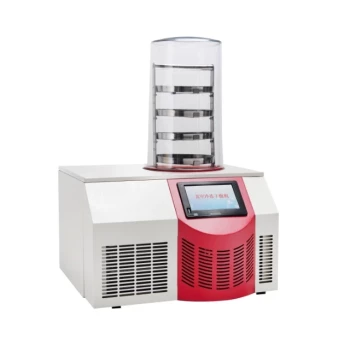
Freeze drying is the preferred method because it preserves the structural integrity and high surface area of Fe-NH2-BDC@ZIF-8 by eliminating liquid-phase surface tension. Traditional blast drying relies on liquid evaporation, which generates intense capillary forces that can crush delicate microporous frameworks. By utilizing vacuum sublimation, freeze drying transitions solvents directly from a solid to a gaseous state, ensuring the three-dimensional channel system remains intact and preventing the formation of hard, unusable particle clumps.
The fundamental advantage of freeze drying lies in bypassing the liquid phase, thereby neutralizing the capillary forces that lead to pore collapse and nanoparticle agglomeration. This preservation is critical for maintaining the high specific surface area and active site exposure required for high-performance nanocomposite applications.
The Mechanics of Pore Preservation
Sublimation vs. Evaporation
A freeze dryer operates by freezing the solvent within the Fe-NH2-BDC@ZIF-8 matrix and then reducing the surrounding pressure. This allows the frozen solvent to sublimate directly into vapor without ever passing through a liquid phase.
Neutralizing Capillary Forces
In a blast drying oven, liquid solvent evaporates from the pores, creating a receding meniscus. This meniscus generates significant capillary suction that exerts massive physical pressure on the pore walls, often leading to structural shrinkage or total lattice collapse.
Protecting the ZIF-8 Lattice
ZIF-8 is characterized by a highly open, microporous framework that is structurally sensitive. Freeze drying ensures that these three-dimensional channels are preserved in their original state, providing a stable foundation for the nanocomposite's functionality.
Maintaining Nanoscale Morphology
Preventing Hard Agglomeration
Traditional heat drying often results in hard agglomeration, where nanoparticles fuse together into dense clusters that are difficult to re-disperse. Freeze drying maintains a "fluffy" or loose-packed powder consistency, which significantly improves the material's dispersibility.
Retaining High Specific Surface Area
By preventing the collapse of the internal pore structure, freeze drying maximizes the specific surface area (SSA) available for chemical reactions. This is vital for materials like Fe-NH2-BDC@ZIF-8, where performance is directly linked to the accessibility of internal active sites.
Ensuring Re-dispersibility
Because the particles do not undergo "cementation" during the drying process, the resulting powder exhibits excellent re-dispersibility in various solvents. This facilitates easier downstream processing and more uniform coating or mixing in final applications.
Impact on Downstream Performance
Optimizing Active Site Exposure
In catalytic applications, the performance of the nanocomposite depends on the exposure of active sites. By maintaining an open pore structure, freeze drying ensures that reactant molecules can diffuse freely through the ZIF-8 framework to reach the Fe-NH2-BDC components.
Facilitating Carbon Support Formation
Freeze drying is decisive for the subsequent preparation of highly active porous carbon supports. When these materials undergo high-temperature treatment (such as sulfidation or calcination), the preserved architecture allows for the formation of a more uniform and effective nitrogen-doped carbon matrix.
Improving Sintering Activity
The loose, soft-agglomerated structure produced by freeze drying enhances the sintering activity of the precursor. This leads to more consistent results during the thermal conversion stages of material synthesis.
Understanding the Trade-offs
Process Time and Cost
Freeze drying is a significantly slower and more expensive process than blast drying. It requires specialized vacuum equipment and high energy consumption to maintain low temperatures and high vacuum levels over extended periods.
Complexity and Scaling
The process is more complex to scale for industrial production compared to simple thermal ovens. It requires precise control over the sublimation front to ensure complete solvent removal without compromising the delicate framework.
Pre-freezing Requirements
The sample must be completely frozen before the vacuum is applied. If any liquid remains, "boiling" can occur under vacuum, which causes foaming and destroys the morphology just as severely as traditional heat drying.
Applying This to Your Synthesis Project
When deciding on a drying method for MOF-based nanocomposites, consider the ultimate application of the material and the sensitivity of its architecture.
- If your primary focus is maximizing catalytic activity: Use a freeze dryer to ensure all internal active sites remain accessible through an open microporous network.
- If your primary focus is high-resolution imaging or characterization: Choose freeze drying to prevent the particle fusion that obscures individual nanoparticle morphology in SEM or TEM analysis.
- If your primary focus is rapid, bulk production of stable materials: A blast drying oven may be acceptable if the specific surface area and pore volume are not critical to the final product's performance.
By prioritizing the physical preservation of the microporous framework, freeze drying ensures that Fe-NH2-BDC@ZIF-8 retains the structural complexity necessary for advanced catalytic performance.
Summary Table:
| Feature | Freeze Drying (Sublimation) | Blast Drying (Evaporation) |
|---|---|---|
| Phase Transition | Solid directly to gas | Liquid to gas |
| Capillary Force | Eliminated; prevents pore collapse | High suction; causes structural shrinkage |
| Morphology | Loose, fluffy powder; highly dispersible | Hard agglomeration; fused clusters |
| Surface Area | Maximized; accessible active sites | Reduced; internal pores often blocked |
| Ideal For | Catalytic activity & SEM characterization | Rapid, bulk processing of stable materials |
Optimize Your Nanocomposite Synthesis with KINTEK
Maintaining the delicate structural integrity of frameworks like Fe-NH2-BDC@ZIF-8 requires high-precision laboratory equipment. KINTEK provides the specialized tools necessary to ensure your materials retain their high specific surface area and catalytic performance.
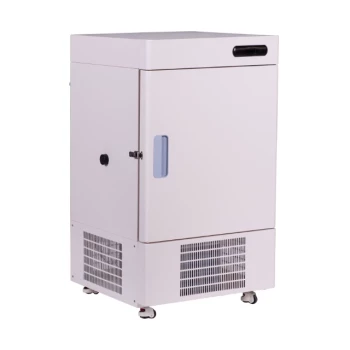
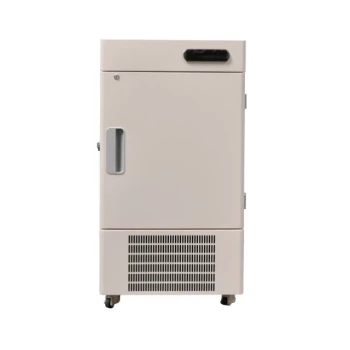
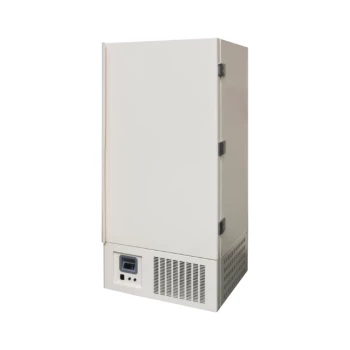
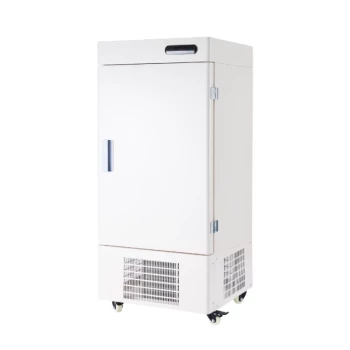
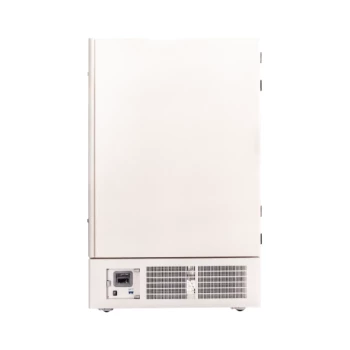
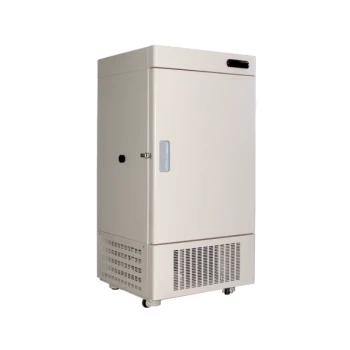
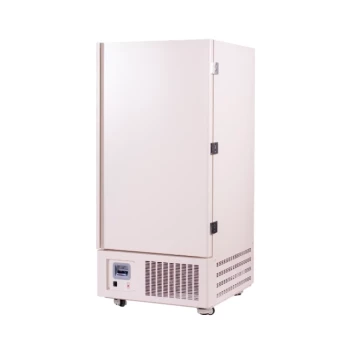
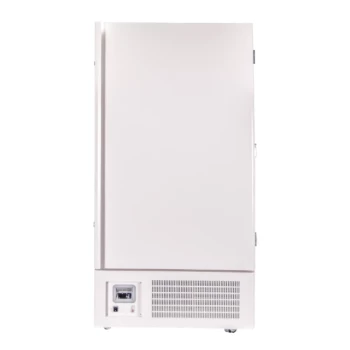
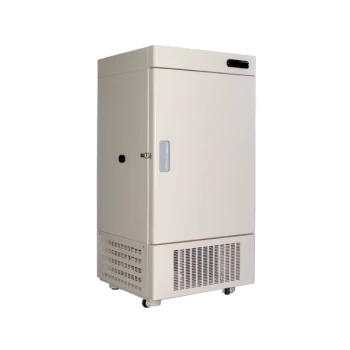
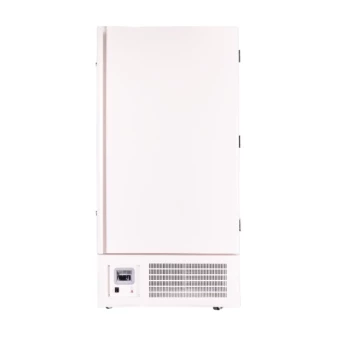
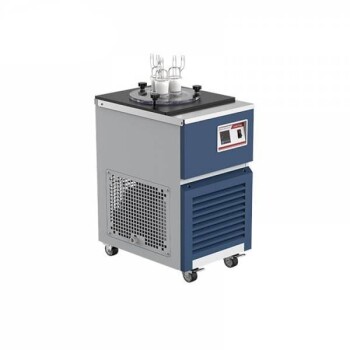
From advanced cooling solutions (freeze dryers, cold traps, and ULT freezers) that prevent pore collapse, to high-temperature furnaces (CVD, vacuum, and atmosphere) and high-pressure reactors for downstream processing, we offer a comprehensive portfolio for advanced material science.
Ready to elevate your research outcomes? Contact our technical experts today to find the perfect drying and thermal treatment solutions for your laboratory. Let KINTEK help you preserve every active site in your next-generation nanocomposites.
References
- Fenglai Pei, Xiangzhi Cui. Constructing FeS and ZnS Heterojunction on N,S-Codoped Carbon as Robust Electrocatalyst toward Oxygen Reduction Reaction. DOI: 10.3390/nano13192682
This article is also based on technical information from Kintek Solution Knowledge Base .
Related Products
- High Performance Laboratory Freeze Dryer
- High Performance Laboratory Freeze Dryer for Research and Development
- Benchtop Laboratory Freeze Dryer for Lab Use
- Benchtop Laboratory Vacuum Freeze Dryer
- 108L Vertical Ultra Low Temperature ULT Freezer
People Also Ask
- What role does a laboratory freeze dryer play in the synthesis of graphene-based electrocatalysts? Preserve 3D Structures
- What are the technical advantages of using a laboratory freeze dryer for porous carbon precursors? Preserve 3D Networks
- What types of liquid samples can be processed using a laboratory freeze dryer? Preserve Your Sensitive Materials
- How do laboratory freeze dryers support scientific research? Preserve Sample Integrity for Reproducible Results
- Why is a laboratory freeze dryer preferred over traditional heating? Preserve Biochar Structure & Maximize Porosity