A cold trap chiller is a specialized device that uses cooling methods to prevent vapors from contaminating vacuum pumps. The cold trap chiller works by condensing or sublimating gases like solvents and water vapors, rendering them harmless. These devices utilize active materials like dry ice, liquid nitrogen, or a Peltier element for cooling. They are most frequently used to condense gases, but they are also effective at trapping other types of contamination like solids. Cold trap chillers are ideal for cryogenic applications and are designed to withstand rapid temperature changes. They are an essential tool in any laboratory setting that uses vacuum pumps.
Toggle Categories
Get Instant Support
Choose your preferred way to connect with our team
-
Get Free Quote Fill out form for detailed pricing
-
Send Email Detailed inquiry support
-
WhatsApp Quick mobile chat
Response Time
Within 8 hours on working days, 24 hours on holidays
cold trap chiller
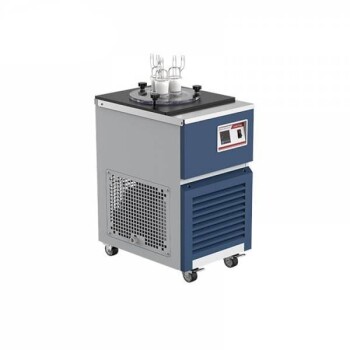
Vacuum Cold Trap Chiller Indirect Cold Trap Chiller
Item Number: KCT-2
We have the best Cold Trap Chiller solutions that will exceed your expectations. Our extensive portfolio virtually guarantees that there is an appropriate standard solution that will meet your needs. Our bespoke design service allows us to meet almost any customer requirement, providing you with a quality solution no matter what your available budget is.
Applications of Cold Trap Chiller
- Separation of solvent and solute
- Concentration of samples
- Preservation of samples
- Purification of compounds
- Removal of impurities
- Extraction of essential oils
- Fractional distillation of liquids
Advantages of Cold Trap Chiller
- Efficiently condenses and traps solvents, preventing them from contaminating the vacuum pump and the environment.
- Provides direct visibility of the condensate, making it easy to monitor the process.
- Reduces backstreaming of various oil molecules in the vacuum chamber.
- Increases the pumping speed of vapors from the container to the vacuum system.
- Safeguards vacuum pumps from being contaminated by vapors being condensed in the device.
- Makes vacuum pumps more efficient and less likely to break down.
- Prevents oil vapors from backstreaming from the pump back to the system.
- Uses a compact and leak-tight structure that doesn’t pass even an ounce of oil vapor.
- Allows for easy drainage of the condensate through its outlets.
- Saves energy and reduces overheads compared to traditional cold traps that use large amounts of nitrogen, tap water, and anti-freeze.
- Offers temperature range flexibility, making it suitable for a wide range of applications such as cryogenic applications, gas chromatography, and adsorption of noble gases, among others.
Our Cold Trap Chiller offers a cost-effective solution to your laboratory equipment needs. It is designed to provide efficient and reliable cooling for your cold trap system, ensuring minimal maintenance requirements. Our chiller also offers a complete customisation service, allowing us to cater to your specific needs and requirements. With its user-friendly design and compact size, our Cold Trap Chiller is easy to install and operate, making it an ideal choice for any laboratory. Trust us to provide you with a high-quality, customised solution at an affordable price.
FAQ
What Is A Cold Trap Chiller In Lab?
A cold trap chiller is a device used in laboratory equipment to protect vacuum pumps from contamination by condensing or sublimating vapors in a separate apparatus. It prevents oil vapors from backstreaming from the pump into the system and maintains a chilled stainless steel or glass surface for vapors to condense or sublimate on. The device utilizes an active material such as dry ice or liquid nitrogen or a Peltier element for cooling and can be disassembled for easy cleaning. Cold traps are essential for efficient pump operation and longer service lives.
What Is The Purpose Of A Cold Trap Chiller?
The purpose of a cold trap chiller is to protect vacuum pumps from contamination by condensing or sublimating vapors and preventing oil vapors from backstreaming into the system. It provides a chilled surface for vapors to condense or sublimate on and utilizes an active material such as dry ice or liquid nitrogen or a Peltier element for cooling. Cold traps are most commonly used to collect vapor from applications involving rotating discs or vacuum systems, but can also be used on other types of contamination including solids. Cryogenic cold traps are specifically manufactured for cryogenic applications such as the adsorption of noble gases.
Why Is A Cold Trap Placed Before The Vacuum Pump?
A cold trap is placed before the vacuum pump to prevent vapors, such as vapor from water or solvents, from contaminating the vacuum pump and the airstream. The cold trap condenses or sublimates gases, preventing them from reaching areas of the system that could lead to malfunction. Cold traps collect vapor from applications involving rotating discs or vacuum systems and oil vapors from a pump to prevent them from flowing into the chamber. By using a cold trap, vacuum pumps operate more efficiently and have longer service lives.
REQUEST A QUOTE
Our professional team will reply to you within one business day. Please feel free to contact us!
Related Articles

Why Your High-Strength Brazed Joints Are Failing—And How to Fix It Permanently
Tired of inconsistent, weak, or failed brazed joints? Discover the invisible root cause of failure and learn how vacuum brazing provides a permanent solution.
Read more
The Architecture of Emptiness: Why Vacuum Level is a Decision, Not Just a Number
Vacuum levels define material purity. We explore the engineering trade-offs between rough vacuum and ultra-high vacuum, and how to choose the right system.
Read more
The Invisible Trade-off: Balancing Speed and Purity in Vacuum Quenching
Nitrogen offers speed; Argon offers purity. Discover the engineering psychology behind choosing the right quenching gas to balance cost against metallurgical integrity.
Read more
The Symphony of Silence: Molybdenum and the Architecture of the Vacuum Hot Zone
Why do we trust Molybdenum in the most extreme environments? Explore the engineering logic behind all-metal hot zones and the pursuit of absolute purity.
Read more
How Vacuum Induction Melting Prevents Catastrophic Material Failures in Critical Components
Discover how Vacuum Induction Melting (VIM) prevents material failures in aerospace, nuclear, and EV components by eliminating atomic-level contamination.
Read more
How Vacuum Induction Melting Elevates High-Performance Alloy Production
Discover how Vacuum Induction Melting (VIM) enhances alloy purity, reduces defects, and optimizes costs for aerospace and energy sectors.
Read more
How Vacuum Induction Melting Ensures Unmatched Reliability in Critical Industries
Vacuum induction melting (VIM) ensures metallurgical purity, durability, and efficiency in aerospace, nuclear, and critical industries. Learn why VIM outperforms traditional methods.
Read more
How Freeze-Drying Cuts Transport Costs by 90% in Critical Logistics
Freeze-drying slashes transport costs by 90% in logistics for space, military, and disaster relief by reducing weight and volume. Learn how it works.
Read more
Freeze-Drying Decoded: The Science Behind Preserving Food, Medicine, and Research Materials
Discover how freeze-drying preserves food, medicine, and research materials with unmatched efficiency. Learn the science behind lyophilization and its applications.
Read more
Why Freeze-Drying is Indispensable for Preserving Sensitive Samples
Freeze-drying preserves sensitive samples by sublimation, maintaining molecular integrity and enabling stable, room-temperature storage. Essential for proteins, vaccines, and volatile compounds.
Read more
How Freeze-Drying Protects Delicate Biological Structures During Water Removal
Freeze-drying preserves biological samples by removing water without structural damage, ideal for vaccines, enzymes, and microbial cultures. Learn how it works.
Read more
Upright vs. Chest ULT Freezers: How to Choose the Right Configuration for Your Lab
Compare upright vs. chest ULT freezers for your lab: temperature stability, workflow efficiency, and cost analysis to protect sensitive samples.
Read more
How ULT Freezers Prevent Catastrophic Loss of Microbiological Samples
ULT freezers safeguard microbiological samples with advanced temperature control, contamination prevention, and emergency backup systems to prevent catastrophic loss.
Read more
Beyond the Spec Sheet: Matching Freeze Dryer Capabilities to Your Application's Critical Needs
Choose the right freeze dryer for pharma, food, or biotech. Key specs like cold trap temp, vacuum, and cooling rate impact drying speed and product quality.
Read more
How ULT Freezers Protect Scientific Discoveries in Genetics and Drug Development
ULT freezers safeguard genetic and pharmaceutical research by maintaining -80°C storage for DNA, proteins, and cell lines—preventing sample degradation and ensuring research validity.
Read more
Application of Liquid Nitrogen in Food Freezing
Explores the use of liquid nitrogen in food freezing, its advantages, methods, equipment, and safety considerations.
Read more
Exploring Various Vacuum Coating Technologies: Evaporation, Sputtering, and Ion Plating
This article delves into the different vacuum coating technologies, focusing on evaporation, sputtering, and ion plating, detailing their principles, advantages, and applications.
Read more
Understanding Cold Traps in Lyophilizers: Key Factors and Evaluation Methods
Explores the role, evaluation, and common misconceptions of cold traps in lyophilizers, emphasizing the importance of water capture efficiency.
Read more
Understanding the Functionality of Cryogenic Cold Traps
An in-depth look at how cryogenic cold traps operate and their applications in various fields.
Read more
Applications of Dry Cold Traps in Various Processes
Dry cold traps are used in multiple applications to condense and collect gases, protecting equipment and improving process efficiency.
Read more