You’ve been here before. An expensive, complex metal assembly comes out of the furnace. You inspect the joint, only to find a hairline crack, discoloration, or a bond that’s simply too weak. It’s another failure. Another costly setback that means more rework, more wasted materials, and another delay to your project deadline. You followed the procedure perfectly, so what went wrong?
The Vicious Cycle of Fixes That Don't Fix Anything
For engineers and technicians striving for perfect, high-strength metal joints, this scenario is a common source of frustration. When a brazed joint fails, the troubleshooting checklist is predictable:
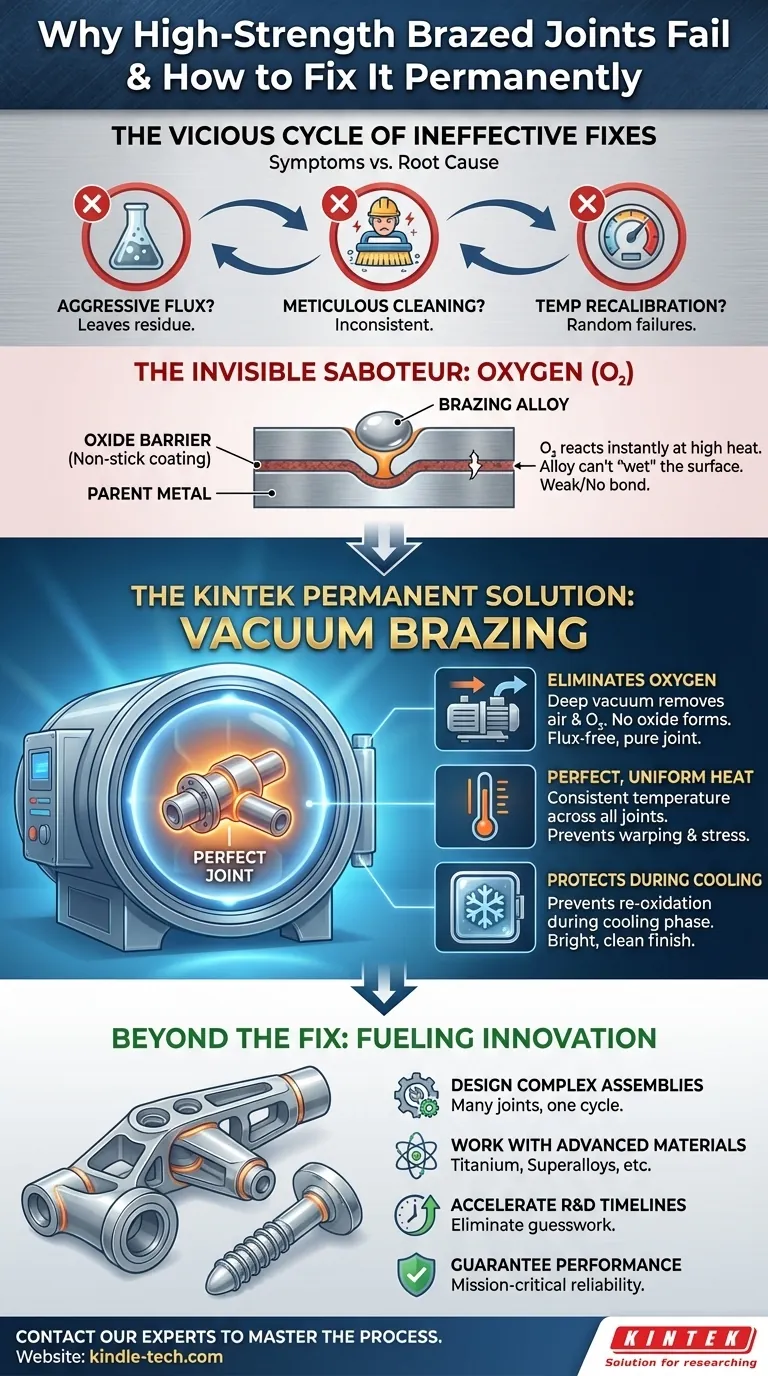
- "Maybe we need a more aggressive chemical flux?" So you try a different formula, only to find it leaves behind corrosive residue that is difficult to clean.
- "Let's clean the parts more meticulously." You implement an exhaustive multi-stage cleaning process, yet the results remain inconsistent.
- "Is the temperature profile off?" You spend hours recalibrating the furnace, but the failures persist, seemingly at random.
Each of these "solutions" feels logical, but they rarely solve the problem for good. They are attempts to manage symptoms. This inconsistency isn't just a technical headache; it has serious business consequences. For a medical device, a failed joint can be catastrophic. In aerospace, it can compromise the integrity of a mission-critical component. Even in less critical applications, it leads to spiraling costs from wasted labor, scrapped high-value materials, and a reputation for unreliable quality.
The reason these fixes fail is that they don't address the real culprit. You’re fighting an enemy you can’t even see.
The Real Culprit: An Invisible Saboteur in Your Furnace
The fundamental reason most brazing fails isn’t dirt, the wrong flux, or imprecise temperature. It's the air itself.
The atmosphere around us contains approximately 21% oxygen. At room temperature, this is harmless. But at the high temperatures required for brazing, metal surfaces react almost instantly with oxygen to form a microscopic, tough layer of oxide.
Think of this oxide layer as a non-stick coating.
No matter how clean your parts are beforehand, this layer forms the moment the parts get hot, creating a physical barrier. The molten brazing alloy can't "wet" the parent metal's surface, preventing it from flowing into the joint and forming a strong, continuous metallurgical bond. What you get is a weak, brittle connection, or no connection at all.
This is why your previous efforts were doomed to inconsistency. Using flux is an attempt to chemically blast away this oxide layer as it forms, but it's an ongoing battle that can leave behind its own contaminants. Meticulous pre-cleaning is pointless if the part re-oxidizes in the first few minutes of heating. You aren't just trying to join two metals; you're trying to do it while the very environment in your furnace is actively working to keep them apart.
Fighting the Enemy by Removing the Battlefield
If the atmosphere is the root of the problem, the only permanent solution is to get rid of it entirely. To achieve a perfect joint, you need to create an environment so pure that oxidation is physically impossible.
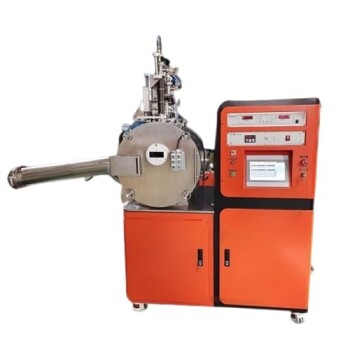
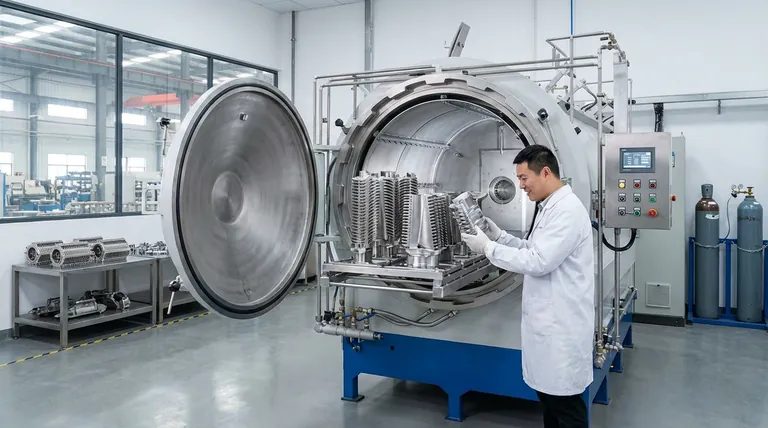
This is the core principle of a vacuum brazing furnace. It isn’t just a better oven; it’s a controlled environment system designed to eliminate the cause of failure at its source.
A KINTEK vacuum furnace is engineered to solve this problem methodically:
1. It Eliminates Oxygen
Before heating even begins, a powerful vacuum system removes virtually all the air from the sealed chamber. By pumping the environment down to a deep vacuum, we starve the process of the oxygen needed to form oxide layers. This makes chemical flux completely unnecessary, resulting in an impeccably clean and pure joint.
2. It Ensures Perfect, Uniform Heat
Once the vacuum is established, the "hot zone" heats your assembly with exceptional uniformity. This prevents thermal stress and warping in complex parts and ensures every joint—whether you have one or one hundred on a single assembly—reaches the precise brazing temperature at the same moment for consistent, repeatable results.
3. It Protects the Part During Cooling
Just as heating in air causes oxidation, so does cooling. A vacuum furnace keeps the assembly under vacuum (or in an inert gas) as it cools. This critical step prevents re-oxidation during the vulnerable cooling phase, ensuring the finished part emerges bright, clean, and strong.
Our furnaces are not just a random collection of parts. They are a direct answer to the fundamental physics of metal joining, designed from the ground up to control the variables that lead to failure.
Beyond the Fix: From Fighting Failures to Fueling Innovation
When you no longer have to worry about the basic integrity of your joints, you stop wasting resources on rework and can focus on pushing boundaries. Resolving this "old problem" for good unlocks new potential.
With the reliability of vacuum brazing, you can now:
- Design and manufacture highly complex assemblies with dozens of joints, confident that all will be perfect in a single, efficient cycle.
- Work with advanced and reactive materials like titanium, stainless steels, and superalloys that are impossible to join reliably with other methods.
- Accelerate your R&D and production timelines by eliminating the time-consuming guesswork and troubleshooting associated with conventional brazing.
- Guarantee the performance and safety of mission-critical components for the most demanding industries, from aerospace to medical devices.
The difference between a failed part and a flawless one isn't about trying harder with the wrong process; it's about adopting the right one. At KINTEK, we specialize in providing the tools and expertise to master that process. Our vacuum furnaces give you total control over the joining environment, but more importantly, they provide a pathway to solving your most challenging engineering problems. If you're ready to move past the cycle of failures and unlock a new standard of quality and complexity, our team is here to help. Contact Our Experts to discuss your specific project and discover how to make every joint a perfect one.
Visual Guide
Related Products
- Vacuum Heat Treat Sintering Brazing Furnace
- Vacuum Induction Melting Spinning System Arc Melting Furnace
- Vacuum Cold Mounting Machine for Sample Preparation
- CF KF Flange Vacuum Electrode Feedthrough Lead Sealing Assembly for Vacuum Systems
- 304 316 Stainless Steel Vacuum Ball Valve Stop Valve for High Vacuum Systems
Related Articles
- The Art of the Void: Why Absence Creates the Strongest Bonds
- Evaluating the Pros and Cons of External Vacuum Heat Treatment Furnaces
- Vacuum Heat Treatment Furnace: Working Principles and Features
- The Architecture of Silence: Mastery Through Total Environmental Control
- Guidelines for Purchasing Vacuum Heat Treatment Furnaces