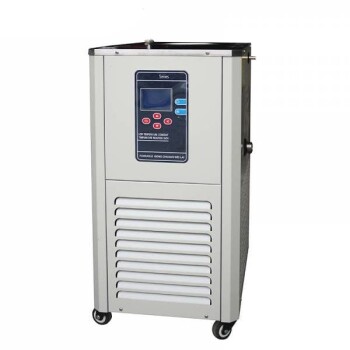
Accuracy in phosphate adsorption experiments is fundamentally ensured through the elimination of mass transfer resistance and the maintenance of thermodynamic stability. By providing continuous, uniform mechanical agitation and precise thermal control, these devices ensure that adsorbent particles remain in a suspended state, allowing phosphate ions to freely and rapidly diffuse to active surface sites for reliable data collection.
Core Takeaway: Constant temperature stirring and shaking equipment provide the controlled kinetic and thermal environment necessary to ensure that experimental results reflect the true chemical affinity of the adsorbent rather than physical limitations like particle settling or temperature fluctuations.
Eliminating Liquid-Phase Mass Transfer Resistance
Ensuring Uniform Particle Suspension
Phosphate ion adsorption requires the adsorbent powder to be completely and uniformly suspended within the potassium dihydrogen phosphate solution. Without constant agitation, particles settle at the bottom of the vessel, drastically reducing the available surface area for ion exchange.
Minimizing Boundary Layer Interference
Mechanical power from a stirrer or shaker creates enough turbulence to overcome liquid film mass transfer resistance. This ensures that the concentration of phosphate ions at the adsorbent's surface is representative of the bulk solution, preventing a "bottleneck" that would skew kinetic measurements.
Facilitating Rapid Diffusion to Active Sites
By maintaining a specific rotation speed (such as 100 or 110 rpm), the equipment ensures that phosphate ions can rapidly diffuse to amine active sites or other functional groups. This allows researchers to capture the true speed of the reaction, which is essential for calculating accurate pseudo-second-order kinetic models.
Maintaining Thermodynamic Consistency
The Role of Precise Temperature Control
Adsorption is a temperature-sensitive process that can be either exothermic or endothermic. A constant temperature environment (typically set to 25 °C or 298 K) ensures that the thermodynamic equilibrium reached is a result of the material’s properties, not external thermal fluctuations.
Achieving True Equilibrium over Time
Many phosphate adsorption experiments require a 24-hour period to reach thermodynamic equilibrium. Constant temperature shakers provide the stability needed over these long durations to ensure that the measured saturated exchange capacity is repeatable and reliable.
Validating Isotherm Models
Stable thermal and kinetic conditions are the foundation for obtaining accurate adsorption isotherm models, such as the Sips or Langmuir models. Without this stability, the calculated maximum theoretical adsorption capacity would be technically unsound, leading to failures when scaling the process for industrial water purification.
Understanding Potential Pitfalls and Trade-offs
The Impact of Excessive Agitation
While agitation is necessary, excessively high speeds can lead to particle attrition, where the mechanical force physically breaks down the adsorbent. This creates new surface area mid-experiment, which artificially inflates the adsorption capacity and compromises the integrity of the data.
Temperature Gradients and Heat Transfer
In larger batches, magnetic stirrers may experience localized heating from the motor, which can create temperature gradients within the solution. Shakers generally offer better thermal uniformity for multiple simultaneous samples, as they circulate air around the entire vessel rather than relying on a heated baseplate.
Limitations of Equipment Calibration
If a stirrer or shaker is not properly calibrated, the oscillation frequency or rotation speed may drift during a long-term experiment. Even minor variations in RPM can alter the mass transfer coefficient, leading to inconsistencies in kinetic data across different experimental runs.
Applying Controlled Agitation to Your Research
Guidelines for Experimental Success
To ensure the highest level of accuracy in your phosphate ion adsorption studies, consider the specific requirements of your material and setup:
- If your primary focus is kinetic modeling: Use a consistent stirring speed (e.g., 100–140 rpm) to ensure that the liquid-solid contact is the only variable affecting the rate of adsorption.
- If your primary focus is thermodynamic equilibrium: Prioritize a shaker with high thermal precision (±0.5 °C) to ensure the 24-hour equilibrium state accurately reflects the material's energy profile.
- If your primary focus is scalability for water treatment: Maintain stable kinetic conditions to ensure that the resulting isotherm data can be reliably used to design industrial-scale purification systems.
By standardizing the physical environment through precise mechanical and thermal control, you transform a sensitive chemical reaction into a repeatable and scientifically rigorous measurement.
Summary Table:
| Feature | Mechanism | Impact on Accuracy |
|---|---|---|
| Mechanical Agitation | Eliminates liquid film resistance | Ensures true kinetic measurements rather than physical limitations |
| Particle Suspension | Prevents adsorbent settling | Maximizes available surface area for ion exchange and diffusion |
| Thermal Control | Maintains stability (e.g., 298 K) | Stabilizes thermodynamic equilibrium for consistent isotherm modeling |
| Long-term Stability | Continuous 24h+ operation | Allows for reliable calculation of saturated exchange capacity |
Elevate Your Research Precision with KINTEK
Ensure the integrity of your adsorption studies with high-precision laboratory equipment from KINTEK. Whether you are modeling pseudo-second-order kinetics or validating Sips isotherm models, our range of shakers, cooling solutions (ULT freezers, chillers), and high-temperature reactors provide the thermal and mechanical stability your data demands.
From high-performance homogenizers and shakers to specialized PTFE and ceramic consumables, KINTEK specializes in empowering water treatment researchers and industrial labs with reliable, scalable tools.
Ready to optimize your experimental accuracy? Contact our experts today to find the perfect equipment for your laboratory needs!
References
- Fumiya Matsuzawa, Motoi Machida. Characteristics of phosphate ion adsorption by nitrogen-doped carbon-based adsorbents prepared from sucrose, melamine, and urea. DOI: 10.7209/carbon.020204
This article is also based on technical information from Kintek Solution Knowledge Base .
Related Products
- Laboratory Small Constant Temperature Heated Magnetic Stirrer Heater and Stirrer
- Custom PTFE Teflon Parts Manufacturer for Magnetic Stirring Bar
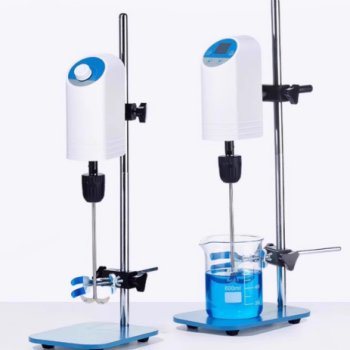
- High Performance Laboratory Stirrers for Diverse Applications
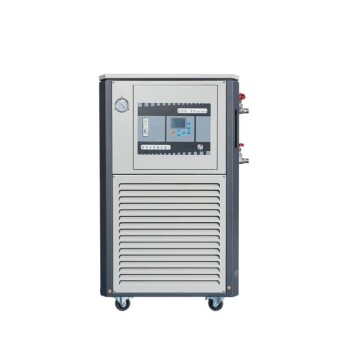
- High Temperature Constant Temperature Heating Circulator Water Bath Chiller Circulator for Reaction Bath
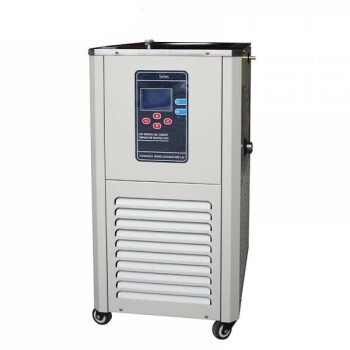
- 50L Chiller Water Bath Cooling Circulator Low Temperature Constant Temperature Reaction Bath
People Also Ask
- What role does a magnetic stirrer with heating play in ZnO nanoparticle synthesis? Precision Control for Quality Results
- What role does a constant temperature heating magnetic stirrer play in MFC-HAp synthesis? Achieve Material Homogeneity
- What is the function of a laboratory magnetic stirrer in Ni–Cr–P electrodeposition? Optimize Ion Transport & Coating
- Why is a laboratory magnetic stirrer required for benzoic acid esters? Boost Reaction Speed & Yield with High RPM
- What role does a laboratory magnetic stirrer play in TiO2 and TiO2-Ag sol preparation? Master Chemical Kinetics