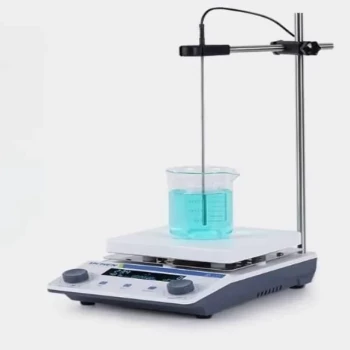
In the co-precipitation synthesis of Zinc Oxide (ZnO) nanoparticles, a magnetic stirrer with heating capabilities serves two critical functions: it ensures the complete molecular-level dissolution of precursors through high-speed rotation and provides the necessary activation energy for the reaction via precise thermal control.
Core Takeaway This equipment transforms a simple mixture into a homogenous reaction environment. By maintaining a stable temperature (e.g., 85°C) and continuous agitation, it primes the chemical precursors to an "ideal state," directly determining the uniformity, size distribution, and purity of the final nanoparticles before the precipitation reaction is triggered.
Achieving Molecular Homogeneity
To synthesize high-quality nanoparticles, the chemical components must be mixed at the molecular level rather than just macroscopically blended.
High-Speed Dissolution
The primary role of the magnetic stirrer is to generate a vortex that rapidly dissolves solid precursors. Specifically, it facilitates the breakdown of zinc acetate into distilled water.
Dispersing Stabilizing Agents
When using stabilizing agents like carboxymethyl cellulose (CMC), consistent agitation is vital. The rotation prevents the polymer from clumping, ensuring it is evenly distributed to cap and stabilize the zinc ions effectively.
Eliminating Concentration Gradients
Continuous forced convection prevents the reactants from settling or segregating. This ensures that every portion of the solution has an identical chemical composition, which is essential for uniform crystal growth.
Providing Critical Activation Energy
Chemical reactions in nanoparticle synthesis often require a specific energy threshold to proceed efficiently.
Reaching the Reaction Threshold
The heating element raises the solution to a specific set point, typically around 85°C for this specific protocol. This supplies the thermal activation energy required to chemically activate the zinc acetate and CMC mixture.
Ensuring Thermal Stability
Beyond just heating, the equipment maintains a stable thermal environment. Fluctuations in temperature can cause inconsistent nucleation rates, leading to particles of varying sizes.
Optimizing the Pre-Precipitation State
The success of the co-precipitation method relies heavily on the condition of the solution before the precipitating agent is added.
Priming for Nucleation
The combination of heat and stirring ensures the precursors reach an "ideal state." The solution is thermally and chemically equilibrated, making it ready for the critical moment when sodium hydroxide (NaOH) is added.
Controlling Particle Morphology
By regulating the mixing speed and temperature, you exert control over the nucleation process. Uniform conditions during this phase directly correlate to a narrow particle size distribution and regular morphology in the final ZnO product.
Understanding Operational Trade-offs
While heating magnetic stirrers are essential, improper use can introduce variables that degrade the final product.
Solvent Evaporation
Prolonged heating at 85°C can lead to significant solvent loss. This alters the molar concentration of the precursors, potentially shifting the stoichiometry of the reaction if not monitored or compensated for.
Agitation Balance
There is a balance to be struck with stirring speed. Excessive speed can introduce air bubbles or cause splashing, while insufficient speed leads to thermal gradients where the solution is hotter near the plate than at the surface.
Making the Right Choice for Your Goal
When configuring your equipment for ZnO synthesis, tailor your approach to your specific scientific objective.
- If your primary focus is Particle Uniformity: Prioritize high-speed, consistent stirring to eliminate concentration gradients, ensuring every nucleus forms in an identical chemical environment.
- If your primary focus is Reaction Efficiency: Focus on precise temperature control (maintaining a strict 85°C) to ensure the activation energy is consistently met without overheating the solvent.
Summary: The magnetic stirrer with heating acts as the fundamental regulator of the synthesis, synchronizing mechanical mixing with thermal energy to create the precise environment required for high-quality Zinc Oxide nanoparticle formation.
Summary Table:
| Feature | Function in ZnO Synthesis | Impact on Final Nanoparticles |
|---|---|---|
| High-Speed Rotation | Ensures molecular-level dissolution & vortex generation | Prevents clumping; ensures uniform particle size |
| Precise Thermal Control | Provides activation energy (typically at 85°C) | Triggers chemical reaction; stabilizes nucleation |
| Forced Convection | Eliminates concentration and thermal gradients | Ensures chemical purity and regular morphology |
| Stabilizer Dispersion | Evenly distributes agents like CMC | Caps and stabilizes zinc ions for controlled growth |
Optimize Your Nanomaterial Synthesis with KINTEK
Precision is the backbone of high-quality nanoparticle production. At KINTEK, we understand that uniform particle morphology starts with reliable laboratory equipment. Whether you are synthesizing Zinc Oxide or developing advanced battery materials, our high-performance magnetic stirrers, high-temperature furnaces, and homogenizers provide the stability your research demands.
Why choose KINTEK?
- Comprehensive Solutions: From high-temperature high-pressure reactors to crushing and milling systems, we cover every stage of material preparation.
- Technical Excellence: Our equipment is designed for precision, helping you eliminate variables like thermal gradients and inconsistent agitation.
- Dedicated Support: We specialize in serving researchers in lab-scale and industrial settings with durable consumables like PTFE products, ceramics, and crucibles.
Ready to elevate your lab's efficiency and results? Contact our experts today to find the perfect equipment for your synthesis!
References
- I. Othman, Mohamed M. El-Molla. Synthesis of zinc oxide and silver/ zinc oxide nano composite for production of antimicrobial textiles. DOI: 10.21608/ejchem.2019.17392.2083
This article is also based on technical information from Kintek Solution Knowledge Base .
Related Products
- Laboratory Small Constant Temperature Heated Magnetic Stirrer Heater and Stirrer
- Custom PTFE Teflon Parts Manufacturer for Magnetic Stirring Bar
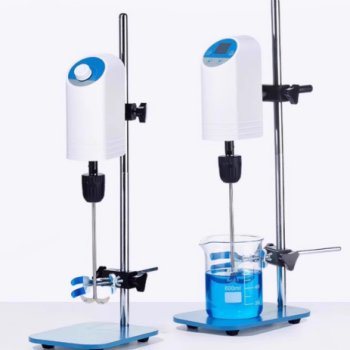
- High Performance Laboratory Stirrers for Diverse Applications
- Manual Heated Hydraulic Press Machine with Heated Plates for Laboratory Hot Press
- Automatic High Temperature Heated Hydraulic Press Machine with Heated Plates for Lab
People Also Ask
- What role does a constant temperature heating magnetic stirrer play in MFC-HAp synthesis? Achieve Material Homogeneity
- What is the function of a laboratory magnetic stirrer in Ni–Cr–P electrodeposition? Optimize Ion Transport & Coating
- Why is a laboratory magnetic stirrer required for benzoic acid esters? Boost Reaction Speed & Yield with High RPM
- What role does a laboratory magnetic stirrer play in TiO2 and TiO2-Ag sol preparation? Master Chemical Kinetics
- What role does a laboratory magnetic stirrer play in the acidification pretreatment of aluminum sludge? Speed Recovery