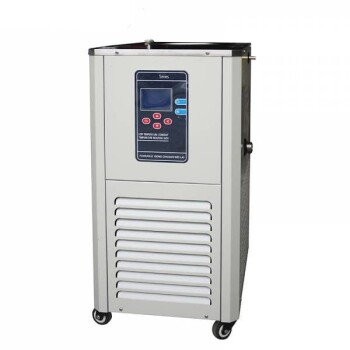
The constant temperature heating magnetic stirrer acts as the primary control unit for reaction kinetics and structural uniformity during the synthesis of cellulose-hydroxyapatite (MFC-HAp) composites.
It serves a dual purpose: it maintains a precise thermal environment (typically around 80°C) to drive chemical bonding while simultaneously applying mechanical force to ensure the calcium and phosphorus precursors are evenly dispersed throughout the fibrous cellulose suspension.
Core Insight By synchronizing stable thermal energy with continuous mixing, this device prevents component separation and facilitates the direct, uniform nucleation of hydroxyapatite crystals onto cellulose fibers. This results in a cohesive nanocomposite with strong structural bonding rather than a simple physical mixture of two separate materials.
The Dual Mechanisms of Action
To understand the critical role of this equipment, we must separate its two simultaneous functions: thermal regulation and mechanical agitation.
Thermal Energy and Crystal Nucleation
The heating element does more than simply warm the solution; it acts as the catalyst for phase change. The device provides stable thermal energy, often maintained at 80°C, which is energetically necessary to initiate the co-precipitation reaction.
Facilitating Growth on Cellulose
This specific thermal environment facilitates the nucleation and growth of hydroxyapatite (HAp) crystals. Instead of forming in isolation, the heat encourages these crystals to grow directly on the surface of the microfibrillated cellulose, creating a true composite interface.
Mechanical Agitation and Precursor Distribution
The magnetic stirring mechanism counteracts the natural tendency of distinct materials to separate. It ensures that the calcium and phosphorus sources—the building blocks of hydroxyapatite—are uniformly distributed within the viscous cellulose suspension.
Preventing Localized Agglomeration
Without continuous agitation, reagents would settle or cluster, leading to "hotspots" of high concentration. The stirrer ensures the chemical environment is consistent throughout the vessel, preventing localized agglomeration and ensuring every cellulose fiber is exposed to the same concentration of reactants.
Impact on Material Properties
The precise control of heat and motion directly dictates the physical properties of the final MFC-HAp composite.
Achieving Structural Homogeneity
The primary outcome of using this device is a nanocomposite with a homogeneous component arrangement. The stirring ensures that the inorganic HAp is not just present, but evenly dispersed across the organic cellulose matrix.
Enhancing Structural Bonding
The simultaneous application of heat and mixing results in strong structural bonding. This creates a robust material suitable for use as an adsorbent, as the components are locked together at a fundamental level rather than loosely associated.
Understanding the Trade-offs
While the device is essential, improper management of its parameters can lead to synthesis failure.
The Risk of Thermal Instability
If the "constant temperature" feature fluctuates, the nucleation rate of the hydroxyapatite will vary. Inconsistent heating can lead to uneven crystal sizes, where some crystals grow too large and others fail to nucleate, compromising the material's specific surface area.
Agitation Intensity
The stirring speed must be carefully calibrated. Insufficient stirring allows the heavy calcium/phosphorus salts to settle (sedimentation), resulting in a heterogeneous product. Conversely, while not explicitly detailed in the primary text, excessive turbulence in similar processes can sometimes disrupt the delicate arrangement of microfibrils.
Making the Right Choice for Your Goal
When setting up your synthesis equipment, align your parameters with your specific material requirements.
- If your primary focus is Crystal Quality: Prioritize the precision of the heating element to ensure the temperature remains exactly at the set point (e.g., 80°C) to foster uniform nucleation.
- If your primary focus is Homogeneity: Ensure the stirring speed is sufficient to keep the viscous MFC suspension in constant motion without creating a vortex that separates components by density.
Ultimately, the constant temperature heating magnetic stirrer is the architect of the composite's internal structure, transforming raw precursors into a unified, high-performance material.
Summary Table:
| Feature | Role in MFC-HAp Synthesis | Impact on Final Composite |
|---|---|---|
| Precise Heating | Maintains ~80°C for nucleation | Drives chemical bonding & crystal growth |
| Magnetic Agitation | Distributes Ca & P precursors | Prevents agglomeration & ensures homogeneity |
| Process Sync | Combines thermal & mechanical energy | Creates strong structural bonding |
| Stability Control | Regulates reaction environment | Ensures uniform crystal size & surface area |
Elevate Your Material Research with KINTEK Precision
Unlock superior structural uniformity in your composite synthesis with KINTEK’s high-precision laboratory equipment. Whether you are developing cellulose-hydroxyapatite (MFC-HAp) adsorbents or advanced biomaterials, our constant temperature heating magnetic stirrers provide the thermal stability and mechanical consistency essential for perfect nucleation.
From high-temperature furnaces and vacuum systems to specialized crushing, milling, and hydraulic presses, KINTEK offers a comprehensive range of solutions for demanding lab environments. Our portfolio also features high-temperature high-pressure reactors, autoclaves, and cooling solutions designed for accuracy and durability.
Ready to optimize your synthesis process? Contact KINTEK today to discover how our expert-grade consumables and equipment can transform your research outcomes.
References
- Vipul Vilas Kusumkar, Martin Daňo. Sorptive Removal of 133Ba from Aqueous Solution Using a Novel Cellulose Hydroxyapatite Composite Derived from Cigarette Waste. DOI: 10.1007/s11270-024-07026-3
This article is also based on technical information from Kintek Solution Knowledge Base .
Related Products
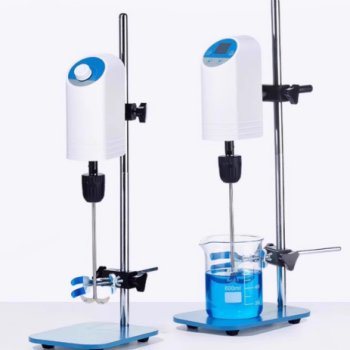
- Laboratory Small Constant Temperature Heated Magnetic Stirrer Heater and Stirrer
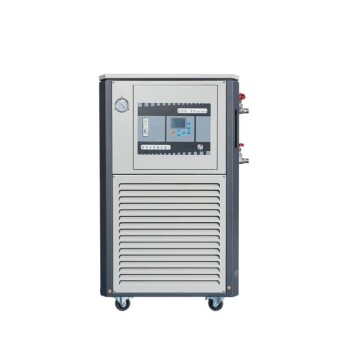
- High Temperature Constant Temperature Heating Circulator Water Bath Chiller Circulator for Reaction Bath
- Custom PTFE Teflon Parts Manufacturer for Magnetic Stirring Bar
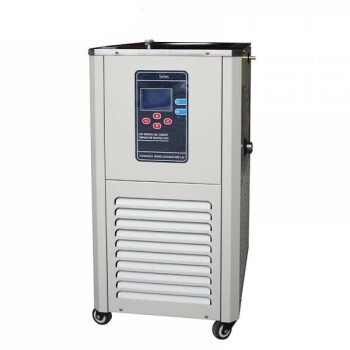
- 5L Heating Chilling Circulator Cooling Water Bath Circulator for High and Low Temperature Constant Temperature Reaction
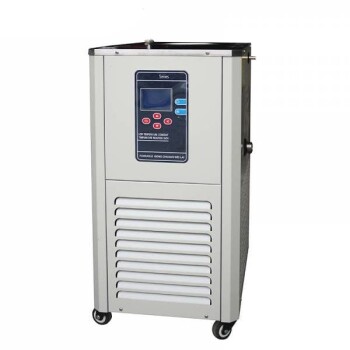
- 10L Heating Chilling Circulator Cooling Water Bath Circulator for High and Low Temperature Constant Temperature Reaction
People Also Ask
- What role does a magnetic stirrer with heating play in ZnO nanoparticle synthesis? Precision Control for Quality Results
- What is the function of a laboratory magnetic stirrer in Ni–Cr–P electrodeposition? Optimize Ion Transport & Coating
- Why is a laboratory magnetic stirrer required for benzoic acid esters? Boost Reaction Speed & Yield with High RPM
- What role does a laboratory magnetic stirrer play in TiO2 and TiO2-Ag sol preparation? Master Chemical Kinetics
- What role does a laboratory magnetic stirrer play in the acidification pretreatment of aluminum sludge? Speed Recovery