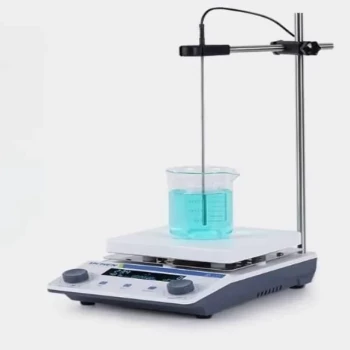
Precise control over thermodynamics and kinetics is essential for high-performance catalyst synthesis. A laboratory heating and stirring device facilitates the loading of platinum (Pt) particles by maintaining the formic acid solution at exactly 80 °C while ensuring the carbon support remains fully dispersed. This dual action guarantees that Pt nucleates uniformly on the support surface rather than agglomerating into ineffective clusters.
Success in catalyst loading relies on balancing reduction rates with particle distribution. By stabilizing thermal conditions and providing constant agitation, the device prevents metal agglomeration and forces Pt particles to deposit evenly within the pores of the carbon support.
Thermal Regulation and Reaction Kinetics
Initiating the Reduction Environment
The device acts as the thermal driver for the synthesis, preheating the formic acid solution to a specific target of 80 °C. This precise thermal energy is required to activate the chemical reduction process effectively.
Maintaining Reaction Stability
Consistent heating ensures the thermodynamic environment remains stable throughout the entire procedure. Fluctuations in temperature can alter reduction rates, leading to inconsistent particle formation.
Mechanical Agitation and Dispersion
Suspending the Support Material
The device plays a critical role in physically managing the carbon support, specifically nitrogen-doped carbon xerogels. Continuous stirring ensures these supports are fully dispersed in the solution rather than settling at the bottom of the vessel.
Controlling Precursor Distribution
During the synthesis, the chloroplatinic acid precursor solution is added dropwise. The stirring mechanism immediately distributes these drops throughout the solvent, preventing localized areas of high concentration.
Optimizing Particle Nucleation
Preventing Agglomeration
One of the primary failure modes in catalyst synthesis is the clumping of metal atoms. Continuous agitation ensures that Pt particles remain separate, preventing severe agglomeration during the deposition phase.
Targeting Internal Structures
The mechanical energy from stirring helps drive the reagents into the complex architecture of the support. This allows Pt particles to deposit not just on the surface, but also deep within the pores of the carbon xerogels.
Understanding Process Sensitivities
The Risk of Thermal Drift
While heating is essential, the device must maintain the 80 °C target without significant overshoot. Excessive heat can accelerate reduction too aggressively, leading to larger, less active particle sizes despite the stirring.
Agitation Limits
Stirring is vital for dispersion, but the method must be consistent. Inadequate mixing during the dropwise addition of the precursor is the leading cause of uneven loading and metal agglomeration.
Ensuring High-Quality Catalyst Synthesis
To maximize the efficiency of your platinum loading process, focus on the following operational goals:
- If your primary focus is particle uniformity: Ensure the carbon support is fully dispersed via steady stirring before you begin the dropwise addition of the precursor.
- If your primary focus is maximizing active surface area: Maintain a strict 80 °C temperature profile to support the specific kinetics required for deposition within the xerogel pores.
Precise control of thermal and mechanical variables is the defining factor between a mediocre composite and a high-performance catalyst.
Summary Table:
| Process Parameter | Role of Device | Impact on Pt Loading |
|---|---|---|
| Temperature (80 °C) | Precise Thermal Regulation | Drives reduction kinetics & prevents thermal drift |
| Mechanical Agitation | Continuous Stirring | Disperses carbon support & prevents Pt agglomeration |
| Precursor Addition | Uniform Distribution | Ensures even deposition of chloroplatinic acid |
| Reaction Stability | Thermodynamic Control | Maximizes active surface area within xerogel pores |
Elevate Your Catalyst Research with KINTEK
Achieving precise particle nucleation requires equipment that offers uncompromising thermal and mechanical control. KINTEK specializes in high-performance laboratory equipment designed for the most demanding synthesis protocols.
Whether you are loading noble metals or developing next-generation energy materials, our range of heating and stirring solutions, high-temperature furnaces, and specialized reactors provide the stability needed to prevent agglomeration and ensure uniform dispersion. Our portfolio also includes essential electrolytic cells, electrodes, and ceramic crucibles to support your electrochemical research from start to finish.
Ready to optimize your lab’s efficiency and catalyst quality? Contact our technical experts today to find the perfect solution for your research!
References
- Cinthia Alegre, M.J. Lázaro. N-Doped Carbon Xerogels as Pt Support for the Electro-Reduction of Oxygen. DOI: 10.3390/ma10091092
This article is also based on technical information from Kintek Solution Knowledge Base .
Related Products
- Laboratory Small Constant Temperature Heated Magnetic Stirrer Heater and Stirrer
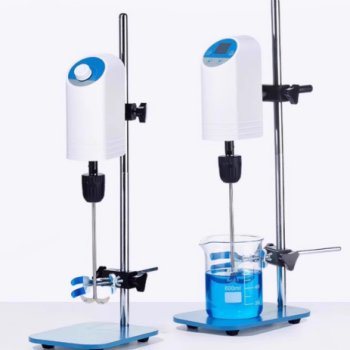
- High Performance Laboratory Stirrers for Diverse Applications
- Automatic Heated Hydraulic Press Machine with Heated Plates for Laboratory Hot Press
- Automatic Heated Hydraulic Press Machine with Heated Plates for Laboratory Hot Press 25T 30T 50T
- 30T 40T Split Automatic Heated Hydraulic Press Machine with Heated Plates for Laboratory Hot Press
People Also Ask
- What role does a magnetic stirrer with heating play in ZnO nanoparticle synthesis? Precision Control for Quality Results
- What role does a constant temperature heating magnetic stirrer play in MFC-HAp synthesis? Achieve Material Homogeneity
- What is the function of a laboratory magnetic stirrer in Ni–Cr–P electrodeposition? Optimize Ion Transport & Coating
- Why is a laboratory magnetic stirrer required for benzoic acid esters? Boost Reaction Speed & Yield with High RPM
- What role does a laboratory magnetic stirrer play in TiO2 and TiO2-Ag sol preparation? Master Chemical Kinetics