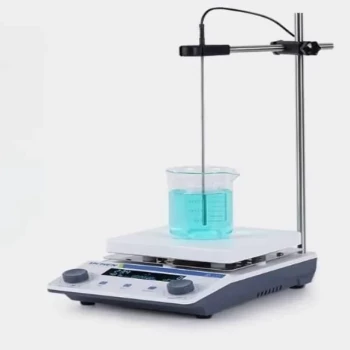
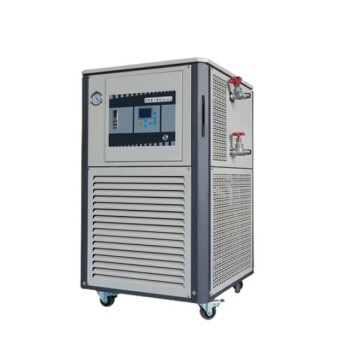
The high-precision constant temperature stirring hot plate acts as the primary driver of homogenization during the critical initial phase of Nitrogen-doped Carbon Xerogel (N-CXG) synthesis. By maintaining a strict temperature of 90 °C while continuously agitating the mixture, it ensures that solid precursors—specifically resorcinol, melamine, and sodium carbonate—fully dissolve into distilled water. This controlled environment transforms a suspension of solids into the transparent, stable solution required for successful polymerization.
The core function of this equipment is to eliminate variables. It turns a physical mixture of distinct chemicals into a chemically uniform "transparent yellow" solution, without which consistent polymerization and gelation are impossible.
The Mechanics of Precursor Dissolution
Thermal Activation at 90 °C
The synthesis begins with a mixture of solid precursors in distilled water: resorcinol, melamine, and sodium carbonate.
To initiate the dissolution process effectively, the hot plate must elevate the solution's temperature to exactly 90 °C.
This precise thermal energy is required to overcome the solubility limits of the solids, ensuring they integrate fully into the aqueous phase rather than remaining as a suspension.
The Necessity of Continuous Agitation
Heat alone is insufficient to create a truly uniform solution for complex nanomaterials.
The magnetic stirring function plays a vital role by keeping the fluid in constant motion.
This prevents the heavier solid particles from settling at the bottom of the beaker and ensures they are exposed to the heated solvent evenly.
Achieving the Visual Standard
Visual Indicators of Success
The equipment is operated until a specific visual milestone is reached: the formation of a transparent yellow solution.
This color change and clarity serve as the primary quality control indicator for this stage of synthesis.
It confirms that the resorcinol, melamine, and sodium carbonate have completely dissolved and are interacting chemically.
Ensuring Downstream Consistency
The state of the precursor solution dictates the quality of the final carbon xerogel.
By creating a homogeneous solution, the hot plate ensures that the chemical environment is uniform throughout the entire volume.
This uniformity is a prerequisite for the subsequent polymerization and gelation reactions, preventing defects in the final material structure.
Understanding the Operational Risks
Risks of Temperature Instability
If the hot plate fails to maintain the target 90 °C, the synthesis is likely to fail.
Lower temperatures may result in incomplete dissolution, leaving solid particles that disrupt the gel network.
Conversely, uncontrolled temperature spikes could degrade the sensitive precursors or trigger premature reactions before the mixture is uniform.
The Impact of Inadequate Stirring
Without vigorous and constant stirring, concentration gradients will form within the liquid.
This lack of homogeneity leads to uneven polymerization rates in different parts of the container.
Ultimately, this results in a final N-CXG material with inconsistent properties and poor structural integrity.
Optimizing Your Synthesis Workflow
To ensure high-quality N-CXG production, approach this initial heating stage with strict process control.
- If your primary focus is reproducibility: Calibrate your hot plate to ensure it holds 90 °C precisely, as temperature deviations are the leading cause of batch-to-batch inconsistency.
- If your primary focus is structural uniformity: Do not rush the dissolution phase; ensure the solution is perfectly transparent and yellow before adding any catalysts or moving to the gelation step.
Precision at this early dissolution stage is the defining factor between a high-performance N-CXG and a failed sample.
Summary Table:
| Parameter | Operational Target | Function in N-CXG Synthesis |
|---|---|---|
| Temperature | 90 °C | Overcomes solubility limits to dissolve solids (Resorcinol, Melamine, Na2CO3). |
| Agitation | Continuous Magnetic Stirring | Prevents particle settling and ensures uniform chemical interaction. |
| Visual Quality | Transparent Yellow Solution | Confirms complete dissolution and readiness for polymerization. |
| Critical Goal | Homogenization | Eliminates concentration gradients to ensure structural integrity of the gel. |
Elevate Your Nanomaterial Synthesis with KINTEK Precision
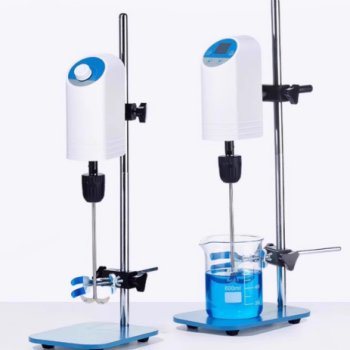
High-performance materials like Nitrogen-doped Carbon Xerogels require uncompromising thermal accuracy. KINTEK specializes in advanced laboratory equipment designed to eliminate variables in your research. From high-precision stirring hot plates and homogenizers to high-temperature furnaces (muffle, vacuum, CVD) and high-pressure reactors, we provide the tools necessary for consistent, reproducible results.
Whether you are scaling battery research with our specialized tools or conducting complex chemical synthesis, KINTEK offers the comprehensive portfolio of laboratory equipment and consumables (including PTFE, ceramics, and crucibles) you need to succeed.
Ready to optimize your lab's efficiency? Contact our technical experts today to find the perfect equipment solution for your specific application.
References
- Cinthia Alegre, M.J. Lázaro. N-Doped Carbon Xerogels as Pt Support for the Electro-Reduction of Oxygen. DOI: 10.3390/ma10091092
This article is also based on technical information from Kintek Solution Knowledge Base .
Related Products
- Laboratory Small Constant Temperature Heated Magnetic Stirrer Heater and Stirrer
- Silicon Carbide (SIC) Ceramic Plate for Engineering Advanced Fine Ceramics
- Automatic High Temperature Heated Hydraulic Press Machine with Heated Plates for Lab
- Precision Machined Silicon Nitride (SiN) Ceramic Sheet for Engineering Advanced Fine Ceramics
- Manual High Temperature Heated Hydraulic Press Machine with Heated Plates for Lab
People Also Ask
- What role does a magnetic stirrer with heating play in ZnO nanoparticle synthesis? Precision Control for Quality Results
- What role does a constant temperature heating magnetic stirrer play in MFC-HAp synthesis? Achieve Material Homogeneity
- What is the function of a laboratory magnetic stirrer in Ni–Cr–P electrodeposition? Optimize Ion Transport & Coating
- Why is a laboratory magnetic stirrer required for benzoic acid esters? Boost Reaction Speed & Yield with High RPM
- What role does a laboratory magnetic stirrer play in TiO2 and TiO2-Ag sol preparation? Master Chemical Kinetics