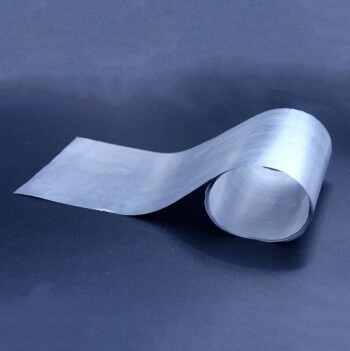
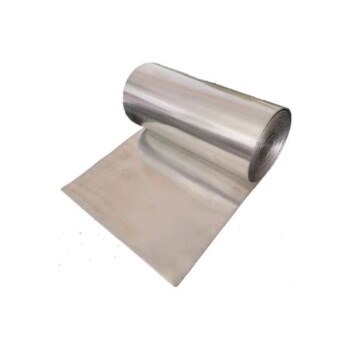
Carbon-coated aluminum foil serves as a high-performance current collector specifically designed to bridge the conductive gap between LFP active materials and the metal substrate. By applying a thin layer of functionalized carbon, this consumable significantly reduces internal resistance, enhances material adhesion, and optimizes the electron transport network essential for Lithium Iron Phosphate (LFP) chemistry.
Core Takeaway: Carbon-coated aluminum foil transforms a passive metal substrate into an active interface that solves LFP’s inherent conductivity limitations. It is the primary catalyst for achieving superior high-rate discharge performance and extended cycling life in modern battery cells.
Enhancing Electrical Conductivity and Charge Transfer
Reducing Interfacial Contact Resistance
LFP particles often suffer from high interfacial contact resistance when placed directly on bare aluminum. The conductive carbon layer acts as an "electrical bridge," filling microscopic gaps between the active material and the foil to ensure a seamless flow of electrons.
Creating Continuous Electron Transmission Paths
Standard aluminum foil provides a flat surface, but LFP—particularly nanoscale LFP—requires a more complex network. The carbon coating provides multidimensional transmission paths that allow electrons to move efficiently from the external circuit into the active material during rapid cycling.
Maintaining Performance at High Rates
Because the carbon layer facilitates faster electron movement, the battery can handle high-rate charge and discharge cycles without significant voltage drops. This makes it a critical component for applications requiring quick power bursts, such as electric vehicle acceleration.
Improving Physical Stability and Adhesion
Strengthening the Mechanical Bond
During the coating process, the carbon layer provides a superior surface texture compared to smooth, high-purity aluminum. This results in enhanced adhesion, preventing the LFP slurry from delaminating or peeling away from the current collector during the physical stresses of manufacturing.
Supporting Nanoscale Structures
LFP is frequently engineered at the nanoscale to improve its performance, which makes it harder to bind. The carbon coating acts as a stable physical support that anchors these tiny particles, ensuring they remain in electrical contact throughout the battery's lifespan.
Enhancing Long-Term Cycling Stability
By preventing the gradual detachment of active material, carbon-coated foil directly improves cycling stability. It ensures that the electrode remains structurally sound even after thousands of expansion and contraction cycles during charging and discharging.
Understanding the Trade-offs and Implementation Factors
Cost vs. Performance Gains
While carbon-coated foil offers clear technical advantages, it is a higher-cost consumable than standard high-purity aluminum foil. Engineers must balance the performance requirements of the specific cell against the increased bill of materials (BOM) cost.
Thickness and Volume Constraints
The addition of the carbon layer, however thin, adds to the total thickness of the current collector. In high-energy-density designs, this additional volume must be accounted for to ensure the overall cell capacity targets are still met.
Voltage Sensitivity
Aluminum foil is stable within the 2.5 to 4.0 V working range typical of LFP chemistries. However, the quality of the carbon coating must be strictly controlled to ensure no impurities are introduced that could trigger side reactions at these voltages.
How to Apply This to Your Project
Recommendations for Implementation
When selecting current collectors for LFP-based projects, consider the following strategic priorities:
- If your primary focus is High-Rate Power: Use carbon-coated foil to minimize internal resistance and prevent overheating during rapid discharge.
- If your primary focus is Long-Cycle Life: Prioritize carbon-coated substrates to ensure the LFP active material maintains mechanical adhesion over several years of use.
- If your primary focus is Cost-Sensitive Energy Storage: Evaluate if standard high-purity aluminum foil can meet your needs, provided your LFP formulation includes sufficient internal conductive additives.
Choosing the right surface treatment for your aluminum foil is not just a material choice, but a fundamental decision in defining the power and longevity of your LFP battery system.
Summary Table:
| Key Function | Benefit for LFP Chemistry | Impact on Battery Performance |
|---|---|---|
| Electrical Conductivity | Reduces interfacial contact resistance | Superior high-rate discharge & less heat |
| Mechanical Adhesion | Prevents LFP slurry delamination | Extended cycling life and durability |
| Electron Transport | Creates multidimensional transmission paths | Stable voltage during rapid cycling |
| Physical Support | Anchors nanoscale active materials | Consistent capacity over thousands of cycles |
Elevate Your Battery Research with KINTEK’s Precision Consumables
Achieving peak performance in LFP electrode development requires current collectors that ensure perfect conductivity and structural integrity. KINTEK specializes in high-quality battery research tools and consumables, including premium carbon-coated foils, electrolytic cells, and electrodes designed for next-generation energy storage.
Our comprehensive laboratory portfolio supports every stage of your workflow:
- Material Synthesis: High-temperature furnaces (CVD, PECVD, vacuum, and atmosphere).
- Sample Preparation: Crushing, milling, and sieving equipment.
- Electrode Formation: Precision hydraulic presses for pellet and electrode fabrication.
- Thermal Management: Cooling solutions including ULT freezers and freeze dryers.
Whether you are a researcher focused on high-rate power or a manufacturer looking for reliable OEM/ODM support, KINTEK delivers the expertise and reliability you need to succeed.
Contact KINTEK Today for a Tailored Quote
References
- L. Li. Advancements in anode and cathode nanomaterials for high-performance Li-ion batteries. DOI: 10.54254/2755-2721/26/20230830
This article is also based on technical information from Kintek Solution Knowledge Base .
Related Products
- Conductive Carbon Cloth Carbon Paper Carbon Felt for Electrodes and Batteries
- Professional Cutting Tools for Carbon Paper Cloth Diaphragm Copper Aluminum Foil and More
- Aluminum-Plastic Flexible Packaging Film for Lithium Battery Packaging
- Aluminum Foil Current Collector for Lithium Battery
- Nickel Aluminum Tabs for Soft Pack Lithium Batteries
People Also Ask
- What are the electrode materials? A Guide to Choosing the Right Conductor for Your Application
- What are the examples of electrode materials? From Platinum to Graphite for Your Application
- How should carbon materials be cleaned before use? Ensure Peak Performance with Proper Prep
- What are carbon cloths used for? Conquer Static Dust on Electronics & Screens
- How can the electrolyte wettability of carbon cloth be enhanced? Unlock Superior Electrochemical Performance