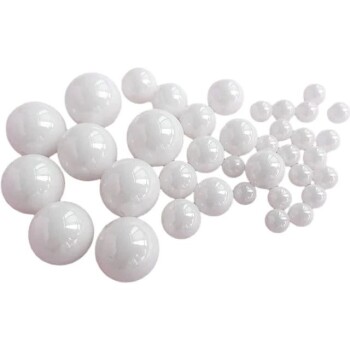
Zirconia grinding jars act as high-energy reaction vessels that facilitate the mechanochemical transformation of CsX and CuX precursors into high-purity perovskite nanocrystals. They provide the intensive mechanical force required to achieve atomic-level uniformity and enhanced chemical reactivity, ensuring a successful transition to single-phase crystals during subsequent thermal treatment.
Zirconia grinding jars provide a high-hardness, chemically inert environment for the intensive milling of precursors. By maximizing collision energy while minimizing material contamination, they ensure both the structural homogeneity and the optoelectronic purity of the final CsCuX perovskite.
Enhancing Precursor Reactivity and Uniformity
Achieving Atomic-Level Homogeneity
In the synthesis of CsCuX perovskites, the primary role of the zirconia jar is to facilitate the uniform distribution of CsX and CuX raw materials. The high-energy milling process ensures that these precursor components are mixed at an atomic level, preventing localized concentrations that could lead to secondary phases.
Increasing Surface Reaction Activity
The mechanical force generated within the jar physically breaks down particles, significantly increasing their surface area and reaction activity. This activation is essential for the powders to react efficiently during the high-temperature calcination process that follows milling.
Ensuring Single-Phase Crystal Formation
By creating a perfectly homogenized precursor mix, zirconia jars enable the formation of high-purity, single-phase crystals. Without this intensive mechanical preparation, the final perovskite structure may suffer from structural defects or incomplete crystallization.
Maintaining Chemical and Optoelectronic Purity
Preventing Metallic Contamination
Zirconia is selected for its extreme hardness and wear resistance, which is critical when milling at high speeds (often up to 800 RPM). Unlike metallic jars, zirconia resists shedding particles into the mix, protecting the perovskite from impurities that would degrade its optoelectronic performance.
Utilizing Chemical Inertness
The chemical inertness of zirconium dioxide (ZrO2) ensures that the jar does not react with the halide precursors (CsX and CuX) during the milling process. This stability is vital for maintaining the precise stoichiometry required for high-quality semiconductor materials.
Protecting Ionic Conductivity
In related solid-state materials, purity is directly linked to performance; similarly, for CsCuX, avoiding foreign ions is crucial. Zirconia’s resistance to wear ensures that the chemical purity of the halide perovskite remains uncompromised, preserving its intrinsic electronic properties.
Leveraging Mechanical Efficiency
High-Density Kinetic Impact
The high density of zirconia material allows the grinding media to generate significant impact kinetic energy during rotation. This energy is necessary to drive the mechanochemical reactions required to synthesize complex perovskite structures from solid-state precursors.
Breaking Down Powder Agglomerates
Precursor powders often form clusters that can inhibit uniform reaction; zirconia jars effectively de-agglomerate these materials. This ensures a fine, consistent particle size distribution, which is a prerequisite for high-quality nanocrystal growth.
Withstanding High-Intensity Impacts
Because zirconia can withstand heavy mechanical impacts without fracturing, it is the ideal material for long-duration, high-intensity milling. This durability ensures the integrity of the sample throughout the entire synthesis cycle.
Understanding the Trade-offs
Thermal Management Challenges
High-energy milling in zirconia jars generates significant frictional heat, which can sometimes lead to premature phase transitions or precursor degradation. Users must often implement cooling intervals or "rest cycles" to manage the internal temperature of the jar.
Cost vs. Contamination Risk
While zirconia is more expensive than alumina or stainless steel, the risk of contamination with cheaper materials is significantly higher. For high-performance optoelectronics, the initial investment in zirconia is usually outweighed by the necessity of material purity.
Scaling Limitations
While highly effective for laboratory-scale synthesis and research, high-energy ball milling in zirconia jars can be difficult to scale for mass production. Maintaining the same energy density and purity levels in larger volumes requires specialized industrial equipment.
How to Apply This to Your Project
Recommendations for Synthesis
- If your primary focus is maximum optoelectronic purity: Use high-grade zirconia jars and balls to eliminate metallic trace impurities that cause non-radiative recombination.
- If your primary focus is achieving a specific nanocrystal size: Adjust the milling duration and RPM, as the high-impact energy of zirconia allows for precise control over particle refinement.
- If your primary focus is minimizing secondary phases: Ensure a high ball-to-powder weight ratio within the zirconia jar to maximize the homogeneity of the CsX and CuX precursor mix.
Selecting the right zirconia hardware is the definitive step in ensuring your solid-state synthesis produces high-quality, research-grade CsCuX perovskite nanocrystals.
Summary Table:
| Key Feature | Benefit to CsCuX Perovskite Synthesis |
|---|---|
| Atomic Homogeneity | Ensures uniform distribution of CsX and CuX to prevent secondary phases. |
| Wear Resistance | Minimizes metallic contamination, preserving optoelectronic performance. |
| Chemical Inertness | Prevents unwanted reactions with halide precursors during high-speed milling. |
| High Kinetic Impact | Provides the energy needed for mechanochemical transformation and de-agglomeration. |
Achieve Unmatched Purity in Perovskite Synthesis with KINTEK
For researchers developing high-performance CsCuX perovskite nanocrystals, material purity and structural uniformity are non-negotiable. KINTEK specializes in advanced laboratory equipment, providing high-durability zirconia grinding jars and crushing/milling systems that ensure zero contamination and atomic-level precursor mixing.
Beyond milling, our comprehensive portfolio supports your entire research workflow with:
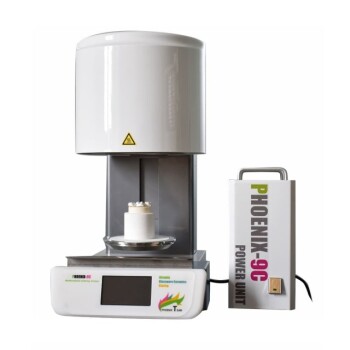
- High-Temperature Furnaces (Muffle, Tube, Vacuum, Atmosphere) for precise calcination and annealing.
- Hydraulic Presses (Pellet, Hot, Isostatic) for high-quality material processing.
- High-Temperature High-Pressure Reactors & Autoclaves for advanced chemical synthesis.
- Precision Consumables including high-purity PTFE products, ceramics, and crucibles.
Ready to optimize your solid-state synthesis and enhance your lab's efficiency? Contact our technical experts today to find the perfect equipment solution tailored to your specific research requirements.
References
- Zhi Jiang, S. А. Vitusevich. Scale-up synthesis of high-quality solid-state-processed CsCuX (X = Cl, Br, I) perovskite nanocrystal materials toward near-ultraviolet flexible electronic properties. DOI: 10.1039/d2ra07100b
This article is also based on technical information from Kintek Solution Knowledge Base .
Related Products
- Laboratory Jar Ball Mill with Alumina Zirconia Grinding Jar and Balls
- Laboratory Jar Mill with Agate Grinding Jar and Balls
- Laboratory Ball Mill Jar Mill with Metal Alloy Grinding Jar and Balls
- Precision Machined Zirconia Ceramic Ball for Engineering Advanced Fine Ceramics
- Engineering Advanced Fine Ceramics Head Tweezers with Pointed Elbow Zirconia Ceramic Tip
People Also Ask
- What are the primary functions of using a ball mill for BZCY72 powder? Achieve High Purity and Enhanced Sintering
- In what way does a laboratory ball mill affect material properties when modifying PHBV/pulp fiber composites?
- Why is a laboratory ball mill required for ultra-fine fly ash? Unlock Nano-Scale Adsorption Power
- What is the function of a laboratory ball mill in the preparation of AMMCs? Optimize Dispersion & Grain Refinement
- What is the function of a laboratory ball mill in the pretreatment of waste tire char (WTC)? Optimize Material Reactivity