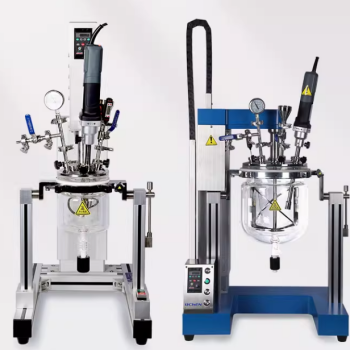
Ultrasonic equipment is essential for effective de-agglomeration. In the dispersion of halloysite nanotubes (HNTs), the primary function of ultrasonic cleaning or homogenization equipment is to utilize cavitation effects to break the Van der Waals forces that hold the nanotubes together. This process ensures a high degree of dispersion in aqueous solutions, creating the necessary physical foundation for the uniform adsorption and deposition of precursors on the surfaces and within the internal lumens of the nanotubes.
The use of ultrasonic cavitation overcomes the natural tendency of halloysite nanotubes to agglomerate by neutralizing inter-particle attractive forces. Achieving this uniform dispersion is a non-negotiable prerequisite for successful chemical modification, composite synthesis, or surface coating.
The Mechanism of Ultrasonic Dispersion
Overcoming Van der Waals Forces
Halloysite nanotubes naturally exist in bundled or clustered states due to strong inter-molecular attractions. Ultrasonic waves provide the mechanical energy required to physically decouple these clusters into individual, free-floating nanotubes.
The Role of Cavitation and Shock Waves
The equipment generates high-frequency vibrations that create microscopic vacuum bubbles in the liquid, a process known as cavitation. When these bubbles collapse, they release intense shock waves and micro-jets that force the solvent between the nanotubes.
Accelerating Molecular Diffusion
Beyond simple physical separation, the local high energy generated by cavitation accelerates the mixing of raw materials. This ensures that reactant molecules diffuse evenly throughout the solution, reaching the nanomaterial interface more rapidly.
Impact on Composite Synthesis and Performance
Facilitating Surface and Lumen Access
Uniform dispersion is critical for ensuring that active components, such as nickel precursors, can reach both the external surfaces and the internal lumens of the HNTs. Without this step, precursors would only deposit on the outer shells of large nanotube bundles, wasting the material's internal surface area.
Refining Microstructure and Grain Size
Ultrasonic assistance helps refine the grain size of the synthesized materials. By maintaining a high degree of dispersion during the reaction, the equipment prevents the formation of large, irregular aggregates, leading to a more uniform microstructure in the final product.
Enhancing Catalytic and Adsorptive Efficiency
In applications like wastewater treatment or photocatalysis, high dispersion maximizes the contact between the active components and the medium. This leads to significantly improved efficiency in processes such as removing heavy metals or producing hydrogen.
Understanding the Trade-offs and Pitfalls
Potential for Structural Damage
Excessive or high-intensity sonication can lead to the fragmentation or shortening of the nanotubes. While dispersion is necessary, over-processing can compromise the structural integrity and aspect ratio of the halloysite.
Heat Generation and Thermal Stability
The energy released during cavitation significantly increases the temperature of the solvent. If the temperature is not controlled through cooling jackets or pulsed sonication, it may trigger premature chemical reactions or degrade temperature-sensitive precursors.
Re-agglomeration Risks
Ultrasonic dispersion is a physical state that can be temporary. Without the addition of appropriate surfactants or immediate subsequent processing, nanotubes may begin to re-agglomerate once the ultrasonic energy is removed.
How to Apply This to Your Project
When integrating ultrasonic dispersion into your workflow, your approach should vary based on your specific material goals:
- If your primary focus is uniform composite coating: Use high-power homogenization to ensure precursors can penetrate the internal lumens of the nanotubes.
- If your primary focus is maintaining nanotube length: Use a chilled ultrasonic bath with lower intensity to prevent mechanical shearing of the HNT structure.
- If your primary focus is industrial scalability: Implement continuous-flow ultrasonic reactors to ensure consistent energy density across large volumes of dispersion.
Mastering the balance of ultrasonic energy and duration is the key to unlocking the full potential of halloysite nanotubes in advanced material synthesis.
Summary Table:
| Feature | Role in HNT Dispersion | Impact on Material Quality |
|---|---|---|
| Cavitation | Breaks Van der Waals forces | Ensures individual nanotube separation |
| Shock Waves | Forces solvent into lumens | Enables uniform precursor deposition |
| Energy Input | Accelerates molecular diffusion | Refines grain size and microstructure |
| Process Control | Manages heat and intensity | Prevents structural damage or fragmentation |
Elevate Your Material Synthesis with KINTEK Precision
Achieving perfect dispersion is the first step toward groundbreaking material innovation. KINTEK specializes in high-performance laboratory equipment designed to meet the rigorous demands of nanotechnology and chemical engineering.
From our powerful ultrasonic homogenizers and shakers for flawless de-agglomeration to high-temperature reactors, autoclaves, and muffle furnaces for advanced composite synthesis, we offer a comprehensive suite of tools to ensure your halloysite nanotubes reach their full potential. Whether you are optimizing battery research, wastewater treatment catalysts, or dental materials, KINTEK provides the reliability and precision your lab deserves.
Ready to optimize your dispersion process and enhance your research outcomes? Contact KINTEK today for expert guidance and tailored equipment solutions!
References
- Meltem Karaismailoğlu Elibol, Yan Lü. Nickel Oxide Decorated Halloysite Nanotubes as Sulfur Host Materials for Lithium–Sulfur Batteries. DOI: 10.1002/gch2.202300005
This article is also based on technical information from Kintek Solution Knowledge Base .
Related Products
- High Shear Homogenizer for Pharmaceutical and Cosmetic Applications
- High Performance Lab Homogenizer for Pharma Cosmetics and Food R&D
- Lab Sterile Slapping Type Homogenizer for Tissue Mashing and Dispersing
- Laboratory High Throughput Tissue Grinding Mill Grinder
- Laboratory Disc Rotary Mixer for Efficient Sample Mixing and Homogenization
People Also Ask
- Why Use a High Shear Homogenizer for Cathode Slurries? Optimize Double-Layer Solid-State Battery Production
- What is the function of high-shear dispersion equipment in corona-resistant nanocomposites? Elevate Your Insulation
- What is the necessity of using an industrial-grade high-shear homogenizer for biomass washing? Ensure Process Efficiency
- What are the advantages of using a high-shear homogenizer for BED/GMA coatings? Achieve Superior Nano-Dispersion
- What role does a high-shear homogenizer play in ODC catalyst suspensions? Unlock Superior Electrochemical Efficiency