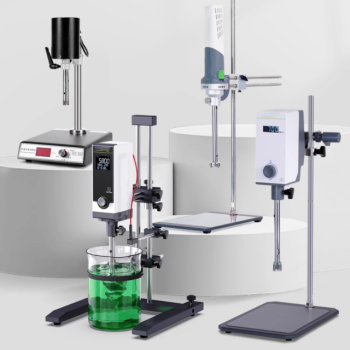
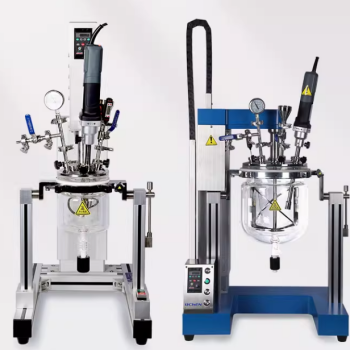
Active dispersion via homogenizers or stirring is critical because it prevents the physical sedimentation and agglomeration of nanoparticles. Without this mechanical intervention, catalyst particles clump together, drastically reducing the effective surface area available for reactions. By maintaining a uniform suspension, these systems ensure that light penetrates the liquid phase evenly and that pollutants have maximum contact with the catalyst.
The core function of homogenization is to defeat the natural tendency of nanoparticles to aggregate, thereby preventing light-shielding effects and ensuring stable, reproducible reaction kinetics.
Overcoming Optical Limitations
Eliminating the "Light-Shielding" Effect
When nanoparticles agglomerate (clump together), the outer particles block light from reaching the inner particles.
This phenomenon, known as light-shielding, renders a significant portion of your catalyst inactive. Continuous stirring breaks these clumps, ensuring every particle is exposed to the light source.
Achieving Uniform Light Distribution
A static fluid allows particles to settle, leading to uneven light absorption where the bottom is oversaturated and the top is clear.
Homogenization maintains a uniform suspension state, allowing incident light to penetrate the entire liquid phase effectively.
Enhancing Reaction Efficiency
Maximizing Active Surface Area
The rate of a photocatalytic reaction depends heavily on how much catalyst surface area is exposed to the reactants.
High-energy mixing prevents settling, keeping the effective reaction surface area at its absolute maximum throughout the process.
Improving Hydrodynamics and Mass Transfer
Beyond optics, proper dispersion creates a favorable hydrodynamic environment.
Mechanical shear forces promote oxygen mass transfer and general material exchange. This ensures that pollutant molecules (or dissolved CO2) eliminate mass transfer limitations and come into full contact with the excited catalyst surface.
Ensuring Process Reliability
Stabilizing Degradation Kinetics
If the catalyst distribution shifts during the reaction, your data becomes unreliable.
Active stirring maintains stable degradation kinetics, preventing the drop in performance that occurs as catalysts settle over time.
Guaranteeing Reproducibility
For scientific validity, experiments must be repeatable under identical conditions.
By preventing random sedimentation patterns, homogenization ensures the reproducibility of degradation experiments and hydrogen production rates.
Understanding the Trade-offs
Mechanical Complexity vs. Reaction Yield
While essential for suspension, introducing high-energy mixing systems adds mechanical complexity to the reactor design.
You must balance the energy input required for mechanical shear against the gain in reaction efficiency. Insufficient mixing leads to settling, while excessive mixing consumes power without necessarily increasing the reaction rate once full dispersion is achieved.
Making the Right Choice for Your Goal
To optimize your suspended bed reactor, match your mixing strategy to your specific constraints:
- If your primary focus is Reaction Speed: Prioritize high-shear homogenization to eliminate mass transfer limitations and maximize catalyst-pollutant contact.
- If your primary focus is Data Quality: Focus on consistent, continuous stirring to prevent sedimentation and ensure the reproducibility of your degradation kinetics.
Ultimately, the performance of a suspended bed reactor is defined not just by the chemistry of the catalyst, but by the physical stability of the suspension.
Summary Table:
| Key Benefit | Impact on Reactor Performance | Mechanism |
|---|---|---|
| Prevents Agglomeration | Maximizes effective surface area | High-shear force breaks particle clumps |
| Eliminates Light-Shielding | Ensures full light penetration | Uniform suspension exposes every particle |
| Mass Transfer Enhancement | Increases reaction speed | Improved hydrodynamics for reactant contact |
| Process Reliability | Guarantees reproducibility | Maintains stable degradation kinetics over time |
Elevate Your Photocatalytic Research with KINTEK Precision
Don't let particle sedimentation compromise your research outcomes. KINTEK specializes in advanced laboratory solutions designed to optimize your material science and chemical engineering workflows. From high-performance homogenizers and shakers that ensure perfect nanoparticle dispersion to high-temperature reactors and autoclaves for demanding synthesis, we provide the tools necessary for reproducible, high-yield results.
Whether you are scaling up hydrogen production or optimizing pollutant degradation, our comprehensive range—including ultrasonic equipment, ceramics, and specialized laboratory consumables—is engineered for reliability.
Ready to optimize your reactor's performance? Contact our technical experts today to find the perfect equipment solution for your lab's specific needs.
References
- Sanya Mishra, O. P. Sinha. Recent Developments in Detoxification of Organic Pollutants Using CdS-based Nanocomposites. DOI: 10.5101/nbe.v13i2.p95-108
This article is also based on technical information from Kintek Solution Knowledge Base .
Related Products
- High Shear Homogenizer for Pharmaceutical and Cosmetic Applications
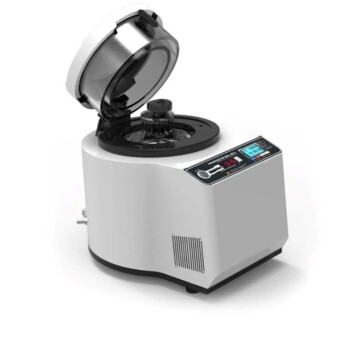
- High Performance Lab Homogenizer for Pharma Cosmetics and Food R&D
- Lab Sterile Slapping Type Homogenizer for Tissue Mashing and Dispersing
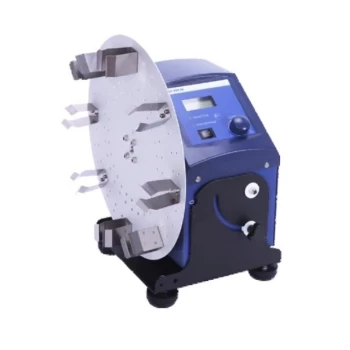
- Laboratory Disc Rotary Mixer for Efficient Sample Mixing and Homogenization
- Laboratory High Throughput Tissue Grinding Mill Grinder
People Also Ask
- Why Use a High Shear Homogenizer for Cathode Slurries? Optimize Double-Layer Solid-State Battery Production
- What is the function of high-shear dispersion equipment in corona-resistant nanocomposites? Elevate Your Insulation
- What is the necessity of using an industrial-grade high-shear homogenizer for biomass washing? Ensure Process Efficiency
- What are the advantages of using a high-shear homogenizer for BED/GMA coatings? Achieve Superior Nano-Dispersion
- What role does a high-shear homogenizer play in ODC catalyst suspensions? Unlock Superior Electrochemical Efficiency