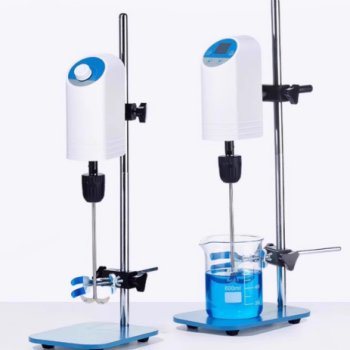
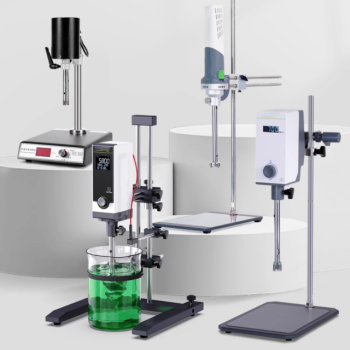
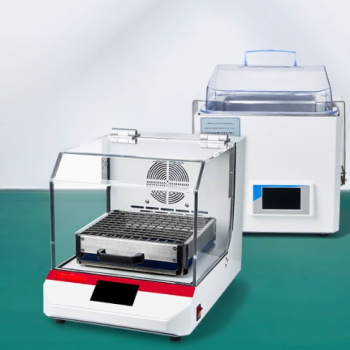
A Laboratory Stirrer acts as the critical mechanical driver for reaction efficiency during the leaching of titanium-magnesium production waste. By providing continuous power, it ensures the mineral pulp remains in a suspended state, preventing the solid waste particles from settling at the bottom of the reactor. This constant motion creates a uniformly mixed environment essential for consistent chemical interactions.
The stirrer utilizes mechanical forced convection to maximize the contact frequency between solid niobium components and liquid leaching agents, directly accelerating reaction kinetics and preventing process stagnation.
The Mechanics of Enhanced Leaching
Maintaining Particle Suspension
The primary physical function of the stirrer is to prevent sedimentation. Without this continuous input of power, the solid mineral pulp would naturally settle out of the solution.
Keeping these particles in a suspended state ensures that the maximum surface area of the solid waste is always exposed to the liquid phase.
Driving Mechanical Forced Convection
The stirrer generates mechanical forced convection throughout the reactor. This active movement replaces natural diffusion, which is often too slow for efficient industrial or experimental leaching.
This convection is the mechanism that ensures the mixture remains uniform rather than separating into distinct layers of solids and liquids.
Increasing Contact Frequency
Reaction rates in heterogeneous systems rely heavily on how often reactants meet. The stirrer significantly increases the contact frequency between the niobium components in the waste and the leaching agents.
In this specific context, the agents—sodium hydroxide and glycerol—are forced into constant interaction with the solid particles, thereby enhancing the overall leaching kinetics.
Critical Process Improvements
Eliminating Concentration Gradients
In a static or poorly mixed vessel, the leaching agent immediately surrounding a solid particle is quickly consumed. This creates a "dead zone" where the reaction slows down.
The stirrer eliminates these concentration gradients by constantly replenishing the reagent supply at the particle's surface, maintaining a high reaction rate.
Ensuring Uniformity
For experimental data to be valid, the conditions within the reactor must be consistent. The stirrer ensures the pulp is uniformly mixed, meaning the temperature and chemical composition are identical throughout the vessel.
The Risks of Inadequate Agitation
The Pitfall of Sedimentation
If the stirring mechanism is insufficient, solid particles will succumb to gravity and accumulate at the bottom of the reactor. This drastically reduces the active surface area available for the chemical reaction.
Inconsistent Kinetic Data
Failure to maintain mechanical forced convection leads to the formation of localized concentration gradients. This results in erratic leaching kinetics, making it impossible to accurately measure the efficiency of recovering niobium from the waste.
Optimizing Your Leaching Strategy
If your primary focus is maximizing Reaction Speed:
- Prioritize a stirring speed high enough to induce vigorous forced convection, ensuring the highest possible frequency of contact between the niobium components and the sodium hydroxide/glycerol mixture.
If your primary focus is Data Consistency:
- Ensure the stirrer provides steady, continuous power to eliminate all concentration gradients, guaranteeing that the mineral pulp remains perfectly suspended and uniformly mixed throughout the experiment.
The Laboratory Stirrer is not just a mixer; it is the fundamental tool that sustains the kinetic energy required for effective material recovery.
Summary Table:
| Feature | Role in Leaching Experiments | Impact on Waste Recovery |
|---|---|---|
| Particle Suspension | Prevents solid waste sedimentation | Maximizes surface area for reaction |
| Forced Convection | Replaces slow natural diffusion | Accelerates contact between reagents |
| Mixing Uniformity | Eliminates concentration gradients | Ensures consistent temperature & chemical data |
| Kinetic Drive | Increases contact frequency | Faster leaching of niobium components |
Maximize Your Material Recovery with KINTEK Precision
Don't let sedimentation or inconsistent kinetics stall your research. KINTEK specializes in high-performance laboratory equipment designed for the most demanding leaching and mineral processing workflows. Whether you are optimizing titanium-magnesium waste recovery or performing complex material synthesis, our portfolio offers the reliability you need.
From high-torque shakers and homogenizers to specialized high-temperature reactors and autoclaves, we provide the tools to ensure uniform mixing and precise control. Our range also includes essential crushing, milling, and sieving systems, as well as specialized PTFE and ceramic consumables to withstand harsh leaching agents like sodium hydroxide.
Ready to elevate your lab’s efficiency and data accuracy?
Contact KINTEK Experts Today to find the perfect equipment solution for your specific application.
References
- Almagul Ultarakova, P.C. Burns. Studies for hydrometallurgical processing of titanium-magnesium production sludge with niobium extraction in solution. DOI: 10.31643/2023/6445.18
This article is also based on technical information from Kintek Solution Knowledge Base .
Related Products
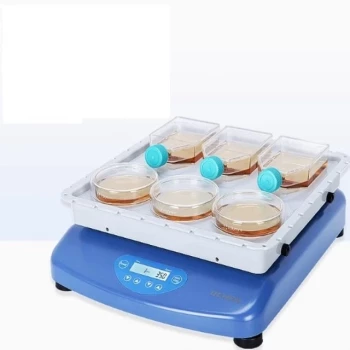
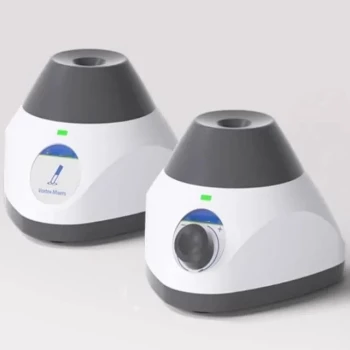
- High Performance Laboratory Stirrers for Diverse Applications
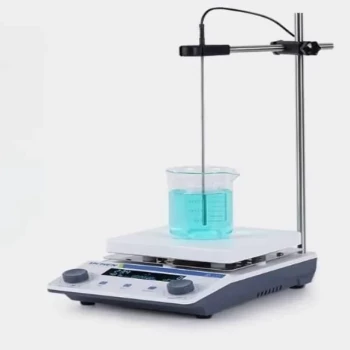
- Laboratory Small Constant Temperature Heated Magnetic Stirrer Heater and Stirrer
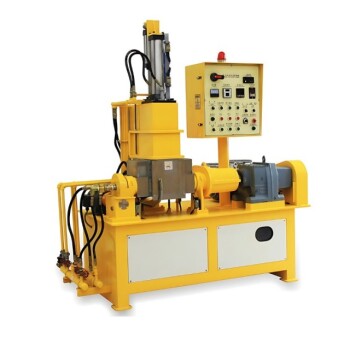
- Lab Internal Rubber Mixer Rubber Kneader Machine for Mixing and Kneading
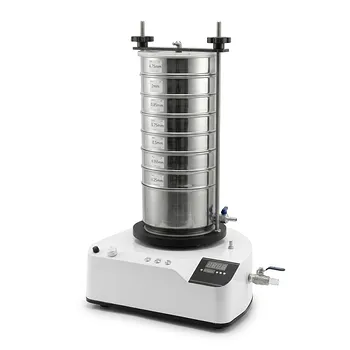
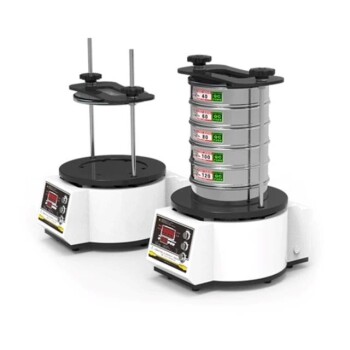
- Laboratory Vibratory Sieve Shaker Machine for Dry and Wet Three-Dimensional Sieving
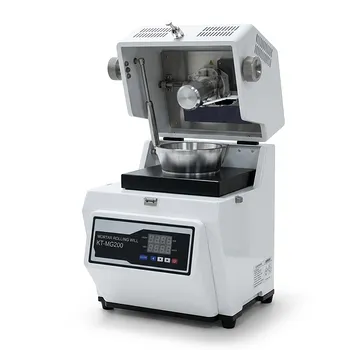
- Laboratory Grinding Mill Mortar Grinder for Sample Preparation
People Also Ask
- How does a laboratory stirrer influence MOF product quality? Master Precision in Non-Solvothermal Synthesis
- What is the primary function of laboratory stirring equipment in the preparation of compost leachate? Optimize Extraction
- What is a laboratory mixer? A Guide to Achieving Perfect Sample Homogeneity
- What is a laboratory mixer used for? Choose the Right Tool for Liquids or Solids
- What is the role of laboratory stirring equipment in nZVI preparation? Achieve Stable and Uniform Nano Slurries