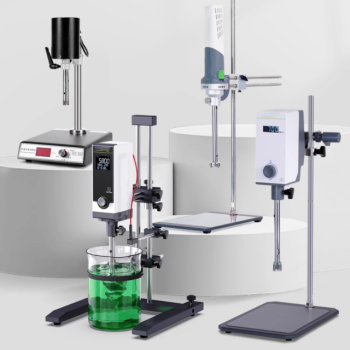
The primary function of a laboratory stirring system in gold scrap leaching is to create an aggressive hydrodynamic environment that forces solid particles into a uniform suspension. By utilizing adjustable speeds, particularly those exceeding 960 rpm, the system ensures that gold scrap does not settle, maximizing the surface area exposed to the hydrochloric acid solution.
By achieving full suspension, the stirring system effectively minimizes liquid film diffusion resistance. This shifts the process bottleneck, allowing the reaction to be dominated by faster interfacial chemical reactions rather than slow diffusion.
Optimizing the Hydrodynamic Environment
Achieving Uniform Suspension
The fundamental role of the stirring system is to overcome gravity. Without adequate agitation, gold scrap particles settle at the bottom of the reactor, significantly reducing the surface area available for the chemical reaction.
The Necessity of High RPMs
To maintain this suspension, the system must operate at sufficient speeds. The primary reference indicates that speeds exceeding 960 rpm are often necessary to create the required hydrodynamic force.
Eliminating Stagnation
Effective stirring eliminates stagnant zones within the reactor. This ensures that fresh acid is constantly brought into contact with the gold particles, preventing local depletion of the reagent.
Enhancing Reaction Kinetics
Reducing Diffusion Resistance
Surrounding every solid particle in a liquid is a stagnant layer known as the "liquid film." This film acts as a barrier, slowing down the movement of reagents to the gold surface.
Breaking the Barrier
High-speed stirring thins this liquid film. By reducing liquid film diffusion resistance, the system removes the physical barriers that typically slow down the leaching process.
Shifting the Reaction Mechanism
When diffusion resistance is minimized, the reaction kinetics change. The process shifts from being "diffusion-controlled" (slow) to being dominated by interfacial chemical reactions.
Optimizing the Kinetic Model
This shift is critical for efficiency. An interfacial chemical reaction model represents the optimal state where the chemistry happens as fast as the reagents can bond, rather than waiting for them to drift through a thick liquid film.
Operational Considerations
The Consequence of Low Speed
It is important to note that speed matters. If the stirring speed is insufficient to achieve full suspension, the system fails to reduce diffusion resistance effectively.
Efficiency Thresholds
Below the critical speed threshold (e.g., <960 rpm in this context), the leaching process remains inefficient. The reaction remains limited by how fast the acid can diffuse through the static liquid layers, negating the benefits of the stirring system.
Maximizing Leaching Efficiency
To ensure your laboratory setup achieves optimal gold recovery, consider the following parameters based on your specific goals:
- If your primary focus is process speed: Ensure your stirring system is capable of exceeding 960 rpm to guarantee the particles are fully lifted into suspension.
- If your primary focus is chemical efficiency: Monitor the system to ensure the reaction is driven by interfacial kinetics rather than diffusion, which requires consistent, high-intensity agitation.
Ultimately, the stirring system acts as a kinetic accelerator, transforming a passive dissolution process into a highly efficient chemical reaction.
Summary Table:
| Feature | Function in Gold Leaching | Impact on Efficiency |
|---|---|---|
| High-Speed Rotation | Exceeding 960 rpm to create hydrodynamic force | Ensures uniform solid suspension and prevents settling |
| Hydrodynamic Force | Eliminates stagnant zones and liquid film barriers | Minimizes liquid film diffusion resistance |
| Kinetic Shift | Transitions process from diffusion-controlled to interfacial | Significantly accelerates the gold recovery rate |
| Surface Exposure | Constant movement of gold particles | Maximizes contact area between scrap and acid solution |
Maximize Your Gold Recovery with KINTEK Precision Equipment
At KINTEK, we understand that high-efficiency leaching requires more than just chemistry—it requires precision engineering. Our advanced laboratory stirring systems and high-temperature reactors are designed to handle the most demanding hydrodynamic requirements, ensuring your gold scrap processing is fast, consistent, and cost-effective.
From high-pressure reactors and autoclaves to specialized crushing and milling systems, KINTEK provides the comprehensive tools needed for advanced material recovery and battery research. Whether you need reliable PTFE consumables, ceramics, or high-performance homogenizers, our team is ready to support your lab's specific needs.
Ready to optimize your leaching kinetics? Contact our experts today to find the perfect equipment solution for your laboratory.
References
- Dilara Tokkan, Osman Nuri Ata. The leaching kinetics of gold from gold scraps in CI2-saturated HCl solutions. DOI: 10.5505/pajes.2018.39259
This article is also based on technical information from Kintek Solution Knowledge Base .
Related Products
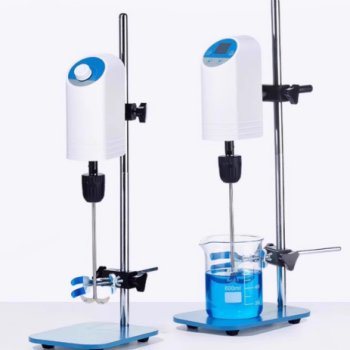
- High Performance Laboratory Stirrers for Diverse Applications
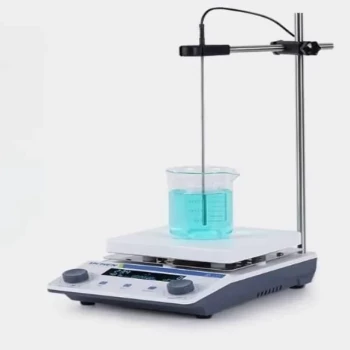
- Laboratory Small Constant Temperature Heated Magnetic Stirrer Heater and Stirrer
- Laboratory Vibratory Sieve Shaker Machine for Dry and Wet Three-Dimensional Sieving
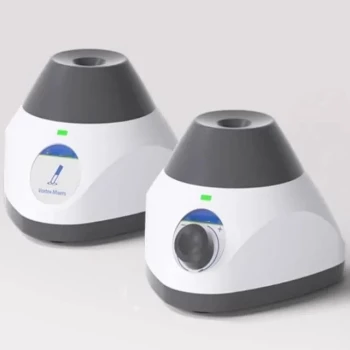
- Laboratory Vortex Mixer Orbital Shaker Multifunctional Rotation Oscillation Mixer
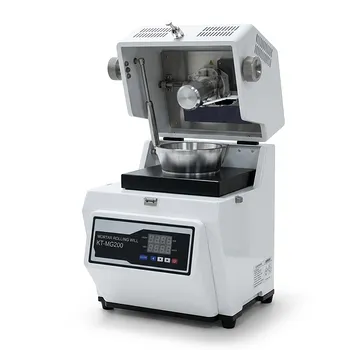
- Vibrating Disc Mill Small Laboratory Grinding Machine
People Also Ask
- How does a laboratory stirrer influence MOF product quality? Master Precision in Non-Solvothermal Synthesis
- What critical role does a Laboratory Stirrer play during leaching? Enhance Titanium-Magnesium Waste Recovery
- What is the primary function of laboratory stirring equipment in the preparation of compost leachate? Optimize Extraction
- What is a laboratory mixer? A Guide to Achieving Perfect Sample Homogeneity
- What is a laboratory mixer used for? Choose the Right Tool for Liquids or Solids