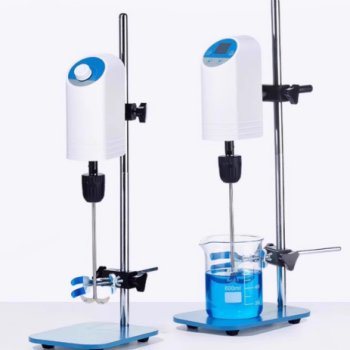
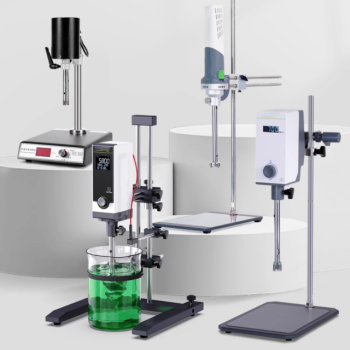
In non-solvothermal synthesis, the laboratory stirrer acts as the primary regulator of physical homogeneity, directly determining the structural integrity of the final Metal-Organic Framework (MOF) material. By ensuring continuous and uniform mechanical agitation at ambient temperature and pressure, the stirrer facilitates the efficient mass transfer necessary to transform raw reactants into a high-quality crystalline powder.
Core Takeaway Precise mechanical stirring is not merely about mixing; it is the control mechanism for stabilizing nucleation rates and preventing particle defects. It ensures the production of MOFs with high crystallinity and uniform particle size distribution by actively inhibiting sedimentation and agglomeration throughout the reaction.
The Mechanics of Quality Control
Optimizing Mass Transfer
In non-solvothermal processes, which often operate under ambient conditions, the reaction relies heavily on the physical interaction of components. A high-precision laboratory stirrer ensures that reactants are brought into contact continuously.
This thorough mixing drives efficient mass transfer. It guarantees that the reaction proceeds at a consistent pace across the entire volume of the vessel, rather than occurring in isolated pockets.
Stabilizing Nucleation
The quality of a MOF crystal is defined at the moment of its birth, known as nucleation. Continuous mechanical stirring maintains a stable environment for this process.
By keeping the mixture uniform, the stirrer ensures a constant nucleation rate. This stability is essential for growing crystals that are structurally consistent rather than chaotic or irregular.
Preventing Structural Defects
Inhibiting Sedimentation
Without active intervention, solid particles in a liquid medium tend to settle at the bottom of the container. This physical separation halts the reaction for those settled particles.
The mechanical control of the stirrer keeps particles in a constant state of suspension. This prevents sedimentation, ensuring all material remains active and available for the synthesis process.
Controlling Agglomeration
A common failure point in MOF synthesis is the clumping of particles, known as excessive agglomeration. This leads to uneven surface areas and poor material performance.
Uniform stirring creates a shear force that prevents particles from fusing together inappropriately. This results in a final powder characterized by a uniform particle size distribution, which is a hallmark of high-quality synthesis.
Risks of Improper Agitation
The Cost of Inconsistency
The primary reference highlights the need for "continuous and uniform" stirring. If the stirring speed fluctuates or stops, the nucleation rate becomes unstable.
This instability leads to a loss of crystallinity. The final product may chemically resemble a MOF but will lack the ordered structure required for advanced applications.
The Danger of Low Precision
If the stirrer lacks precision, it may fail to fully suspend the heavier components of the mixture. This leads to immediate sedimentation.
Once sedimentation occurs, the resulting product will likely exhibit poor distribution. You will end up with a mixture of fully reacted MOFs and unreacted raw materials, rendering the batch unusable.
Making the Right Choice for Your Goal
To achieve the best results in non-solvothermal MOF synthesis, align your stirring strategy with your specific quality metrics:
- If your primary focus is Uniform Particle Size: Prioritize continuous mechanical control to actively prevent particle sedimentation and excessive agglomeration.
- If your primary focus is High Crystallinity: Ensure your stirrer delivers high-precision stability to maintain a constant nucleation rate throughout the duration of the synthesis.
By maintaining strict mechanical control over the mixing process, you guarantee the uniformity and crystalline quality of your final material.
Summary Table:
| Quality Factor | Influence of Stirring | Impact on Final MOF |
|---|---|---|
| Mass Transfer | Facilitates continuous contact of reactants | High physical homogeneity & uniform reaction pace |
| Nucleation Rate | Maintains a stable, uniform environment | High crystallinity & structural consistency |
| Sedimentation | Prevents particles from settling at the vessel bottom | Full utilization of raw materials & active synthesis |
| Particle Size | Creates shear force to inhibit agglomeration | Uniform particle size distribution & high surface area |
Elevate Your MOF Synthesis with KINTEK Precision
Consistency is the foundation of high-quality Metal-Organic Frameworks. At KINTEK, we understand that achieving uniform particle size and high crystallinity requires more than just mixing—it requires precise mechanical control.
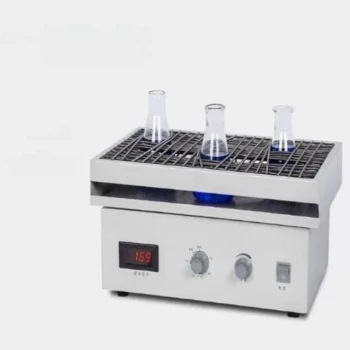
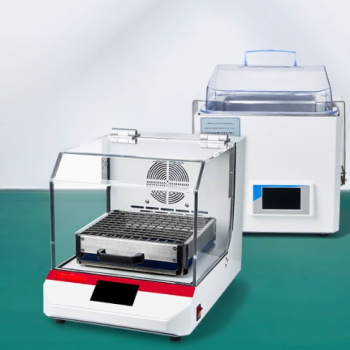
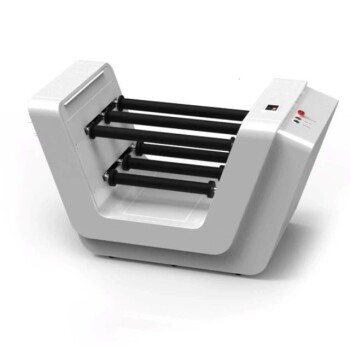
Our extensive portfolio of laboratory stirrers and homogenizers is engineered to provide the stable, continuous agitation necessary to eliminate sedimentation and stabilize nucleation in your non-solvothermal processes. Beyond stirring, KINTEK offers a complete suite of laboratory solutions, including high-temperature furnaces, crushing and milling systems, and specialized electrolytic cells for advanced material research.
Ready to optimize your lab’s efficiency and product integrity? Contact our technical experts today to find the perfect equipment for your research goals.
References
- Shuxian Tang, Gang Wei. Recent Advances in Metal–Organic Framework (MOF)-Based Composites for Organic Effluent Remediation. DOI: 10.3390/ma17112660
This article is also based on technical information from Kintek Solution Knowledge Base .
Related Products
- High Performance Laboratory Stirrers for Diverse Applications
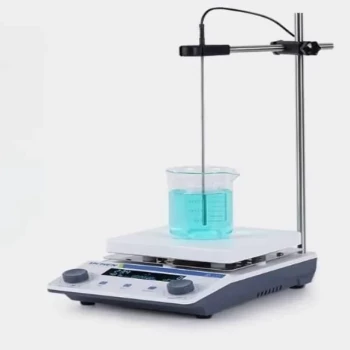
- Laboratory Small Constant Temperature Heated Magnetic Stirrer Heater and Stirrer
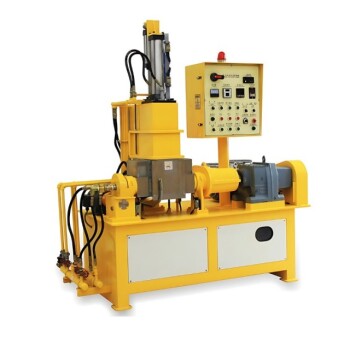
- Lab Internal Rubber Mixer Rubber Kneader Machine for Mixing and Kneading
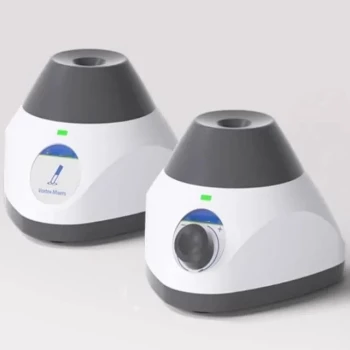
- Laboratory Vortex Mixer Orbital Shaker Multifunctional Rotation Oscillation Mixer
- Laboratory Vibratory Sieve Shaker Machine for Dry and Wet Three-Dimensional Sieving
People Also Ask
- What critical role does a Laboratory Stirrer play during leaching? Enhance Titanium-Magnesium Waste Recovery
- What is the primary function of laboratory stirring equipment in the preparation of compost leachate? Optimize Extraction
- What is a laboratory mixer? A Guide to Achieving Perfect Sample Homogeneity
- What is a laboratory mixer used for? Choose the Right Tool for Liquids or Solids
- What is the role of laboratory stirring equipment in nZVI preparation? Achieve Stable and Uniform Nano Slurries