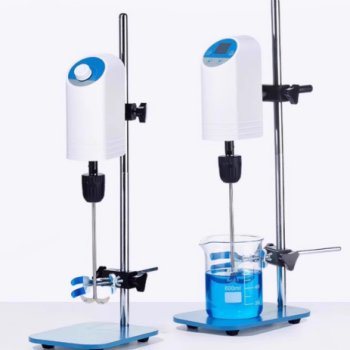
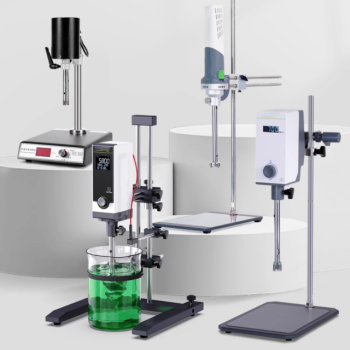
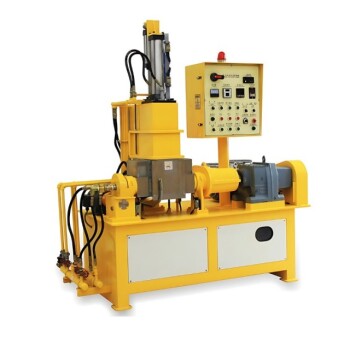
High-speed stirring equipment serves as the primary mechanical mechanism for homogenizing fungal liquid pre-cultures. It employs high-speed pulses to physically shatter fungal hyphae blocks and simultaneously blend them into the nutrient broth, ensuring the fungal species are uniformly distributed throughout the liquid medium.
The core function of this equipment is to convert irregular fungal growth into a standardized, high-activity inoculum. This mechanical uniformity creates the essential biological foundation required for successful large-scale solid-state fermentation.
The Mechanics of Hyphal Disruption
Breaking Down Biomass
Fungal hyphae naturally tend to grow in tangled blocks or clumps during the initial culture phase.
High-speed stirring equipment utilizes high-speed pulses to address this aggregation. This intense mechanical action rapidly breaks these hyphal blocks apart, reducing the biomass into smaller, usable units.
Achieving Homogenization
Once the physical structure of the fungi is broken down, the equipment ensures thorough mixing with the nutrient broth.
This process prevents the separation of biomass and liquid. The result is a uniform distribution of the fungal species, meaning every portion of the liquid contains a consistent amount of biological material.
Impact on Fermentation Success
Enhancing Activity Consistency
The primary goal of the pre-culture is to create an inoculum that behaves predictably.
By ensuring the fungi are evenly dispersed, the equipment significantly enhances the activity consistency of the inoculum. This ensures that when the liquid is applied to the solid substrate, growth initiates evenly across the entire batch.
Establishing the Biological Foundation
The quality of the final solid-state fermentation is directly dependent on the quality of the pre-culture.
High-speed stirring establishes a high-quality biological foundation. This step is particularly critical for large-scale operations involving substrates like oat straw, where uneven inoculation could lead to process failure or inconsistent yields.
Operational Necessity (The Trade-off)
Mechanical Intervention vs. Natural Growth
It is important to recognize that natural fungal growth patterns are inherently unsuited for direct large-scale inoculation.
Without the mechanical intervention of high-speed stirring, the inoculum would remain clumped. This would lead to "hot spots" of growth and areas of inactivity in the final substrate, compromising the efficiency of the entire fermentation process.
Making the Right Choice for Your Goal
To maximize the effectiveness of your fungal pre-cultures, consider the following operational priorities:
- If your primary focus is process reliability: Prioritize equipment that delivers consistent high-speed pulses to eliminate hyphal clumping and guarantee uniform activity.
- If your primary focus is scaling up production: Ensure your stirring process is robust enough to create a high-quality biological foundation, which is requisite for fermenting large volumes of substrates like oat straw.
Uniformity in the liquid phase is the single most critical predictor of consistency in the solid phase.
Summary Table:
| Feature | Role in Pre-Culture Preparation | Impact on Fermentation |
|---|---|---|
| High-Speed Pulses | Shatters tangled fungal hyphae blocks | Standardizes inoculum particle size |
| Mechanical Blending | Mixes biomass uniformly with nutrient broth | Prevents biomass/liquid separation |
| Homogenization | Creates a consistent biological foundation | Ensures even growth across solid substrates |
| Activity Control | Enhances consistency of the fungal species | Reduces "hot spots" and process failure |
Elevate Your Fermentation Precision with KINTEK
Consistency in solid-state fermentation begins with a perfectly homogenized pre-culture. At KINTEK, we specialize in providing high-performance laboratory equipment tailored for advanced biological research. Whether you are scaling up fungal production on substrates like oat straw or refining your inoculum quality, our robust shakers, homogenizers, and cooling solutions ensure your biological foundation is flawless.
From high-temperature furnaces for material prep to precision crushing, milling, and hydraulic presses, KINTEK offers a comprehensive range of tools to support every stage of your lab's workflow.
Ready to maximize your yield and ensure process reliability? Contact us today to find the perfect equipment for your lab!
References
- Wei Gao, Rongfei Zhao. Biological Pretreatment by Solid-State Fermentation of Oat Straw to Enhance Physical Quality of Pellets. DOI: 10.1155/2020/3060475
This article is also based on technical information from Kintek Solution Knowledge Base .
Related Products
- High Performance Laboratory Stirrers for Diverse Applications
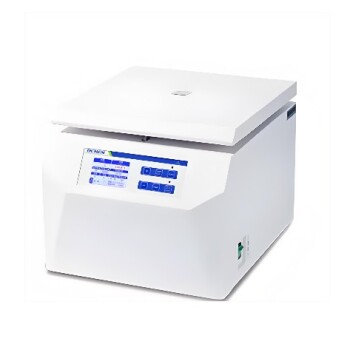
- High-Speed Desktop Centrifuge for Blood Sample Processing
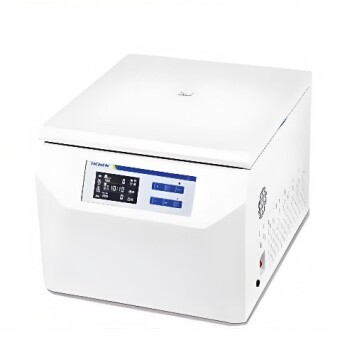
- Benchtop High Speed Small Lab Centrifuge for Serum Separation and Low Temperature Dehydration
- Laboratory Small Constant Temperature Heated Magnetic Stirrer Heater and Stirrer
- Laboratory Benchtop High Speed Small Centrifuge for Low Temp Serum Separation Dehydration Research
People Also Ask
- How does a laboratory stirrer influence MOF product quality? Master Precision in Non-Solvothermal Synthesis
- What critical role does a Laboratory Stirrer play during leaching? Enhance Titanium-Magnesium Waste Recovery
- What is the primary function of laboratory stirring equipment in the preparation of compost leachate? Optimize Extraction
- What is a laboratory mixer? A Guide to Achieving Perfect Sample Homogeneity
- What is a laboratory mixer used for? Choose the Right Tool for Liquids or Solids