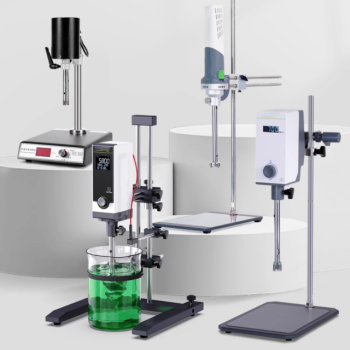
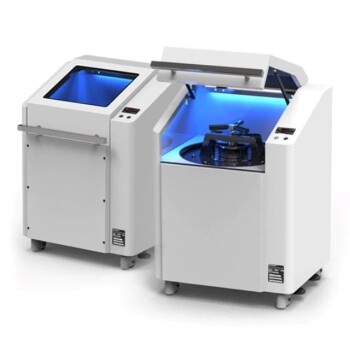
A laboratory shaker serves as the kinetic engine of batch adsorption experiments, providing the continuous physical disturbance necessary to keep fly ash particles effectively suspended in wastewater samples. By maintaining this constant agitation, the device ensures uniform contact between the solid adsorbent and the liquid, preventing particle settling that would otherwise compromise the validity of the experiment.
The core value of a laboratory shaker lies in its ability to eliminate external mass transfer resistance. It ensures that the data you collect reflects the true chemical adsorption potential of the fly ash, rather than physical limitations caused by diffusion or settling.
Optimizing the Kinetic Environment
Maintaining Particle Suspension
Fly ash consists of fine particles that naturally settle in static liquid. A shaker provides continuous kinetic energy to counteract gravity, keeping these particles fully suspended.
This suspension is critical for exposing the maximum surface area of the adsorbent to the wastewater solution throughout the entire experiment.
Eliminating External Resistances
In a static or poorly agitated solution, a stagnant layer of liquid (often called a "water film") forms around each particle. This film creates a barrier, slowing down the movement of pollutants toward the adsorbent.
The mechanical force generated by the shaker disrupts this water film diffusion resistance. By breaking this barrier, the shaker ensures that mass transfer occurs efficiently from the bulk liquid to the surface of the fly ash.
Enhancing Collision Frequency
Adsorption relies on the physical contact between heavy metal ions and the active sites on the fly ash.
By maintaining constant motion, the shaker significantly increases the frequency of collisions between these ions and the adsorbent. This acceleration is essential for the system to reach kinetic equilibrium within a reasonable timeframe.
Ensuring Data Integrity and Reproducibility
Establishing Equilibrium Baselines
To determine how effective fly ash is as an adsorbent, researchers must identify the exact time required to reach equilibrium.
The shaker provides the consistent kinetic conditions necessary to measure this accurately. Without it, variations in mixing speeds could lead to false equilibrium data, rendering kinetic models useless.
Controlling Thermodynamic Variables
When equipped with temperature controls, a constant-temperature shaker becomes a tool for thermodynamic analysis.
It ensures the reaction occurs at a specific, stable temperature, which is vital for calculating thermodynamic parameters. This allows researchers to simulate how the fly ash will perform under various environmental conditions.
Understanding the Trade-offs
The Risk of Incorrect Speed
While agitation is necessary, the rotation speed must be carefully optimized.
If the speed is too low, particles will settle, and external mass transfer resistance will distort the data. If the speed is too high, it may cause particle attrition (breaking the fly ash apart) or splashing, which alters the solid-to-liquid ratio.
Thermal Consistency vs. Kinetic Force
Standard shakers provide kinetic force but lack temperature control.
Using a shaker without temperature regulation can introduce errors if ambient room temperature fluctuates during long-term experiments. For precise thermodynamic modeling, a standard shaker is insufficient and a constant-temperature unit is required.
Making the Right Choice for Your Goal
To ensure your batch adsorption experiments yield publication-quality data, align your equipment usage with your specific research objectives:
- If your primary focus is determining Reaction Kinetics: Prioritize a shaker with precise, stable rotation speeds to fully overcome liquid film mass transfer resistance and determine accurate equilibrium times.
- If your primary focus is Thermodynamic Modeling: You must utilize a constant-temperature shaker to isolate the effects of heat on pollutant removal efficiency.
Ultimately, the laboratory shaker is not just a mixer; it is the control mechanism that standardizes the physical environment, allowing the chemical properties of the fly ash to be measured with precision.
Summary Table:
| Feature | Role in Adsorption Experiment | Research Benefit |
|---|---|---|
| Kinetic Agitation | Maintains fly ash suspension | Ensures maximum surface area exposure |
| Film Disturbance | Breaks stagnant liquid layers | Eliminates external mass transfer resistance |
| Speed Control | Prevents particle settling/attrition | Standardizes collision frequency and data |
| Thermal Regulation | Maintains stable reaction environment | Essential for accurate thermodynamic modeling |
Elevate Your Adsorption Research with KINTEK Precision
High-quality batch adsorption data depends on the consistency of your kinetic environment. KINTEK specializes in advanced laboratory equipment designed to meet the rigorous demands of material science and environmental research.
Whether you are analyzing the kinetic potential of fly ash or developing complex wastewater treatments, our comprehensive range of laboratory shakers, homogenizers, and shakers ensures stable, reproducible agitation. Beyond mixing, KINTEK offers a complete portfolio of high-performance tools, including:
- High-temperature furnaces and reactors for material synthesis.
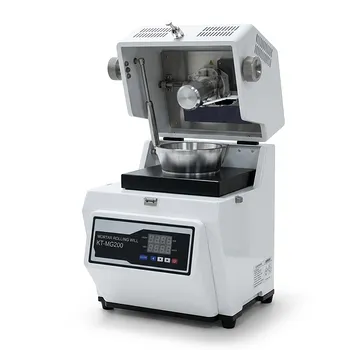
- Crushing and milling systems for precise adsorbent preparation.
- Thermostatic cooling solutions and ULT freezers for sample preservation.
- Specialized consumables like ceramics, crucibles, and PTFE products.
Maximize your lab's efficiency and data integrity today. Contact KINTEK for expert guidance and tailored equipment solutions!
References
- Waleed Jadaa. Wastewater Treatment Utilizing Industrial Waste Fly Ash as a Low-Cost Adsorbent for Heavy Metal Removal: Literature Review. DOI: 10.3390/cleantechnol6010013
This article is also based on technical information from Kintek Solution Knowledge Base .
Related Products
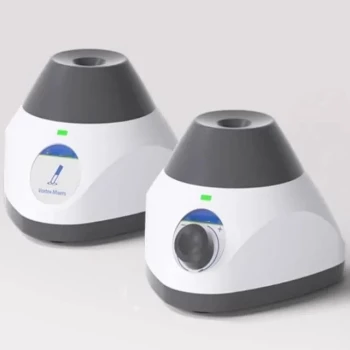
- Laboratory Multifunctional Small Speed-Adjustable Horizontal Mechanical Shaker for Lab
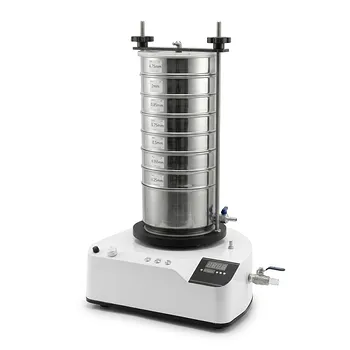
- Laboratory Vibratory Sieve Shaker Machine for Dry and Wet Three-Dimensional Sieving
- Laboratory Oscillating Orbital Shaker
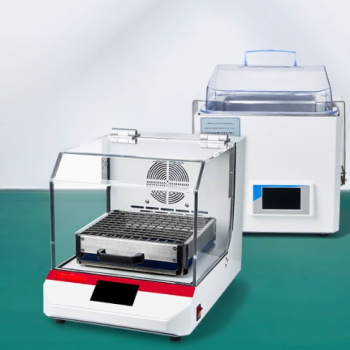
- Shaking Incubators for Diverse Laboratory Applications
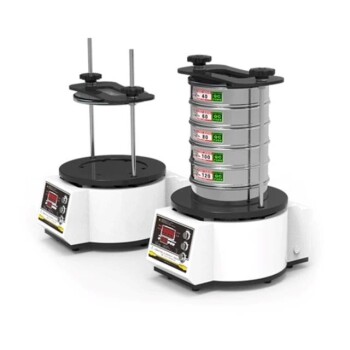
- Laboratory Vibratory Sieve Shaker Machine Slap Vibrating Sieve
People Also Ask
- How do static culture and shaking culture affect the morphology of BC? Optimize Lab Shaker Results
- What is the role of a laboratory shaker in silane sol preparation? Master Uniform Aramid Fabric Coating
- Why is a laboratory shaker required for continuous 24-hour catalyst treatment? Achieve Deep Uniform Impregnation
- What is the function of a laboratory shaker in evaluating Fe-C@C nanoparticles? Optimize Methylene Blue Adsorption
- How do laboratory shakers or stirrers influence the efficiency of hydrogen production during dark fermentation?