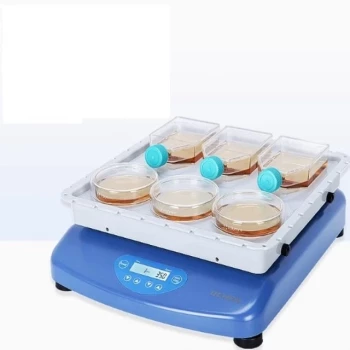
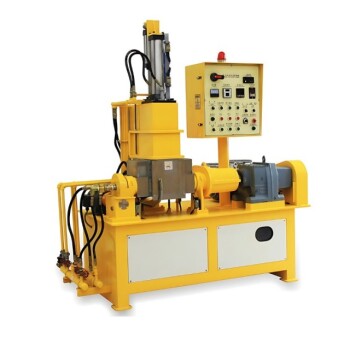
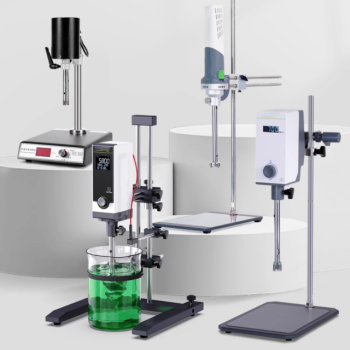
High-speed stirring serves as the primary mechanical stabilizer for zinc borate suspensions, ensuring that zinc oxide powder remains evenly dispersed within a hot boric acid solution. By operating at speeds such as 300 rpm, the equipment actively counteracts the natural physical tendencies of the powder to settle or clump. This rigorous agitation creates the homogeneous baseline required for successful chemical synthesis.
High-speed agitation is a non-negotiable prerequisite for product quality, as it prevents sedimentation and agglomeration that would otherwise corrupt the phase composition of the final hydrothermal reaction products.
The Mechanics of Suspension Uniformity
Preventing Particle Sedimentation
Zinc oxide powder is denser than the aqueous solution it is mixed into. Without constant intervention, gravity will cause the particles to settle at the bottom of the vessel.
High-speed stirring, specifically at rates like 300 rpm, generates sufficient turbulence to keep these particles in a constant state of suspension. This ensures that the solid-to-liquid ratio remains consistent throughout the entire volume of the mixture.
Eliminating Agglomeration
Fine powders have a tendency to clump together, forming aggregates that resist chemical reaction. These clumps reduce the surface area available for interaction with the boric acid.
The shear force generated by high-speed stirring physically breaks these clusters apart. This ensures the zinc oxide remains as a highly dispersed powder, rather than a collection of unreactive clumps.
The Impact on Reaction Quality
Establishing Chemical Homogeneity
The goal of the initial mixing process is to achieve a uniform physical distribution of components. This physical state is the direct precursor to chemical success.
By maintaining a homogeneous mixture, the equipment ensures that the ratio of zinc oxide to boric acid is identical at every point in the vessel.
Guarantees Phase Composition
The uniformity achieved during mixing dictates the success of the subsequent hydrothermal reaction.
If the suspension is uneven, the resulting chemical reaction will be inconsistent. Proper stirring guarantees the phase composition uniformity of the final products, preventing the formation of impurities or incomplete reactions.
The Role of Thermal Environment
This mixing often occurs within a 90°C water bath environment. Heat affects the solubility and viscosity of the solution.
High-speed stirring works in tandem with this thermal energy to maintain equilibrium, ensuring the hot aqueous environment supports, rather than hinders, the dispersion of the powder.
Critical Process Requirements
The Necessity of Intensity
Low-speed or intermittent stirring is insufficient for this specific application. The reference emphasizes that intense mechanical agitation is required.
Gentle mixing cannot provide the kinetic energy necessary to counteract the settling velocity of zinc oxide in a hot solution.
Sensitivity to Disruption
The suspension state is dynamic and relies entirely on the mechanical input. If the stirring speed drops significantly below the optimal 300 rpm threshold, sedimentation begins almost immediately.
This indicates that the process has very little tolerance for equipment failure or operational variance during the mixing phase.
Making the Right Choice for Your Goal
To ensure high-quality zinc borate production, your equipment settings must be precise.
- If your primary focus is Physical Stability: Ensure your equipment can maintain a constant 300 rpm to combat the specific density and settling rate of zinc oxide.
- If your primary focus is Chemical Purity: Prioritize the elimination of agglomeration during the mixing phase to guarantee the correct phase composition in the final product.
Uniform mixing is not merely a preparatory step; it is the fundamental control that determines the chemical integrity of the final reaction.
Summary Table:
| Feature | Mechanical Impact | Resulting Benefit |
|---|---|---|
| Stirring Speed | 300 rpm Agitation | Counteracts particle sedimentation |
| Shear Force | Breaking Aggregates | Eliminates unreactive powder clumps |
| Thermal Synergy | 90°C Water Bath | Maintains solubility and equilibrium |
| Consistency | High Dispersion | Guarantees phase composition uniformity |
Elevate Your Material Synthesis with KINTEK Precision
Achieving the perfect zinc borate suspension requires more than just mixing; it demands rigorous, reliable mechanical stability. KINTEK specializes in advanced laboratory equipment designed to handle the most sensitive chemical processes. From high-speed homogenizers and shakers that ensure zero-agglomeration to our robust high-temperature reactors and autoclaves, we provide the tools necessary for precise hydrothermal reactions.
Whether you are refining battery materials or perfecting ceramic compositions, our high-performance crushing and milling systems and cooling solutions guarantee consistent results every time. Don't let equipment variance compromise your chemical purity.
Ready to optimize your lab's uniformity? Contact KINTEK today to discover how our comprehensive range of high-performance lab equipment and consumables can enhance your research and production efficiency.
References
- И. В. Козерожец, С. П. Губин. A New Approach for the Synthesis of Powder Zinc Oxide and Zinc Borates with Desired Properties. DOI: 10.3390/inorganics10110212
This article is also based on technical information from Kintek Solution Knowledge Base .
Related Products
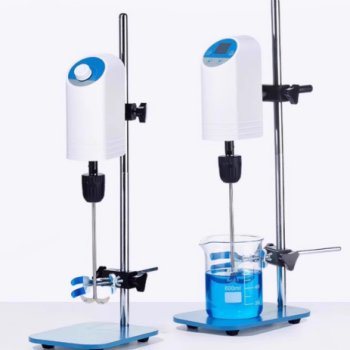
- High Performance Laboratory Stirrers for Diverse Applications
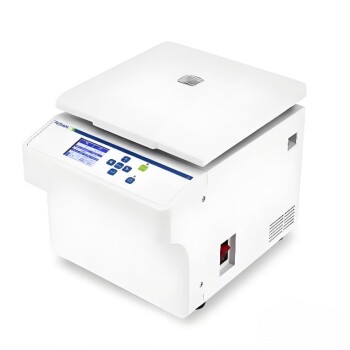
- High-Speed Desktop Centrifuge for Blood Sample Processing
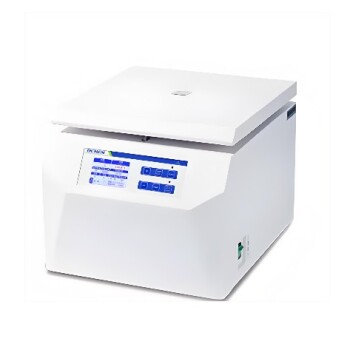
- Benchtop High Speed Small Lab Centrifuge for Serum Separation and Low Temperature Dehydration
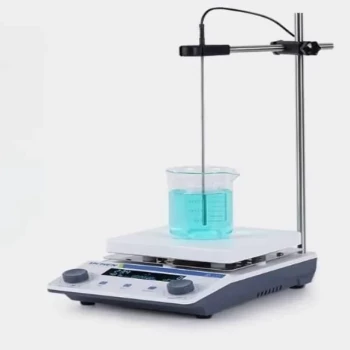
- Laboratory Small Constant Temperature Heated Magnetic Stirrer Heater and Stirrer
- Laboratory Benchtop High Speed Small Centrifuge for Low Temp Serum Separation Dehydration Research
People Also Ask
- How does a laboratory stirrer influence MOF product quality? Master Precision in Non-Solvothermal Synthesis
- What critical role does a Laboratory Stirrer play during leaching? Enhance Titanium-Magnesium Waste Recovery
- What is the primary function of laboratory stirring equipment in the preparation of compost leachate? Optimize Extraction
- What is a laboratory mixer? A Guide to Achieving Perfect Sample Homogeneity
- What is a laboratory mixer used for? Choose the Right Tool for Liquids or Solids