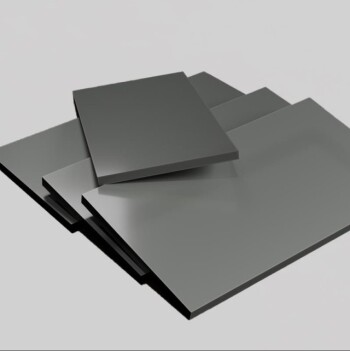
Graphite paper serves as a critical functional interface between the nickel alloy powder and the graphite mold components during the Spark Plasma Sintering (SPS) process. Its presence effectively isolates the sintering material from the tooling while simultaneously optimizing the physical conditions required for successful densification.
Core Takeaway Graphite paper acts as a dual-purpose buffer: it physically prevents the nickel alloy from fusing to the mold (ensuring safe demolding) and electrically bridges microscopic gaps to ensure uniform heating and pressure distribution.
The Mechanics of Isolation and Protection
Preventing Chemical Interaction
At the high temperatures and pressures characteristic of SPS, nickel alloys are prone to reacting with or adhering to the graphite mold walls.
Graphite paper functions as a sacrificial barrier. It prevents the powder from coming into direct contact with the mold, inhibiting diffusion bonding or chemical reactions that would fuse the sample to the tooling.
Facilitating Clean Demolding
The successful extraction of a sintered sample is often as critical as the sintering process itself.
Because the paper prevents adhesion, the finished nickel alloy sample does not stick to the inner walls of the die or the punches. This significantly simplifies the demolding process, reducing the risk of cracking the sample or damaging the mold during extraction.
Extending Tooling Lifespan
Graphite molds are expensive consumables that degrade over time.
By eliminating direct contact and reducing the mechanical force needed to eject the sample, the paper protects the inner surfaces of the mold from wear and abrasion. This preserves the mold's geometry and extends its operational life.
Enhancing Process Uniformity
Compensating for Surface Roughness
Even high-quality graphite molds possess minor surface irregularities or roughness.
Graphite paper is flexible and compliant. It fills these microscopic gaps, creating a seamless interface between the rigid mold and the consolidating powder.
Optimizing Electrical Conductivity
SPS relies on the efficient transmission of high-current pulses through the mold and sample.
By improving the contact interface, graphite paper reduces contact resistance. This ensures that the electrical current is distributed uniformly, preventing localized hotspots that could lead to uneven sintering or microstructural defects.
Ensuring Even Pressure Distribution
Uniform mechanical pressure is essential for achieving high density in the final part.
The buffering effect of the paper helps transmit mechanical pressure evenly across the surface of the nickel alloy powder. This results in a homogeneous density profile throughout the sintered component.
Operational Considerations and Trade-offs
Impact on Dimensional Tolerances
While beneficial, the graphite paper adds a finite thickness to the assembly.
You must account for the thickness of the foil when calculating the final dimensions of the sintered part and the travel distance of the punches. Failure to compensate for this can lead to slight dimensional inaccuracies.
Handling and Setup Precision
Graphite paper is fragile and requires careful handling during the assembly phase.
Improper placement—such as wrinkling or overlapping—can introduce surface defects into the nickel alloy sample. The assembly process requires meticulous attention to detail to ensure the paper lies perfectly flat against the mold walls.
Optimizing Your Assembly Strategy
To get the most out of your SPS process, tailor your use of graphite paper to your specific objectives:
- If your primary focus is Sample Integrity: Ensure the paper is perfectly smooth and free of wrinkles to prevent surface defects and ensure uniform current density.
- If your primary focus is Equipment Longevity: Prioritize full coverage of all mold surfaces to prevent any nickel-to-graphite contact, maximizing the reusability of your tooling.
Used correctly, graphite paper is not just a barrier; it is an essential equalizer that safeguards both your material properties and your manufacturing hardware.
Summary Table:
| Function | Key Benefit | Mechanism |
|---|---|---|
| Isolation | Prevents Adhesion | Acts as a sacrificial barrier to stop diffusion bonding between powder and mold. |
| Protection | Extends Tool Life | Reduces mechanical wear and abrasion on expensive graphite molds during extraction. |
| Conductivity | Uniform Heating | Fills microscopic gaps to reduce contact resistance and prevent localized hotspots. |
| Pressure | Even Densification | Compliant interface ensures mechanical pressure is distributed across the sample surface. |
Maximize Your Material Research Efficiency with KINTEK
Precision in material synthesis requires more than just high-quality powders—it demands the right environment. At KINTEK, we specialize in providing cutting-edge laboratory solutions, including high-performance high-temperature furnaces (SPS, Vacuum, CVD, and Dental), and robust crushing and milling systems to ensure your samples are processed to perfection.
Whether you are working with nickel alloys or advanced ceramics, our comprehensive range of graphite consumables, hydraulic presses, and high-pressure reactors is designed to enhance your lab's productivity and research accuracy.
Ready to elevate your sintering outcomes and protect your tooling?
Contact our technical experts today to find the perfect equipment and consumables for your laboratory!
Related Products
- Spark Plasma Sintering Furnace SPS Furnace
- Ultra-High Temperature Graphite Vacuum Graphitization Furnace
- 2200 ℃ Graphite Vacuum Heat Treat Furnace
- High Purity Pure Graphite Crucible for Electron Beam Evaporation
- High Purity Pure Graphite Crucible for Evaporation
People Also Ask
- What is SPS sintering method? A Guide to High-Speed, High-Performance Material Fabrication
- Why are Spark Plasma Sintering (SPS) furnaces or hot presses utilized in the preparation of Li3PS4 solid electrolytes?
- What is the difference between spark plasma sintering and flash sintering? A Guide to Advanced Sintering Methods
- What technical advantages does a Spark Plasma Sintering (SPS) furnace offer for LZP ceramics? Enhance Ionic Conductivity
- What is the theory of spark plasma sintering? A Guide to Rapid, Low-Temperature Densification