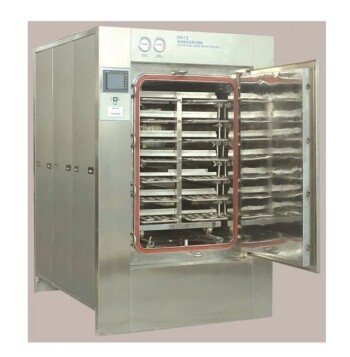
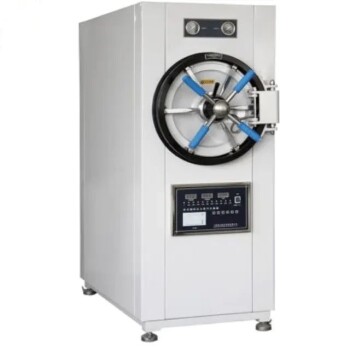
The role of a PTFE-lined stainless steel autoclave is to create a sealed, contaminant-free, high-pressure reactor. By enabling reaction temperatures above the boiling point of water (typically around 150°C for this specific synthesis), the device facilitates the precise crystallization of gamma-AlOOH (boehmite). Crucially, the PTFE liner isolates the reaction mixture from the steel shell, preventing corrosion and ensuring the catalyst remains free of metal ion impurities.
The autoclave combines the structural strength required for high-pressure physics with the chemical inertness required for high-purity synthesis. It enables the creation of highly crystalline, high-surface-area catalysts by maintaining a subcritical environment without introducing contaminants from the reactor walls.
The Physics of the Hydrothermal Environment
Achieving Subcritical Conditions
The stainless steel shell allows the system to withstand significant pressure, enabling the solvent to remain liquid at temperatures well above its atmospheric boiling point.
For gamma-AlOOH synthesis, this typically involves maintaining a temperature of 150°C.
Enhancing Precursor Solubility and Reaction Rates
In this sealed, high-temperature environment, the properties of water change, improving the solubility of precursors.
This accelerates the reaction kinetics, ensuring that the precursor solution reacts fully to nucleate and crystallize into the desired boehmite phase.
Controlling Crystallinity
The constant pressure and temperature provided by the autoclave promote better ordering of the crystal lattice compared to open-air synthesis.
This results in a catalyst with higher crystallinity and optimized morphology, which are essential for the material's final performance.
The Chemical Necessity of the PTFE Liner
Protection Against Corrosive Environments
The synthesis of gamma-AlOOH frequently involves strong alkaline solutions that would rapidly corrode bare stainless steel at high temperatures.
The PTFE (polytetrafluoroethylene) liner acts as an impermeable barrier. It possesses exceptional chemical inertness, protecting the structural integrity of the stainless steel body.
Preventing Metal Ion Contamination
If the reaction liquid were to touch the steel walls, metal ions (such as iron, nickel, or chromium) would leach into the mixture.
These impurities act as "poisons" or defects in the final crystal structure. The PTFE liner eliminates this risk, ensuring the resulting powder achieves high purity.
Preserving Specific Surface Area
The presence of impurities often leads to agglomeration or irregular crystal growth.
By maintaining a chemically clean environment, the PTFE liner helps ensure the gamma-AlOOH develops a high specific surface area, which is directly correlated to its efficiency as a catalyst.
Understanding the Trade-offs
Temperature Limitations of PTFE
While PTFE is chemically robust, it has thermal limits.
It typically cannot withstand temperatures exceeding 200°C to 250°C without deforming or degrading, unlike the stainless steel shell which could handle much higher heat.
Fill Volume Constraints
Because the liquid inside expands significantly when heated, the autoclave cannot be filled completely.
You typically must leave 20–40% of the volume empty to generate the necessary autogenous pressure safely without rupturing the liner or the seal.
Making the Right Choice for Your Goal
When designing your synthesis protocol for gamma-AlOOH, consider these parameters:
- If your primary focus is Phase Purity: Ensure the PTFE liner is inspected for scratches or defects before use, as even minor breaches can introduce steel contaminants.
- If your primary focus is Crystal Morphology: Precisely control the temperature (e.g., 150°C) and duration, as the autoclave's pressure generation is directly tied to temperature stability.
- If your primary focus is Equipment Longevity: Clean the PTFE liner immediately after use to prevent alkaline residues from absorbing into the micropores of the polymer over time.
The PTFE-lined autoclave is the industry standard for this synthesis because it creates the only environment where high pressure and chemical sterility coexist.
Summary Table:
| Feature | Function in Gamma-AlOOH Synthesis |
|---|---|
| Stainless Steel Shell | Provides structural strength to withstand high autogenous pressure at 150°C+ |
| PTFE Liner | Ensures chemical inertness, preventing metal ion leaching and catalyst poisoning |
| Sealed Environment | Enables subcritical water conditions to accelerate reaction kinetics and crystallinity |
| Temperature Limit | Optimized for processes up to 200°C-250°C to maintain liner integrity |
| Fill Volume | 60-80% capacity recommended to safely manage liquid expansion and pressure |
Elevate your material science research with KINTEK’s premium laboratory solutions. As specialists in high-temperature and high-pressure equipment, we provide the precision PTFE-lined stainless steel autoclaves and hydrothermal reactors essential for synthesizing high-purity catalysts like gamma-AlOOH. Beyond reactors, KINTEK offers a comprehensive range of muffle furnaces, vacuum systems, and specialized consumables like PTFE products and ceramics to support your entire workflow. Achieve superior crystallinity and contamination-free results—contact our experts today to find the perfect reactor for your lab!
References
- Luxin Zhang, Meng Hu. Catalytic conversion of carbohydrates into 5-ethoxymethylfurfural using γ-AlOOH and CeO<sub>2</sub>@B<sub>2</sub>O<sub>3</sub> catalyst synergistic effect. DOI: 10.1039/d2ra01866g
This article is also based on technical information from Kintek Solution Knowledge Base .
Related Products
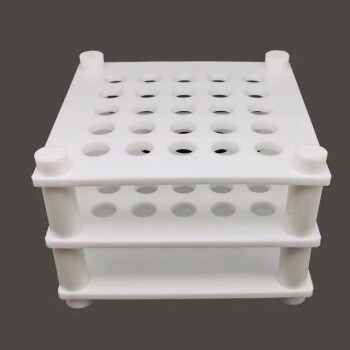
- Custom PTFE Teflon Parts Manufacturer for Centrifuge Tube Racks
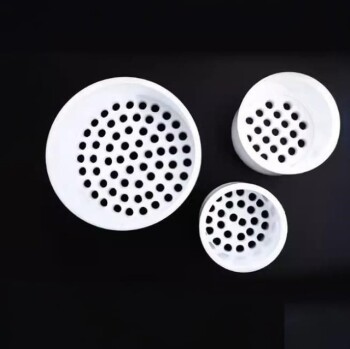
- Custom PTFE Teflon Parts Manufacturer for PTFE Mesh F4 Sieve
- Custom PTFE Teflon Parts Manufacturer Corrosion Resistant Cleaning Rack Flower Basket
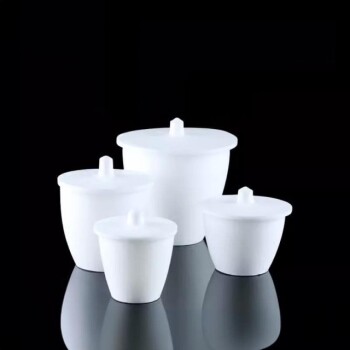
- Custom Machined and Molded PTFE Teflon Parts Manufacturer with PTFE Crucible and Lid
- Custom PTFE Teflon Parts Manufacturer for Cleaning Racks
People Also Ask
- Why is slender PTFE tubing necessary for flow control in multi-channel catalyst aging? Ensure Equal Gas Distribution
- Why are PTFE containers required for PCT leaching tests? Ensure Chemical Inertness and Analytical Precision
- Why are PTFE containers necessary for selective HF etching of MAX phases? Ensure Safe & Pure MXene Synthesis
- What role do PTFE containers play in trace metal detection? Ensure Analytical Precision in Photocatalysis Studies
- Why is a PTFE container required for acid leaching of silicon nanosheets? Ensure High Purity and Safety