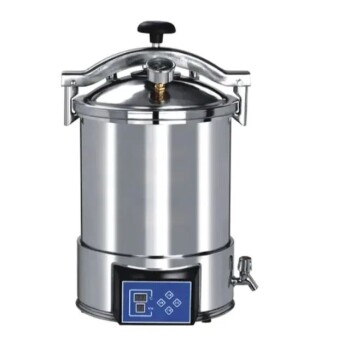
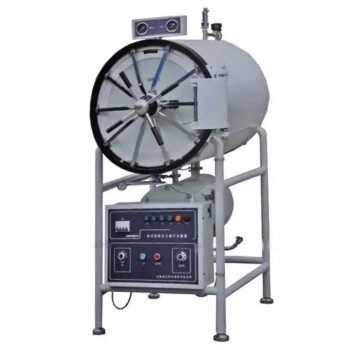
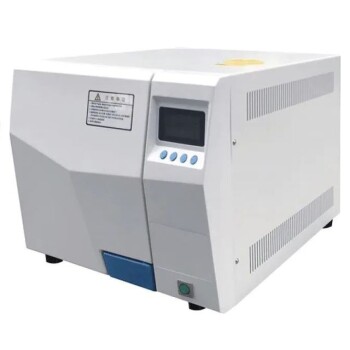
The autoclave reactor serves as the essential high-pressure vessel required for the hydrothermal carbonization (HTC) of cellulose. By maintaining a sealed environment at elevated temperatures (typically around 220 °C), it facilitates the decomposition and reorganization of cellulose in deionized water. This process transforms the raw biomass into a solid biochar characterized by a stable carbon skeleton and a high density of oxygen-containing functional groups.
The autoclave reactor is the fundamental tool for hydrothermal carbonization, providing the simultaneous high pressure and temperature necessary to reorganize cellulose into a functionalized carbon material. It ensures the structural integrity and chemical reactivity of the biochar, making it an ideal substrate for advanced material synthesis.
The Critical Role of High-Pressure Environments
Driving Hydrothermal Carbonization (HTC)
The primary function of the autoclave is to provide a closed system where water can be heated beyond its boiling point without evaporating. This create a high-pressure environment that forces the hydrothermal carbonization process to occur efficiently.
Enabling Molecular Reorganization
Inside the reactor, the combination of heat and pressure causes the cellulose chains to break down and reorganize. This internal environment is what allows the transition from a complex carbohydrate to a structured solid biochar.
Structural and Chemical Advantages
Developing the Carbon Skeleton
The autoclave environment ensures the formation of a specific carbon skeleton that remains stable under subsequent processing. This skeleton provides the physical foundation necessary for the biochar to function as a catalyst or adsorbent.
Preserving Functional Groups
Unlike dry pyrolysis, the hydrothermal conditions within an autoclave yield biochar with abundant oxygen-containing functional groups. These groups are critical for loading metal active components or facilitating chemical bonding in composite materials.
Technical Specifications and Material Integrity
Corrosion Resistance and Sealing
Many autoclave reactors utilize a Teflon lining to provide a corrosion-resistant environment during hydrothermal synthesis. This lining protects the vessel from the acidic or reactive byproducts generated during the breakdown of cellulose.
Facilitating Multi-Component Composites
The high-pressure environment allows for the in-situ growth and tight coupling of other materials, such as titanium dioxide (TiO2), onto the biochar template. This results in composite materials with high structural integrity that can withstand extreme reaction conditions.
Understanding the Trade-offs
Thermal and Pressure Limitations
Autoclave reactors are bound by strict safety limits regarding maximum operating pressure and temperature. Exceeding these limits can lead to equipment failure or inconsistent carbonization, requiring precise monitoring and control systems.
Scalability and Batch Processing Constraints
Most lab-grade autoclaves are designed for batch processing, which can limit the volume of biochar produced in a single run. Transitioning from small-scale hydrothermal synthesis to industrial-scale production requires significant investment in larger, high-pressure infrastructure.
Making the Right Choice for Your Goal
When utilizing an autoclave for cellulose-derived biochar, your specific objectives will dictate the operational parameters.
- If your primary focus is surface reactivity: Operate at moderate hydrothermal temperatures (e.g., 180°C–220°C) to maximize the retention of oxygen-containing functional groups.
- If your primary focus is structural integrity for composites: Utilize a Teflon-lined reactor to facilitate the in-situ coupling of secondary minerals or nanoparticles without degrading the vessel.
- If your primary focus is maximum carbon density: Focus on maintaining higher pressures and longer residence times to ensure complete decomposition and reorganization of the cellulose skeleton.
The autoclave reactor remains the definitive tool for precision-engineering the chemical and physical properties of cellulose-derived biochar.
Summary Table:
| Feature/Role | Hydrothermal Carbonization (HTC) Impact |
|---|---|
| High-Pressure Vessel | Creates a closed system allowing water to exceed boiling point without evaporating. |
| Molecular Reorganization | Facilitates the breakdown and restructuring of cellulose into a stable carbon skeleton. |
| Functionalization | Preserves oxygen-containing functional groups, enhancing surface reactivity. |
| Teflon Lining | Provides essential corrosion resistance against acidic byproducts during synthesis. |
| Composite Synthesis | Enables in-situ coupling of nanoparticles (e.g., TiO2) for high-integrity materials. |
Elevate Your Biochar Research with KINTEK
Precision in hydrothermal carbonization starts with the right equipment. KINTEK specializes in high-performance laboratory solutions, offering a robust range of high-temperature high-pressure reactors and autoclaves specifically designed for demanding material synthesis. Whether you are focusing on surface reactivity or structural integrity for composites, our Teflon-lined vessels and advanced control systems ensure consistent, high-quality results.
From high-temperature furnaces and hydraulic presses to crushing and milling systems, KINTEK provides the comprehensive tools and consumables (including PTFE and ceramic crucibles) needed to advance your renewable energy and materials science projects.
Ready to optimize your carbonization process? Contact us today to discuss your specific requirements with our technical experts!
References
- Xiheng Kang, Xueping Song. Synthesis of Mg–K-biochar bimetallic catalyst and its evaluation of glucose isomerization. DOI: 10.1007/s42773-023-00250-w
This article is also based on technical information from Kintek Solution Knowledge Base .
Related Products
- High Pressure Laboratory Autoclave Reactor for Hydrothermal Synthesis
- Mini SS High Pressure Autoclave Reactor for Laboratory Use
- Stainless High Pressure Autoclave Reactor Laboratory Pressure Reactor
- Customizable High Pressure Reactors for Advanced Scientific and Industrial Applications
- Portable High Pressure Laboratory Autoclave Steam Sterilizer for Lab Use
People Also Ask
- What role does a high-pressure reactor (autoclave) play in the synthesis of NiCuFe-LDH? Master Hydrothermal Growth
- What Role Does a High-Pressure Reactor or Autoclave Play in HA Catalyst Synthesis? Achieve High Surface Area Materials
- What equipment is required for hydrothermal synthesis of Ga0.25Zn4.67S5.08? Optimize Your Semiconductor Production
- What is the function of a high-pressure reactor in the hydrothermal synthesis of boehmite? Expert Process Insights
- What role does an autoclave play in the synthesis of MnO2 nanofibers? Mastering Hydrothermal Growth