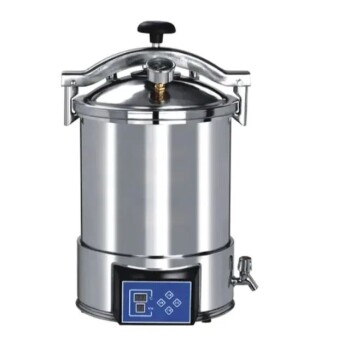
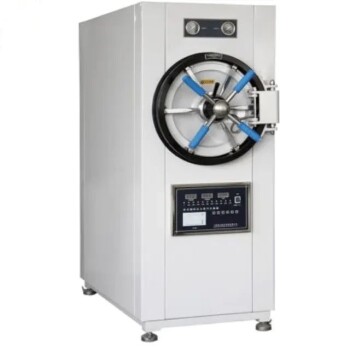
A high-pressure laboratory autoclave functions as a structural accelerator for biomass conversion. It creates a controlled environment of elevated temperature and pressure that forces chemical reagents—such as acids, alkalis, or alcohols—deep into the dense, lignocellulosic structure of walnut shells. This aggressive infiltration prepares the material for downstream chemical applications by overcoming its natural physical resistance.
The Core Utility By sustaining pressures (e.g., 4 bar) and temperatures above the boiling point of solvents, the autoclave disrupts the crystalline structure of cellulose and degrades lignin. This turns a rigid, non-reactive shell into a highly reactive substrate suitable for further chemical processing.
The Mechanics of Pretreatment
Overcoming Structural Recalcitrance
Walnut shells possess a complex lignocellulosic architecture designed by nature to be tough and resistant to degradation.
Standard chemical soaking at atmospheric pressure often fails to penetrate beyond the surface layers of this material.
The autoclave uses high pressure to physically drive reagents into the shell's matrix, ensuring the entire mass is treated rather than just the exterior.
Disrupting Crystalline Cellulose
One of the primary barriers to utilizing walnut shells is the crystallinity of their cellulose content.
The high-temperature environment within the autoclave provides the energy required to disrupt these crystalline regions.
This disruption "unlocks" the cellulose, making it accessible for hydrolysis or other chemical modifications.
Lignin Degradation
Lignin acts as the glue holding the shell structure together, limiting the effectiveness of chemical treatments.
The autoclave environment facilitates the breakdown and solubilization of this lignin.
Removing or degrading the lignin exposes the underlying carbohydrate polymers, significantly enhancing the reactivity of the biomass.
Operational Principles
Exceeding Atmospheric Boiling Points
In an open vessel, liquid solvents cannot exceed their boiling point (e.g., 100°C for water).
The sealed nature of the autoclave allows reagents to remain in a liquid state at temperatures well above their normal boiling points.
This thermal energy accelerates reaction rates, allowing for faster and more complete pretreatment than is possible under standard conditions.
Controlled Pressure Application
For walnut shell pretreatment, the device often operates at specific pressures, such as 4 bar.
This pressure is critical not just for temperature control, but for mechanical infiltration of the porous shell structure.
It ensures that the chemical attack is uniform throughout the material, resulting in a consistent product.
Understanding the Trade-offs
Operational Complexity vs. Efficacy
While highly effective, using an autoclave introduces complexity compared to simple reflux boiling.
Operators must strictly monitor pressure and temperature parameters to ensure safety and reproducibility.
Deviations in pressure can lead to incomplete pretreatment or, conversely, excessive degradation of the useful cellulose components.
Energy and Equipment Cost
Autoclave pretreatment is an energy-intensive process due to the requirement for maintaining high heat and pressure.
The equipment itself requires a higher capital investment than standard atmospheric reactors.
You must weigh the benefit of enhanced reactivity against the higher operational costs of the pretreatment step.
Making the Right Choice for Your Project
When determining if high-pressure autoclaving is the correct pretreatment method for your walnut shell biomass, consider your specific end-goals.
- If your primary focus is deep chemical conversion: The autoclave is essential for breaking down lignin and accessing crystalline cellulose to maximize reactivity.
- If your primary focus is surface modification: High-pressure treatment may be excessive; atmospheric treatments might suffice for simple surface adsorption tasks.
Ultimately, the autoclave serves to defeat the natural stubbornness of the walnut shell, transforming it from agricultural waste into a viable chemical feedstock.
Summary Table:
| Feature | Function in Pretreatment | Impact on Walnut Shells |
|---|---|---|
| High Pressure | Forces reagents into the matrix | Overcomes structural recalcitrance |
| High Temperature | Exceeds atmospheric boiling points | Disrupts crystalline cellulose structure |
| Chemical Infiltration | Uniform reagent distribution | Ensures consistent chemical reactivity |
| Lignin Degradation | Solubilizes structural "glue" | Unlocks cellulose for hydrolysis |
Elevate your biomass research with KINTEK. Our precision-engineered high-temperature high-pressure reactors and autoclaves are designed to overcome the toughest structural barriers in chemical pretreatment, ensuring maximum reactivity and efficiency.
Beyond autoclaving, KINTEK offers a comprehensive range of laboratory solutions, including:
- High-temperature furnaces (muffle, tube, rotary, vacuum, CVD, PECVD, MPCVD)
- Chemical processing tools (high-pressure reactors, autoclaves, electrolytic cells)
- Sample preparation (crushing systems, hydraulic presses, sieving equipment)
- Cooling & preservation (ULT freezers, freeze dryers)
Don't let rigid biomass structures slow down your innovation. Contact KINTEK today to discover how our specialized equipment and consumables can optimize your laboratory's chemical conversion processes.
References
- Nives Jovičić, Ana Matin. Toward sustainable bioproducts from lignocellulosic biomass: Influence of chemical pretreatments on liquefied walnut shells. DOI: 10.1515/opag-2022-0382
This article is also based on technical information from Kintek Solution Knowledge Base .
Related Products
- High Pressure Laboratory Autoclave Reactor for Hydrothermal Synthesis
- Desktop Fast High Pressure Laboratory Autoclave Sterilizer 16L 24L for Lab Use
- Stainless High Pressure Autoclave Reactor Laboratory Pressure Reactor
- Mini SS High Pressure Autoclave Reactor for Laboratory Use
- Laboratory High Pressure Horizontal Autoclave Steam Sterilizer for Lab Use
People Also Ask
- What role does a high-pressure reactor (autoclave) play in the synthesis of NiCuFe-LDH? Master Hydrothermal Growth
- What Role Does a High-Pressure Reactor or Autoclave Play in HA Catalyst Synthesis? Achieve High Surface Area Materials
- What equipment is required for hydrothermal synthesis of Ga0.25Zn4.67S5.08? Optimize Your Semiconductor Production
- What is the function of a high-pressure reactor in the hydrothermal synthesis of boehmite? Expert Process Insights
- What role does an autoclave play in the synthesis of MnO2 nanofibers? Mastering Hydrothermal Growth