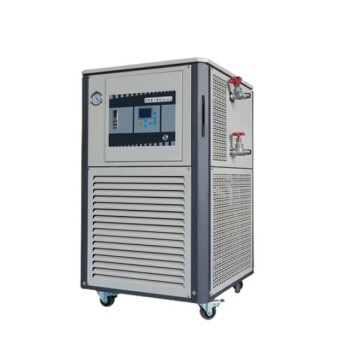
The fundamental purpose of using a high-temperature hydrothermal reactor in this context is to induce the sublimation of solid iodine within a sealed, high-pressure environment. By converting solid iodine directly into a gas, the reactor forces the material deep into the microporous architecture of the activated carbon.
Core Insight: The reactor utilizes high pressure and temperature to drive gas-phase diffusion, ensuring iodine is physically confined within carbon nanopores. This structural trapping prevents the dissolution of active materials during battery operation, directly solving the issue of short cycle life in Zinc-Iodine (Zn||I2) batteries.
The Mechanics of Iodine Encapsulation
Facilitating Sublimation
Standard mixing methods often fail to distribute solid iodine evenly throughout a porous host.
The hydrothermal reactor utilizes high heat to drive sublimation, effectively transforming solid iodine directly into a gas phase.
High-Pressure Infusion
Once in the gas phase, the iodine molecules become highly mobile and capable of diffusing into extremely small spaces.
The reactor's high internal pressure drives these gas molecules to fill the nanopores of the activated carbon's microporous structure.
Addressing the Polyiodide Challenge
Achieving Physical Confinement
The ultimate goal of this synthesis method is physical confinement.
By forcing iodine into the nanopores via gas diffusion, the activated carbon structure acts as a physical cage that traps the active material.
Suppressing Material Loss
A major failure mode in Zn||I2 batteries is the formation of soluble polyiodides that dissolve into the electrolyte during charging and discharging.
The confinement achieved by the hydrothermal reactor effectively suppresses the formation and loss of these soluble polyiodides.
Extending Battery Longevity
By keeping the iodine locked within the cathode structure, the battery retains its active material for longer.
This directly translates to an extended cycle life, making the battery more durable and reliable over time.
Understanding the Operational Context
The Necessity of a Closed System
It is critical to note that this process relies on the reactor being a closed system.
If the environment were not sealed, the sublimated iodine gas would escape rather than diffusing into the carbon pores.
Precision and Reproducibility
While the primary focus is iodine infusion, the hydrothermal environment generally ensures high reproducibility and control.
However, this method requires careful management of temperature and pressure to ensure the phase change occurs without damaging the carbon host.
Making the Right Choice for Your Goal
To optimize your cathode synthesis strategy, consider the following:
- If your primary focus is Cycle Life: You must use the hydrothermal reactor to maximize physical confinement, as this is the primary mechanism for preventing polyiodide dissolution.
- If your primary focus is Material Utilization: Ensure the reactor reaches sufficient pressure to drive the iodine gas into the deepest micropores, preventing "dead" volume in the carbon.
The high-temperature hydrothermal reactor is not merely a heating vessel; it is a precision tool for locking active iodine into a protective carbon framework to ensure long-term stability.
Summary Table:
| Feature | Mechanism | Benefit for I2@AC Synthesis |
|---|---|---|
| Sublimation Control | Converts solid I2 to gas phase | Ensures uniform distribution within porous hosts |
| High-Pressure Infusion | Drives gas into micropores | Achieves deep physical confinement of active materials |
| Closed System | Prevents vapor escape | Maximizes material utilization and loading efficiency |
| Physical Confinement | Traps iodine in carbon cages | Suppresses polyiodide dissolution and extends cycle life |
Elevate Your Battery Research with KINTEK Precision
Unlock the full potential of your cathode material synthesis with KINTEK’s high-temperature high-pressure reactors and autoclaves. Our equipment is engineered to provide the precise thermal control and airtight integrity required for gas-phase diffusion and physical confinement in I2@AC composite production.
Whether you are focusing on Zinc-Iodine battery longevity or advanced material infusion, KINTEK offers a comprehensive range of laboratory solutions—from crushing and milling systems to high-temperature furnaces and PTFE consumables—to support your entire workflow.
Ready to optimize your lab's performance? Contact KINTEK today to discuss how our specialized equipment can enhance your research outcomes.
References
- Wenshuo Shang, Litao Kang. Boosting Zn||I2 Battery’s Performance by Coating a Zeolite-Based Cation-Exchange Protecting Layer. DOI: 10.1007/s40820-022-00825-5
This article is also based on technical information from Kintek Solution Knowledge Base .
Related Products
- Customizable Laboratory High Temperature High Pressure Reactors for Diverse Scientific Applications
- High Pressure Laboratory Autoclave Reactor for Hydrothermal Synthesis
- High Temperature Constant Temperature Heating Circulator Water Bath Chiller Circulator for Reaction Bath
- 100L Heating Chilling Circulator Cooling Water Bath Circulator for High and Low Temperature Constant Temperature Reaction
- 5L Heating Chilling Circulator Cooling Water Bath Circulator for High and Low Temperature Constant Temperature Reaction
People Also Ask
- How do high-pressure and high-temperature reactors ensure the effective treatment of lignocellulosic wastewater in WAO?
- What equipment is required for high-pressure high-temperature reactions? Master Extreme Chemistry Safely
- How do you control high pressure in a reactor? A Guide to Safe & Stable Operation
- How does initial oxygen pressure affect the wet oxidation of pharmaceutical sludge? Master Your Oxidation Depth
- Why is argon better than nitrogen for inert atmosphere? Ensure Absolute Reactivity & Stability