Sealed laboratory reaction vessels are a fundamental requirement in the hydrothermal synthesis of zeolites because they isolate the chemical environment to maintain precise temperature stability and prevent the evaporation of alkaline activator solutions. By creating a closed system, these vessels ensure the liquid concentration remains constant, which is critical for fully dissolving coal fly ash components and facilitating the ordered growth of the molecular sieve structure.
The success of zeolite synthesis hinges on a stable thermodynamic environment; sealed vessels act as the control mechanism that prevents solvent loss and pressure drops, ensuring the amorphous fly ash transforms into a highly ordered crystalline structure.
Preserving Chemical Consistency
Preventing Evaporation Loss
The primary function of a sealed vessel is to create a closed loop that strictly prevents the evaporation of the liquid medium.
If the alkaline activator solution (such as NaOH or KOH) were allowed to evaporate, the concentration of the reactants would shift unpredictably. This stability is vital because the synthesis relies on a specific ratio of liquid to solid components to function correctly.
Ensuring Full Dissolution
The transformation of coal fly ash begins with the breakdown of its components in an alkaline medium.
A stable reaction liquid concentration is required to drive the full dissolution of the fly ash. Sealed vessels maintain this concentration over the entire hydrothermal duration, ensuring that the necessary aluminosilicate components are available for the subsequent reaction phases.
Mastering the Thermodynamic Environment
Maintaining Constant Temperature
Hydrothermal synthesis requires a sustained, elevated temperature—often around 90°C or higher—to proceed.
Sealed vessels are designed to maintain a constant temperature environment effectively. This thermal consistency provides the energy required for the reaction kinetics without the fluctuations that occur in open systems.
Facilitating High-Pressure Conditions
While temperature is the driver, the sealed nature of the vessel (often an autoclave) naturally allows for the buildup of pressure.
Operating between 1 bar and 15 bar, this high-pressure environment works in tandem with the heat to induce the gelation and rearrangement of components. This pressure is impossible to achieve without a robustly sealed container.
Critical Factors for Crystal Growth
Promoting Ordered Nucleation
The ultimate goal of the process is the formation of a specific molecular sieve structure.
By keeping the environment static and contained, sealed vessels allow for ordered nucleation and growth. This controlled setting enables the dissolved components to rearrange themselves into the complex, crystalline lattice of a zeolite.
The Risk of Environmental Fluctuations
It is important to understand the trade-offs of a compromised system. A uniform thermal field is critical for ensuring the purity and pore regularity of the resulting zeolite.
If the vessel seal is inadequate, thermal gradients or pressure leaks can occur. This disruption often leads to incomplete crystallization or the formation of impurities rather than the desired high-purity zeolite structure.
Making the Right Choice for Your Goal
To ensure successful synthesis, your equipment choice should align with your specific research objectives.
- If your primary focus is structural purity: Prioritize vessels with superior thermal conductivity and pressure ratings to ensure a perfectly uniform thermal field during crystallization.
- If your primary focus is process reproducibility: Ensure your vessels feature high-integrity sealing mechanisms to strictly prevent evaporation and concentration drift between batches.
Control the environment, and you control the crystal.
Summary Table:
| Feature | Role in Zeolite Synthesis | Impact on Quality |
|---|---|---|
| Evaporation Prevention | Maintains constant alkaline concentration | Ensures full dissolution of coal fly ash components |
| Temperature Stability | Sustains constant 90°C+ environment | Provides consistent energy for reaction kinetics |
| Pressure Regulation | Operates between 1 bar and 15 bar | Induces gelation and crystalline rearrangement |
| Controlled Nucleation | Isolates the chemical environment | Promotes ordered growth of molecular sieve structures |
Maximize Your Research Precision with KINTEK
At KINTEK, we understand that successful zeolite synthesis requires more than just heat—it requires absolute environmental control. Our premium high-temperature high-pressure reactors and autoclaves are engineered to prevent solvent loss and maintain the uniform thermal fields essential for high-purity crystalline structures.
Whether you are focusing on coal fly ash transformation or advanced material development, KINTEK provides the specialized laboratory equipment you need, including:
- Teflon-lined hydrothermal reactors for chemical resistance
- High-pressure autoclaves for controlled crystal growth
- High-temperature furnaces and crushing/milling systems
- Precision hydraulic presses and essential consumables
Ready to elevate your laboratory's synthesis results? Contact our experts today to discover how KINTEK’s comprehensive range of equipment and consumables can streamline your workflow and guarantee reproducibility.
References
- Silviya Boycheva, Margarita Popova. Progress in the Utilization of Coal Fly Ash by Conversion to Zeolites with Green Energy Applications. DOI: 10.3390/ma13092014
This article is also based on technical information from Kintek Solution Knowledge Base .
Related Products
- Stainless High Pressure Autoclave Reactor Laboratory Pressure Reactor
- Customizable High Pressure Reactors for Advanced Scientific and Industrial Applications
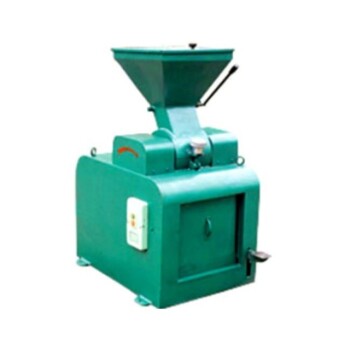
- Laboratory Sealed Hammer Crusher for Efficient Sample Preparation
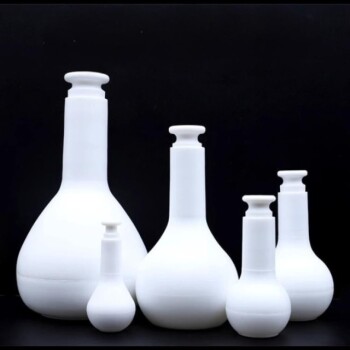
- Custom PTFE Teflon Parts Manufacturer for Microwave Digestion Tank
- Customizable Laboratory High Temperature High Pressure Reactors for Diverse Scientific Applications
People Also Ask
- Why is a laboratory high-pressure reactor used in the hydrothermal synthesis of hydroxyapatite catalysts?
- Why is a laboratory high-pressure reactor necessary for synthesizing fly ash-based zeolite? Achieve Pure Crystallization
- What role does a laboratory high-pressure reactor play in the leaching process of spent cathode materials? Optimize Recovery
- What conditions do laboratory high-pressure reactors provide for HTC? Optimize Your Biochar Production Processes
- How are high-pressure reactors used to prepare metaphosphate electrocatalysts? Master In-Situ Precursor Growth