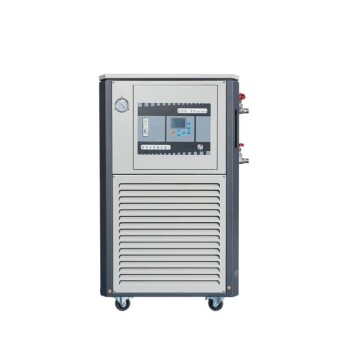
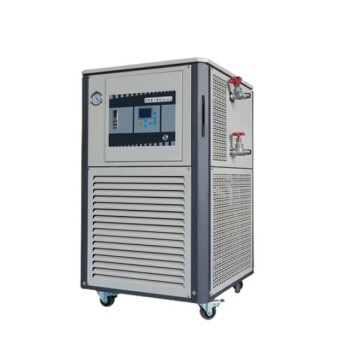
A constant temperature hydrothermal reactor serves as the critical vessel for transforming coal fly ash into value-added materials through alkaline conversion. By maintaining a sealed environment at a stable temperature (often around 90°C), the reactor generates the autogenous pressure and thermal uniformity required to break down the fly ash's chemically stable structure.
The Core Insight The reactor is not merely a heater; it is a phase-change engine that drives the dissolution of aluminosilicates into hydrogels, enabling the synthesis of high-value zeolites like Faujasite (FAU) or Linde Type A (LTA) from industrial waste.
The Role of the Reaction Environment
Generating Autogenous Pressure
The reactor functions as an autoclave, creating a high-pressure environment simply by heating the liquid contents within a sealed space.
This autogenous pressure forces the alkaline liquid into the pores of the fly ash particles.
Without this pressure, the solvent cannot effectively penetrate the dense, insoluble particles to initiate the chemical transformation.
Ensuring Thermal Uniformity
For crystallization to occur correctly, the temperature must remain stable throughout the entire volume of the reactor.
The hydrothermal reactor provides thermal uniformity, ensuring that the activation energy required for the reaction is available equally to all particles.
Fluctuations in temperature can lead to incomplete reactions or the formation of unwanted mixed phases.
The Mechanism of Activation
1. Dissolution of Aluminosilicates
Inside the reactor, the combination of heat, pressure, and alkalinity attacks the glassy structure of the fly ash.
Aluminosilicate components dissolve from the solid ash into the surrounding alkaline medium.
This step is the rate-limiting factor; if the reactor conditions (temperature and time) are insufficient, the ash remains inert.
2. Formation of Hydrogels
Once dissolved, the silicate and aluminate species interact in the solution to form an amorphous hydrogel.
This gel acts as the precursor material, a nutrient-rich soup from which organized structures can emerge.
3. Heterogeneous Crystallization
The final stage facilitated by the reactor is the reorganization of the hydrogel back onto the solid surfaces.
The gel undergoes heterogeneous crystallization on the surface of the remaining insoluble particles.
This controlled growth leads to the formation of specific, highly organized zeolite phases, such as Faujasite (FAU) or Linde Type A (LTA).
Understanding the Constraints
Phase Sensitivity
The primary trade-off in hydrothermal activation is the sensitivity of phase formation to temperature.
While the primary reference notes 90°C, deviating from the optimal temperature for a specific target zeolite can disastrously alter the result.
A temperature that is too high may promote the formation of denser, less porous zeolite phases, while a temperature that is too low may result in amorphous geopolymers rather than crystalline zeolites.
Time vs. Crystallinity
The reactor must maintain these conditions for a specific duration to achieve high crystallinity.
Cutting the reaction time short in the reactor typically leaves unreacted ash and amorphous gel, significantly reducing the quality and purity of the final zeolite product.
Making the Right Choice for Your Goal
To maximize the utility of a constant temperature hydrothermal reactor, you must align the operating parameters with your specific material requirements.
- If your primary focus is synthesizing Zeolite A (LTA): Ensure the reactor temperature is strictly maintained at the lower end (approx. 90°C) to prevent phase transformation into more stable, less porous sodalities.
- If your primary focus is maximum conversion rate: Utilize the reactor's pressure capabilities to ensure deep penetration of the alkaline solution, but monitor the duration to avoid over-crystallization into unwanted phases.
Success in hydrothermal activation relies on precise control: the reactor provides the conditions, but the temperature set-point dictates the mineralogy.
Summary Table:
| Stage of Activation | Role of the Reactor | Key Outcome |
|---|---|---|
| Dissolution | High heat and alkalinity attack glassy structures | Release of aluminosilicate components |
| Gelation | Stable temperature facilitates species interaction | Formation of amorphous hydrogel precursors |
| Crystallization | Controlled environment for reorganization | Synthesis of high-value zeolites (FAU, LTA) |
| Pressure Generation | Sealed vessel creates autogenous pressure | Deep solvent penetration into ash pores |
Transform Industrial Waste into High-Value Materials
Take control of your material synthesis with KINTEK’s premium laboratory solutions. Whether you are focused on zeolite synthesis or advanced geochemistry, our high-temperature high-pressure reactors and autoclaves provide the thermal uniformity and pressure stability required for precise coal fly ash activation.
From high-performance hydrothermal reactors to essential ceramics and crucibles, KINTEK specializes in the equipment that empowers researchers and industrial labs to achieve superior results. Let our expertise in heating, crushing, and cooling solutions support your next breakthrough.
Ready to optimize your hydrothermal processes?
Contact KINTEK today to find the perfect reactor for your lab!
References
- Silviya Boycheva, Margarita Popova. Processing of high-grade zeolite nanocomposites from solid fuel combustion by-products as critical raw materials substitutes. DOI: 10.1051/mfreview/2020019
This article is also based on technical information from Kintek Solution Knowledge Base .
Related Products
- High Pressure Laboratory Autoclave Reactor for Hydrothermal Synthesis
- Customizable Laboratory High Temperature High Pressure Reactors for Diverse Scientific Applications
- Custom PTFE Teflon Parts Manufacturer for Hydrothermal Synthesis Reactor Polytetrafluoroethylene Carbon Paper and Carbon Cloth Nano-growth
- Electric Rotary Kiln Small Rotary Furnace Biomass Pyrolysis Plant
- Customizable High Pressure Reactors for Advanced Scientific and Industrial Applications
People Also Ask
- What role does a high-pressure reactor (autoclave) play in the synthesis of NiCuFe-LDH? Master Hydrothermal Growth
- What Role Does a High-Pressure Reactor or Autoclave Play in HA Catalyst Synthesis? Achieve High Surface Area Materials
- What equipment is required for hydrothermal synthesis of Ga0.25Zn4.67S5.08? Optimize Your Semiconductor Production
- What is the function of a high-pressure reactor in the hydrothermal synthesis of boehmite? Expert Process Insights
- What role does an autoclave play in the synthesis of MnO2 nanofibers? Mastering Hydrothermal Growth