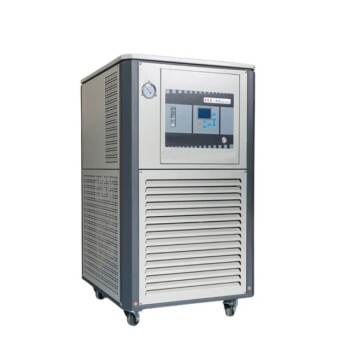
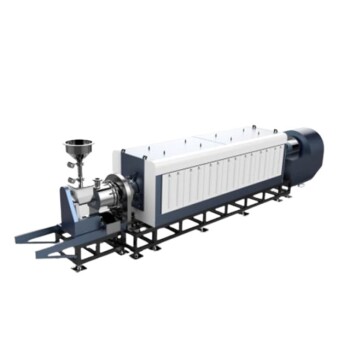
A high-pressure hydrothermal reactor facilitates synthesis by creating a sealed, subcritical environment where temperature and pressure are elevated simultaneously. This specific state drastically enhances the solubility of precursors and accelerates reaction kinetics beyond what is possible in standard open-vessel reactions. By strictly controlling these conditions, the reactor guides the self-assembly of hydroxyapatite crystals into a mesoporous structure with a high specific surface area, which is the defining characteristic required for efficient heterogeneous catalysis.
By maintaining a subcritical aqueous state, the reactor enables precise control over crystal growth and self-assembly. This engineered environment transforms raw precursors into highly stable, mesoporous structures with the surface area required for superior catalytic performance.
Creating the Subcritical Reaction Environment
Reaching the Subcritical State
The reactor functions by providing a closed environment that brings the aqueous solution into a subcritical state. In this state, the physical properties of water change, acting as both a solvent and a reactant. This environment is essential for initiating chemical reactions that would not occur under ambient conditions.
Enhancing Precursor Solubility
The combination of high temperature and pressure significantly enhances the solubility of the precursor materials. This ensures that raw materials are fully dissolved and available for reaction. Better solubility leads to a more homogeneous mixture, which is critical for consistent product formation.
Accelerating Reaction Kinetics
The pressurized environment increases the rate at which chemical interactions occur. This acceleration allows for the rapid precipitation and subsequent thermal treatment of the material. Consequently, the synthesis process becomes more efficient compared to conventional methods.
Driving Self-Assembly and Structure Formation
Guided Self-Assembly
The controlled environment within the reactor specifically guides the self-assembly of hydroxyapatite crystals. Rather than random precipitation, the subcritical conditions encourage the formation of organized structures. This leads to the development of the desired mesoporous architecture.
Regulating Pore Structure
The stability of the reactor allows for the precise regulation of the material's morphology. By managing the temperature and pressure distribution, researchers can control the size and arrangement of the pores. This results in a material with a high specific surface area, which provides more active sites for catalytic reactions.
Facilitating Dopant Integration
The reactor's conditions are ideal for introducing specific ions, such as molybdate anions, into the crystal lattice. The high pressure ensures these components are effectively and uniformly integrated during the crystallization process. This doping is often crucial for enhancing the material's specific catalytic properties.
Understanding the Operational Trade-offs
Parameter Sensitivity
While the reactor allows for precise control, the quality of the final product is highly sensitive to the specific temperature and pressure parameters used. Slight deviations can alter the phase composition or reduce the specific surface area. Achieving the desired mesoporous structure requires rigorous calibration of exposure times and thermal gradients.
Reproducibility Challenges
Although the reactor is designed to ensure high reproducibility, consistency depends entirely on maintaining a constant environment. Any fluctuation in the reactor's seal or heating elements can lead to variations in crystal growth. Users must ensure their equipment is capable of maintaining a strictly "constant-temperature" environment throughout the duration of the synthesis.
Optimizing Your Synthesis Strategy
To get the most out of high-pressure hydrothermal synthesis for your specific application, consider the following strategic focus areas:
- If your primary focus is Maximal Catalytic Activity: Prioritize the regulation of pore structure to maximize specific surface area, ensuring the highest number of active sites for oxidation reactions.
- If your primary focus is Material Stability: Focus on the precise control of phase composition and purity to ensure the hydroxyapatite crystals are robust and free from unwanted byproducts.
- If your primary focus is Functional Customization: Leverage the reactor's ability to facilitate liquid-phase reactions to stably dope the lattice with functional groups or anions like molybdate.
By mastering the subcritical environment of the reactor, you can reliably engineer hydroxyapatite catalysts that offer superior performance and structural integrity.
Summary Table:
| Mechanism | Impact on Synthesis | Benefit for Catalysis |
|---|---|---|
| Subcritical Environment | Enhances precursor solubility & reaction kinetics | Creates high-purity, stable crystal phases |
| Guided Self-Assembly | Directs crystal growth into mesoporous architectures | Increases specific surface area for active sites |
| Pressure Regulation | Facilitates uniform dopant integration (e.g., molybdate) | Enhances chemical reactivity and selectivity |
| Thermal Stability | Enables precise control over pore size and morphology | Ensures reproducibility and material robustness |
Elevate Your Material Research with KINTEK Precision
Ready to master the subcritical environment for your next breakthrough in catalysis? KINTEK specializes in high-performance laboratory equipment designed for the most demanding synthesis protocols. Whether you require high-temperature high-pressure reactors and autoclaves for hydrothermal synthesis, or specialized crushing and milling systems for precursor preparation, our solutions provide the stability and control your research demands.
From PTFE-lined vessels and ceramic crucibles to advanced vacuum and tube furnaces, we empower researchers to achieve superior pore regulation and phase purity. Contact KINTEK today to optimize your laboratory workflow and discover how our comprehensive range of high-pressure reactors and consumables can accelerate your path to discovery.
References
- Magdalena Podolak, Anna Bielawska. Anticancer properties of novel Thiazolidinone derivatives tested in MDA-MB-231 breast cancer cell lines.. DOI: 10.21175/rad.abstr.book.2023.10.3
This article is also based on technical information from Kintek Solution Knowledge Base .
Related Products
- Customizable Laboratory High Temperature High Pressure Reactors for Diverse Scientific Applications
- High Pressure Laboratory Autoclave Reactor for Hydrothermal Synthesis
- Customizable High Pressure Reactors for Advanced Scientific and Industrial Applications
- Stainless High Pressure Autoclave Reactor Laboratory Pressure Reactor
- Mini SS High Pressure Autoclave Reactor for Laboratory Use
People Also Ask
- How do high-pressure and high-temperature reactors ensure the effective treatment of lignocellulosic wastewater in WAO?
- What equipment is required for high-pressure high-temperature reactions? Master Extreme Chemistry Safely
- How do you control high pressure in a reactor? A Guide to Safe & Stable Operation
- How does initial oxygen pressure affect the wet oxidation of pharmaceutical sludge? Master Your Oxidation Depth
- Why is argon better than nitrogen for inert atmosphere? Ensure Absolute Reactivity & Stability