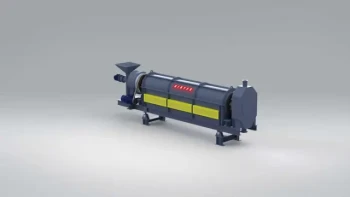
To convert waste mushroom substrate into hydrochar, a hydrothermal carbonization (HTC) reactor establishes a rigorous subcritical water environment. Specifically, the reactor maintains a temperature of approximately 180°C while sustaining a self-generated (autogenous) pressure ranging from 2 to 10 MPa to drive the carbonization process.
The reactor’s ability to maintain a sealed, high-pressure aqueous environment is the key to bypassing the need for pre-drying biomass. This specific combination of heat and pressure triggers deep thermochemical reactions that fundamentally restructure the waste into a stable, porous carbon material.
The Critical Reaction Environment
To successfully process mushroom substrate, the reactor must provide three distinct physical conditions simultaneously.
Subcritical Water State
The reactor utilizes water as the reaction medium rather than just a solvent. By keeping water in a liquid state at temperatures where it would normally boil, the reactor creates "subcritical water." This medium exhibits unique properties that accelerate the breakdown of biomass.
Precise Thermal Regulation
The reactor provides a constant high-temperature environment, specifically targeting 180°C. This temperature is the threshold required to initiate the necessary chemical transformations within a reasonable timeframe, often around one hour.
Autogenous Pressure Generation
Unlike systems requiring external compression, these reactors rely on autogenous pressure. As the sealed vessel heats to 180°C, the water vapor and volatile gases generate an internal pressure of 2 to 10 MPa. This pressure is critical for keeping the water in the liquid phase and forcing the chemical reactions to occur.
Mechanism of Transformation
The conditions provided by the reactor do not merely dry the mushroom substrate; they chemically alter it.
Chemical Pathways
The high-pressure, high-temperature environment triggers a cascade of thermochemical reactions. The primary mechanisms are dehydration (removal of water from the molecular structure), decarboxylation (removal of carbon dioxide), and polycondensation.
Structural Evolution
These reactions convert the loose, fibrous mushroom substrate into a dense solid. The process significantly increases the number of surface functional groups, specifically aromatic and oxygen-rich groups.
Porosity Development
The reactor environment facilitates the creation of a rich pore structure within the hydrochar. This porosity is the primary driver behind the material's high-performance capabilities, such as the adsorption of heavy metals like cadmium.
Understanding the Trade-offs
While the HTC reactor is highly effective for wet biomass, the operational conditions present specific challenges that must be managed.
Equipment Complexity
Maintaining 2-10 MPa of pressure at 180°C requires robust, industrial-grade pressure vessels. This necessitates higher capital investment compared to simple open-air composting or low-temperature drying systems.
Process Control Sensitivity
Because the pressure is autogenous (self-generated), it is directly tied to the temperature and the moisture content of the feedstock. Precise thermal control is non-negotiable; slight fluctuations in temperature can lead to significant variances in pressure and product quality.
Making the Right Choice for Your Goal
The specific utility of the hydrochar produced depends on how you leverage the reactor's conditions.
- If your primary focus is environmental remediation: Prioritize the development of the rich pore structure and surface functional groups, as these determine the material's capacity to adsorb heavy metals like cadmium.
- If your primary focus is solid fuel production: Focus on the reactor's ability to facilitate dehydration and decarboxylation, which lowers the combustion activation energy and improves the fuel quality of the hydrochar.
By mastering the balance of temperature and autogenous pressure, you turn a waste disposal problem into a resource generation opportunity.
Summary Table:
| Parameter | Targeted Condition | Purpose in Carbonization |
|---|---|---|
| Temperature | 180°C | Initiates dehydration, decarboxylation, and polycondensation |
| Pressure | 2 - 10 MPa (Autogenous) | Maintains water in subcritical liquid state; drives chemical reactions |
| Reaction Medium | Subcritical Water | Acts as a reactive solvent to break down biomass without pre-drying |
| Residence Time | ~1 Hour | Ensures structural evolution and development of surface functional groups |
| Output Material | Hydrochar | Stable, porous carbon material with high adsorption and fuel potential |
Revolutionize Your Waste-to-Value Research with KINTEK
Transform agricultural waste into high-performance carbon materials with precision engineering. KINTEK specializes in advanced laboratory solutions, providing the robust high-temperature high-pressure reactors and autoclaves essential for successful hydrothermal carbonization (HTC).
Whether you are focusing on environmental remediation or solid fuel production, our equipment ensures the precise thermal regulation and pressure integrity required to develop rich pore structures and surface functional groups. Beyond reactors, we offer a comprehensive range of crushing and milling systems, PTFE products, and cooling solutions to support your entire material synthesis workflow.
Ready to elevate your carbonization efficiency? Contact our laboratory specialists today to find the perfect reactor system for your research goals!
References
- Miloš Janeček, Tomáš Chráska. Microstructure and mechanical properties of biomedical alloys spark plasma sintered from elemental powders. DOI: 10.21175/rad.abstr.book.2023.19.8
This article is also based on technical information from Kintek Solution Knowledge Base .
Related Products
- High Pressure Laboratory Autoclave Reactor for Hydrothermal Synthesis
- Customizable Laboratory High Temperature High Pressure Reactors for Diverse Scientific Applications
- Electric Rotary Kiln Small Rotary Furnace for Activated Carbon Regeneration
- Customer Made Versatile CVD Tube Furnace Chemical Vapor Deposition Chamber System Equipment
- Electric Rotary Kiln Small Rotary Furnace Biomass Pyrolysis Plant
People Also Ask
- What role does a high-pressure reactor (autoclave) play in the synthesis of NiCuFe-LDH? Master Hydrothermal Growth
- What Role Does a High-Pressure Reactor or Autoclave Play in HA Catalyst Synthesis? Achieve High Surface Area Materials
- What equipment is required for hydrothermal synthesis of Ga0.25Zn4.67S5.08? Optimize Your Semiconductor Production
- What is the function of a high-pressure reactor in the hydrothermal synthesis of boehmite? Expert Process Insights
- What role does an autoclave play in the synthesis of MnO2 nanofibers? Mastering Hydrothermal Growth